Since 2014, the Faculty of Arts Distinguished Lecture in Economics has given students and the broader community access to new ideas and insights in economics. Lectures covered topics ranging from innovation and patents to jobs, and from child health to inequality. For video recordings of the past lectures, please see the individual lecture information below.
We believe that these lectures ignite curiosity and cultivate a greater understanding of how economics can contribute to solutions to societies' problems.
Expand Collapse
2025: Changing Harmful Norms with Eliana La Ferrera

Changing Harmful Norms
On Thursday, October 2, 2025 the University of Waterloo will be hosting Eliana La Ferrara, Professor of Public Policy at Harvard Kennedy School, to give the annual Distinguished Lecture in Economics on the topic of harmful gender norms.
Harmful gender norms are persistent in many countries, despite the efficiency and equity costs they entail. Professor La Ferrara will discuss what factors may contribute to this persistence, and how these norms may be eradicated.
About Professor Eliana La Ferrera
Eliana La Ferrara is a Professor of Public Policy at Harvard Kennedy School. She is Past President of the Econometric Society and Program Director of Development Economics for the Center for Economic Policy Research (CEPR). She is also a J-PAL Affiliate, a Foreign Honorary Member of the American Economic Association, and an International Honorary Member of the American Academy of Arts and Sciences.
Her research focuses on Development Economics and Political Economics, particularly on the role of social factors in economic development. Methodologically, she combines fieldwork, rigorous empirical analysis, and microeconomic theory to address questions at the intersection of economics and other social sciences. She has studied ethnic diversity, kin structure and social norms, and the effects of television on social outcomes. She has also investigated political constraints to development, with particular focus on violent conflict in Africa. She regularly collaborates with governments and international organizations to evaluate the effectiveness of development policies.
Date: October 2, 2025
Time: 3:00 PM
Location: Federation Hall, University of Waterloo
2023: Inequality, externalities, and climate with Rohini Pande

Credit: Dan Renzetti
2023 Distinguished Lecture
Rohini Pande, Yale University
Title: Inequality, externalities, and climate
Abstract: The climate emergency is inextricably linked to economic inequality, and each amplifies the other. Higher-income countries, groups, and individuals use more fossil-fuel-generated energy than the less affluent. Conversely, lower-income countries, groups, and individuals are less able to protect themselves against the costs and shocks of climate breakdown — the negative externalities of fossil fuel use — than the rich. Continued carbon-intensive, unequal, economic growth, far from raising all boats, threatens to sink some entirely. This talk will take learnings from recent research on reducing economic inequality, and from research on reducing the negative externalities that communities suffer from air pollution, and ask what they tell us about taking effective action to prevent climate breakdown.
Date: September 15, 2023
Time: 3:00 to 4:30 PM
Location: Federation Hall, University of Waterloo
About Rohini Pande
Rohini Pande is the Henry J. Heinz II Professor of Economics, Director of the Economic Growth Center, and Director of Inclusion Economics at Yale University. She is a co-editor of American Economic Review: Insights. Pande’s research is largely focused on how formal and informal institutions shape power relationships and patterns of economic and political advantage in society, particularly in developing countries. She is interested in the role of public policy in providing the poor and disadvantaged political and economic power, and how notions of economic justice and human rights can help justify and enable such change.
The Faculty of Arts gratefully acknowledges our Economics alumni for their generous support* (*gifts of $1,000 or more) of the Distinguished Lecture Series. The 2023 lecture was sponsored by:

2022: Pandemic macroeconomics: What we've learned, and what may lie ahead with Paul Beaudry

Paul Beaudry, Deputy Governor of the Bank of Canada
Pandemic macroeconomics: What we’ve learned, and what may lie ahead
The COVID-19 pandemic brought unprecedented shocks on the Canadian and global economies, and the speed at which these shocks unfolded pushed policymakers to learn lessons and course-correct in real time. Although we are still living through an extraordinary period, we can start to reflect on what this episode may have taught us about how the macroeconomy works in times of crisis, what important questions this experience has raised and what may lie ahead as we continue to face challenges like stubbornly high inflation.
Date: September 20, 2022
Time: 3:30 to 4:45 PM
Location: Federation Hall, University of Waterloo
Watch the recorded lecture on youtube.
About Deputy Governor Paul Beaudry

Paul Beaudry was appointed Deputy Governor of the Bank of Canada, effective February 2019. In this capacity, he is one of two deputy governors responsible for overseeing the Bank’s financial system activities. In 2021, Mr. Beaudry became responsible for the Bank’s analysis of international economic developments in support of monetary policy decisions—serving as the Bank’s G7 and G20 Deputy. As a member of the Bank’s Governing Council, he shares responsibility for decisions with respect to monetary policy and financial system stability and for setting the strategic direction of the Bank.
At the time of his appointment to the Bank of Canada, Mr. Beaudry was Professor at the University of British Columbia’s Vancouver School of Economics. Mr. Beaudry began his career as assistant professor at the Université de Montréal in 1989. From 1990 to 1994, he was an assistant professor at Boston University. In 1994, he became an associate professor at the University of British Columbia before being promoted to full professor in 1996. During 2009 and 2010, Mr. Beaudry held the Chair in Economics at All Souls College, Oxford University.
Mr. Beaudry is a two-time former laureate of the Bank of Canada’s Research Fellowship Award. He is a Fellow of the Royal Society of Canada, and a Research Associate at the National Bureau of Economic Research. He has been a Visiting Professor at European University Institute, MIT, Nuffield College Oxford, Sorbonne Paris I, the Université de Montréal and the University of Toulouse. Recognition of his work includes the Canada Research Chair in Macroeconomics (2000-2015) and the John Rae Prize from the Canadian Economics Association (2008).
Born in Montréal, Quebec, Mr. Beaudry holds a BA in Economics from Laval University, an MA in Economics from the University of British Columbia, and a PhD in Economics from Princeton University.
The Faculty of Arts gratefully acknowledges our Economics alumni for their generous support* of the Distinguished Lecture Series.
- Brian Lipskie
- Anonymous (1)
*gifts of $1,000 or more
2022: Suffering, the Safety Net and Disparities during COVID-19 with Hilary Hoynes

Suffering, the Safety Net and Disparities during COVID-19
By: Dr. Hilary Hoynes, Professor of Economics and Public Policy at UC Berkeley
The COVID-19 crisis produced exceptionally large spikes in unemployment rates in Canada and the United States in the Spring of 2020 with disproportionate impacts on low-income families. School and child-care center closures meant lost learning and free- and reduced-price school meals for many low-income children. While governments in both countries responded swiftly with targeted income support aimed at helping displaced workers and their families bridge the crisis, the US also distributed universal support payments and expanded the duration and benefit levels of the unemployment insurance programs.
In this lecture, Professor Hilary Hoynes will (a) document the impact of the economic crisis across demographic groups in the U.S. population, (b) summarize the exceptional US policy response enhancing the social safety net, and (c) assess the success of the policy response. She will then discuss the U.S. policy landscape moving forward, with an emphasis on the expanded Child Tax Credit. The findings provide essential lessons on supporting families and their children through economic crises for policymakers on both sides of the Canada-U.S. border.
Date: January 21, 2022
Time: 3-4:30pm
Location and Format: Dr. Hoynes presented the lecture virtually from UC Berkley. Guests viewed the presentation on-line.
Watch the recorded lecture on YouTube
About the Dr. Hilary Hoynes
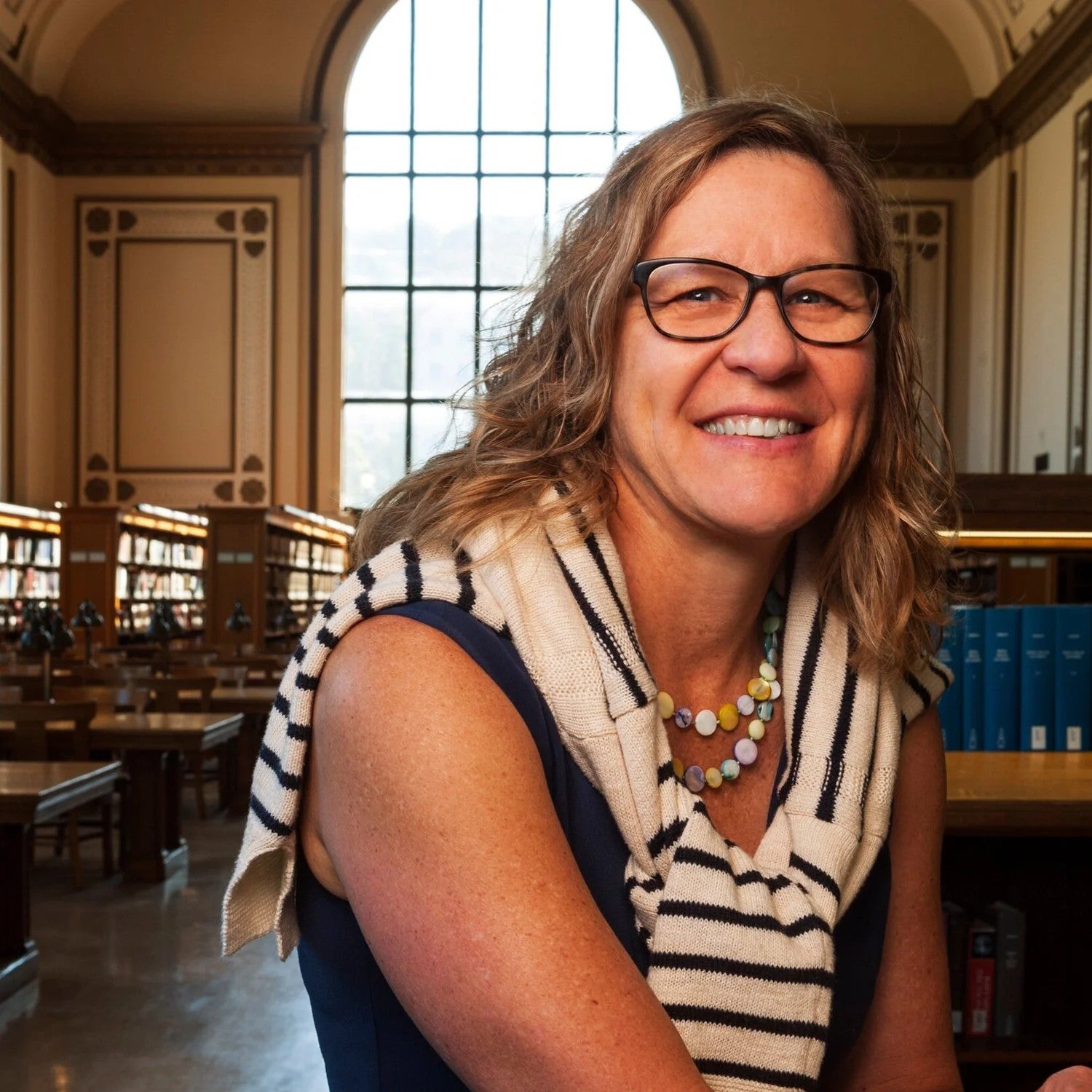
Hilary Hoynes is a Professor of Economics and Public Policy and holds the Haas Distinguished Chair in Economic Disparities at the University of California Berkeley where she also co-directs the Berkeley Opportunity Lab. Her research focuses on poverty, inequality, food and nutrition programs, and the impacts of government tax and transfer programs on low income families.
Standard models of economic theory taught to students pay little attention to children. Individuals are born as workers and make decisions on day one about how much to work and consume. But this is a gross caricature of the research being done by economists today. For nearly three decades, Professor Hilary Hoynes has put children and the families they grow up in, especially economically disadvantaged children, at the front and centre of her research agenda, thereby playing a seminal role in the growth and quality of the child-centred economics literature. Central to her work is the fundamental question of how public policies, including schools system and government income transfer programs, can be best designed to ensure equal economic opportunities for children. The Covid-19 pandemic and the disruptions it has imposed on families has made clearer than ever the importance of social safety nets and high-quality public schools to disadvantaged children. Research such as that conducted by Professor Hoynes is crucial for informing policy makers about appropriate responses.
The Faculty of Arts gratefully acknowledges our Economics alumni for their generous support* of the Distinguished Lecture Series.
- Brian Lipskie
- Anonymous (1)
*gifts of $1,000 or more
2019: Child Health as Human Capital with Janet Currie

Child Health as Human Capital
By Janet Currie, Henry Putnam Professor of Economics and Public Affairs at Princeton University
Child health is increasingly understood to be a critical form of human capital, but only recently have we begun to understand how valuable it is and how better to support its development. This lecture provides an overview of recent work demonstrating the key role of public insurance in supporting longer-term human capital development, and pointing to improvements in child mental health as an especially important mechanism.
Date: Monday, October 28, 2019
Time: 4:30-6:00pm
Location: Arts Lecture Hall, Room 113
Reception to follow in HH 373 from 6:00-7:00pm
Watch a recording of the Lecture on YouTube
About the Lecturer

Janet Currie is a pioneer in the economic analysis of child development and its role in the development of social inequalities. Her work has been instrumental in demonstrating the long-term impacts of early life childhood intervention programs, health insurance coverage, and pollution exposure. Currie is the co-director of the National Bureau of Economic Research’s Program on Children and Families. She is the in-coming President of the American Society of Health Economics and has served as the Vice President of the American Economic Association. She is a Fellow of the American Academy of Political and Social Science, the Society of Labor Economists, and of the Econometric Society and is a member of the National Academy of Sciences, the National Academy of Medicine and of the American Academy of Art and Sciences. Currie has honorary degrees from the University of Lyon and the University of Zurich. In 2016 she was awarded the Carolyn Shaw Bell award for mentorship by the American Economic Association. Currie’s research currently focuses on socioeconomic differences in health and access to health care, environmental threats to health, and the important role of mental health.
The Faculty of Arts gratefully acknowledges our Economics alumni for their generous and ongoing support of the Distinguished Lecture Series.
- Brian Lipskie of The Rae & Lipskie Partnership
2018: Good Jobs, the growing importance of who you work for with David Card

Good Jobs: The Growing Importance of Who You Work For
By David Card, Professor of Economics at the University of California, Berkeley
In the simple models that economists routinely use to think about the labour market there is no such thing as a “good job”: everyone is paid what they are worth, regardless of whom they work for. Common experience and a growing body of evidence from many different countries suggests that in fact different firms often pay higher or lower wages, and that the differentials between firms offering good and bad jobs are wider than ever. In this lecture, Professor Card will review this evidence and discuss the importance of firms’ pay and hiring policies for understanding wage inequality, the gender pay gap, the career profile of wages, and many other phenomena.
View "2018 Distinguished Lecture in Economics - David Card" on YouTube
About the distinguished lecturer

David Card is the Class of 1950 Professor of Economics at the University of California, Berkeley, and Director of the Center for Labor Economics at Berkeley. He taught at Princeton University from 1983 to 1996, and has held visiting appointments at Columbia University, Harvard University, UCLA, and the Center for Advanced Study in the Behavioral Sciences.
His research interests include wage-setting, education, inequality, and gender-related issues. He co-authored the 1995 book Myth and Measurement: The New Economics of the Minimum Wage, and co-edited The Handbook of Labor Economics (1999), Seeking a Premier Economy: The Economic Effects of British Economic Reforms (2004); and Small Differences that Matter: Labor Markets and Income Maintenance in Canada and the United States (1992). He has also published over 100 journal articles and book chapters. Professor Card served as Director of the Labor Studies Program at the National Bureau of Economic Research from 2012 to 2017. He was co-editor of Econometrica from 1991 to 1995 and coeditor of the American Economic Review from 2002 to 2005.
In 1992 Professor Card was elected a fellow of the Econometric Society, and in 1998 he was elected to the American Academy of Arts and Sciences. In 1995 he received the American Economic Association's John Bates Clark Prize, which is awarded every other year to the economist under 40 whose work is judged to have made the most significant contribution to the field. He was a co-recipient of the IZA Labor Economics Award in 2006, and was awarded the Frisch Medal by the Econometric Society in 2007 and the BBVA Frontiers of Knowledge Award in 2015.
The Faculty of Arts gratefully acknowledges our Economics alumni for their generous support* of the Distinguished Lecture Series.
- Brian Lipskie
- Anonymous (1)
*gifts of $1,000 or more
2017: Uneven Growth and Social Conflict with Debraj Ray

Waterloo Arts is pleased to present this distinguished lecture series with a focus on economics and its impact on society and individuals.
Each year the Department of Economics invites a distinguished scholar to present a lecture on the state of the art in a field of economic research, giving students from various disciplines a special opportunity to enhance their understanding of economics. The University community and members of the public are warmly invited to attend the lectures - and encouraged to engage with the topic of discussion. Each event will provide an opportunity for members of the audience to interact with the speaker in a question and answer session following the lecture.
The Faculty of Arts gratefully acknowledges our Economics alumni for their generous support of the Distinguished Lecture Series.
- Ted Scott
- Brian Lipskie
- Anonymous (1)
Uneven Growth and Social Conflict
By Debraj Ray, Silver Professor, Faculty of Arts Sciences, and Professor of Economics at New York University
Economic growth can be extraordinarily rapid in developing countries. But it is often uneven, leaving whole segments of society behind. Such unevenness can serve to both inspire and frustrate, and so lead to social conflict even as overall economic conditions improve. These issues are crucially important in North America and Europe today.
Professor Ray will discuss what we can learn about the uneven-growth/conflict nexus from developing countries, where such issues have never been far from the surface.
View "Fall 2017 Distinguished Lecture in Economics - Debraj Ray" on YouTube
About the distinguished lecturer

Professor Ray is one of the leading development economists in the world. He has made significant contributions to the economics of coalition formation, altruism, malnutrition, and the role of inequality, polarization and conflict in development. His books include Development Economics (1998) and A Game-Theoretic Perspective on Coalition Formation (2008).
Debraj Ray is Julius Silver Professor in the Faculty of Arts and Science, and Professor of Economics at New York University. He is Co-editor of the American Economic Review and a Research Associate at the National Bureau of Economic Research. He is a Fellow of the American Academy of Arts and Sciences, the Econometric Society and a Guggenheim Fellow.
Debraj Ray, Silver Professor, Faculty of Arts Sciences, and Professor of Economics at New York University delivered a thought provoking lecture called "Uneven Growth and Social Conflict".
2016: Why are there still so many jobs? with David Autor

Why are there still so many jobs? The History and Future of Workplace Automation
By David Autor, Ford Professor of Economics at MIT
Many of the great technological advances of the past two centuries have been designed to reduce human work: to substitute mechanical power for human musculature (as in the case of tractors), to replace inconsistent human handiwork with machine perfection (as in the case of assembly lines), and to eliminate slow and error-prone human calculation with digital precision (as in the case of calculators and computers). These inventions have worked. We no longer dig ditches with shovels, pound tools out of wrought iron, or keep books using actual books.
Despite these vast labour-saving technological advances, the fraction of the adult population that is working at a job is higher now than it was 125 years ago, and it has risen in almost every decade since at least 1890. Why hasn’t automation wiped out employment? Why are there still so many jobs? Professor David Autor will attempt to answer this question and he will speculate on what this foretells about the future of work and the likelihood --- or unlikelihood --- of human obsolescence.
View "Fall 2016 Distinguished Lecture in Economics - David Autor" on YouTube
About the distinguished lecturer

Professor Autor is one of the world's most influential labour economists. He has made significant contributions to our understanding of the recent increases in income inequality. His research has been key in identifying the links between automation, the disappearance of routine jobs and the increasing wage premium associated with university education.
David Autor is the Ford Professor of Economics and Associate Head at the MIT Department of Economics. He is Co-director of the MIT School Effectiveness and Inequality Initiative, Research Associate of the National Bureau of Economic Research, Associate Director of the NBER Disability Research Center, and former editor of the Journal of Economic Perspectives. He is a member of the executive committees of the American Economic Association and the Society of Labor Economists, and a fellow of the Econometrics Society and the American Academy of Arts and Sciences. He has received the NSF Career award and the Sherwin Rosen Prize for outstanding contributions in the field of Labour Economics.
2015: Reducing inequality and improving productivity by employee ownership with Richard B. Freeman

Reducing inequality and improving productivity by employee ownership:
evidence-based economic policy for 21st century capitalism
By Richard B. Freeman
Herbert Ascherman Chair in Economics at Harvard University
Tuesday, October 6, 2015
The spectre of inequality haunts modern capitalism, as a small elite gain the bulk of the benefits of economic growth and use their wealth to dominate economies and polities. In virtually every country, labour's share of income has fallen and inequality increased massively.
What can we do to arrest the growth of inequality, restore a strong middle class, and make sure that real wages of typical workers grow with productivity? Based on his research with coauthors Joseph Blasi and Douglas Kruse, Professor Richard Freeman argues that the answer lies in wider ownership of capital and worker participation in decisions at their workplace and firm. He gives evidence that this solution works and lays out ways to get from here to there.
View "Fall 2015 Distinguished Lecture in Economics - Freeman" on YouTube
About the distinguished lecturer
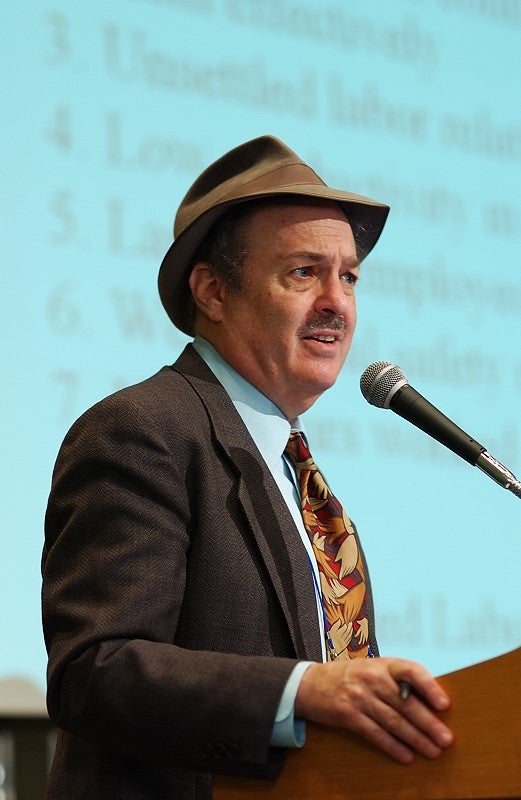
Professor Freeman is one of the leading labour economists in the world. He has made significant contributions to the economics of earnings inequality and education, discrimination, labour unions and global labor standards, the labour market in China, and the job market for scientists and engineers. His books include The Overeducated American, What Workers Want, with co-author Joel Rogers, and The Citizens Share: Reducing Inequality in the Twenty-First Century, with co- authors Joseph Blasi and Douglas Kruse.
Richard B. Freeman holds the Herbert Ascherman Chair in Economics at Harvard University. He directs the National Bureau of Economic Research / Sloan Science Engineering Workforce Projects, and is Co-Director of the Harvard Center for Green Buildings and Cities. He is a Fellow of the American Academy of Arts and Science. He received the Mincer Lifetime Achievement Prize from the Society of Labor Economics in 2006. In 2011 he was appointed Frances Perkins Fellow of the American Academy of Political and Social Science.
2015: The Case Against Patents with David Levine

The Case Against Patents
By Professor David Levine
from the European University Institute
April 1, 2015
Are patents essential for thriving innovation and prosperity? Professor David Levine challenges the common view that intellectual property is beneficial to society. Based on his research with coauthor Michele Boldrin, Professor Levine contends that there is no convincing evidence that patents serve to increase innovation and productivity. He argues that more patents can in fact inhibit innovation and may be damaging to both economic prosperity and the public good.
View "2015 Distinguished Lecture in Economics - Levine" on YouTube
About the 2015 distinguished lecturer
David K. Levine has made fundamental contributions to several subfields of economic theory, including those that border economics and psychology and economics and political science. His contributions cover the spectrum - from providing a better understanding of the formation of preferences, to the strategic behavior of individuals and groups, to the dynamic behavior of markets for goods and assets. His books include Is Behavioral Economics Doomed? and Against Intellectual Monopoly, co-authored with Michele Boldrin.
Professor Levine is currently Joint Chair for the Department of Economics and Robert Schuman Center for Advanced Study at the European University Institute. He is on leave as John H. Biggs Distinguished Professor of Economics at Washington University in St. Louis. Having served as President of the Society for the Advancement of Economic Theory and of the Society for Economic Dynamics, he is a fellow of the Econometric Society, an Economic Theory Fellow, a research associate of the National Bureau of Economic Research, and of the Federal Reserve Bank of St. Louis.
2014: Innovatoin and growth with financial and other frictions with Randall Wright

Innovation and growth with financial and other frictions

Presented by Professor Randall Wright
University of Wisconsin
March 26, 2014
Professor Randall Wright is one of the most influential macroeconomic theorists today. He has made significant contributions to our understanding of labour markets, business cycles, and monetary and financial economics. His research is characterized by its focus on the frictions inherent to economic exchange, which make money an essential feature of all modern economies.
His work addresses central issues about the role of money as a medium of exchange and it has illuminated the important ways in which a monetary economy differs from the hypothetical, frictionless models employed by economists in the past. Professor Wright's recent work addresses the implications of market frictions on economic activity to include broader aspects of the financial sector, and bridges an important theoretical divide between traditional macroeconomics and finance.
View "2014 Distinguished Lecture in Economics - Wright" on YouTube
More about Professor Wright
Randall Wright is the Ray Zemon Professor of Liquid Assets in the Department of Finance, Investment and Banking at the Wisconsin School of Business, and a Professor in the Department of Economics at the University of Wisconsin. He is a consultant for the Federal Reserve Banks of Minneapolis and Chicago, a Research Associate at the National Bureau of Economic Research, and a Fellow of the Econometric Society and of the Society for the Advancement of Economic Theory.