Thinking critically about urban sustainability in Singapore: A field course
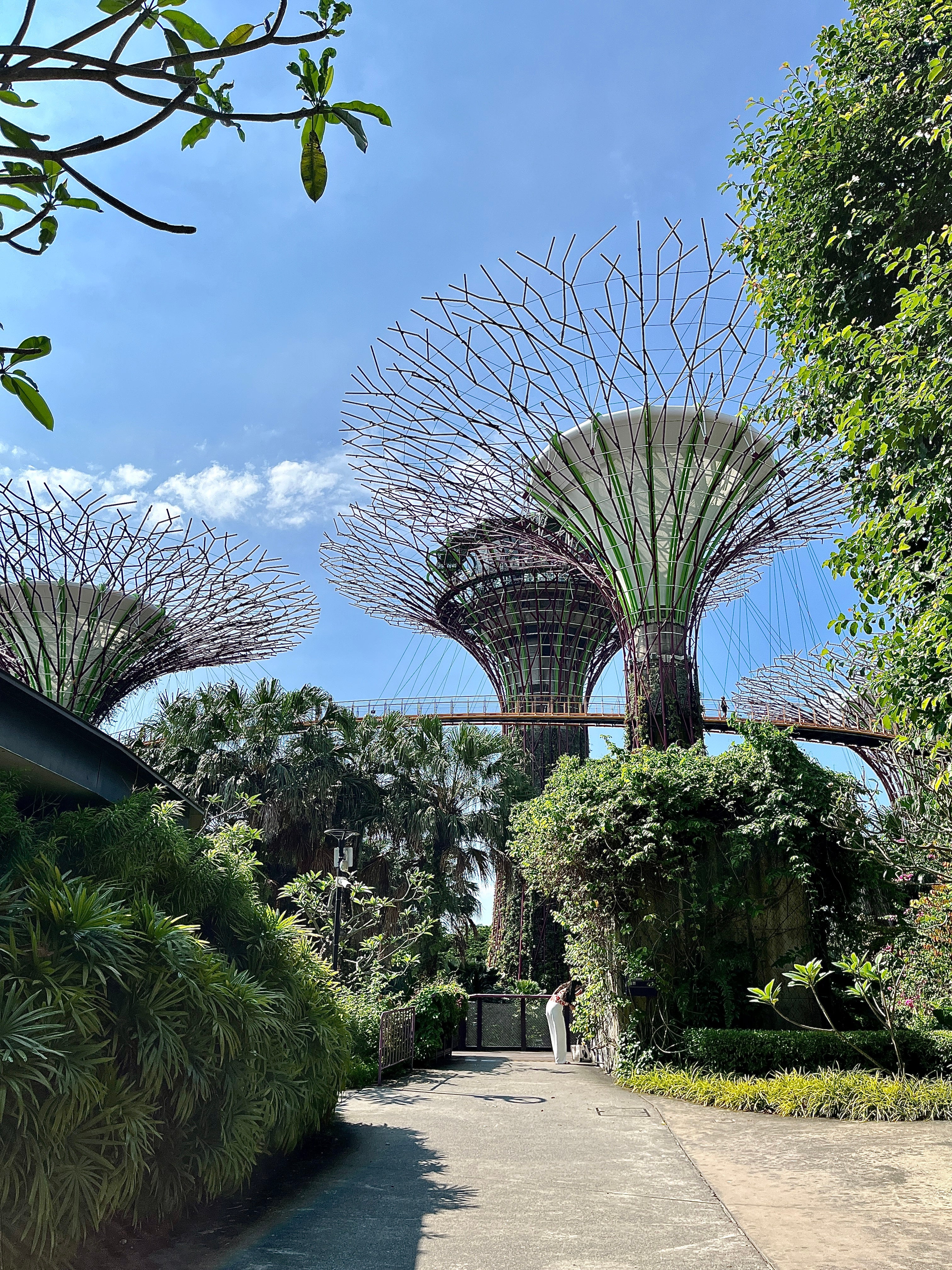
Gardens by the Bay, one of the premier urban parks in Singapore.

A student explores the plants at a vertical farm.
At the beginning of the Spring 2025 term, Dr. Peter Crank and I took 20 undergraduate students across the Pacific Ocean to visit Singapore on a ten-day field course. As a small city-state only 740km2 in size, Singapore is often described as one of the most sustainable cities in the world. It has been nicknamed a City in a Garden and is filled with urban parks and nature areas. Greening Singapore has been a key strategy since independence, with future goals expand green spaces and access even further. But sustainability in Singapore is about more than just green spaces. My research has identified that efforts to integrate water, energy, food, and other sustainability sectors together have allowed for effective policy implementation that produces sustainable outcomes.
The course (ENVS 476A) explores the complexity of urban sustainability through the case study of Singapore, as students engage their critical thinking skills to reflect on the environmental, social, and economic interconnections within the country. During our time there, we focused on five themes of urban sustainability: food sustainability, water systems, extreme heat and climate change, conservation, and green urbanism. This included guest lectures from Singapore-based scholars researching urban heat and smart cities, field trip visits to vertical farms and urban parks, and museum tours of national galleries all about sustainability and urban planning.
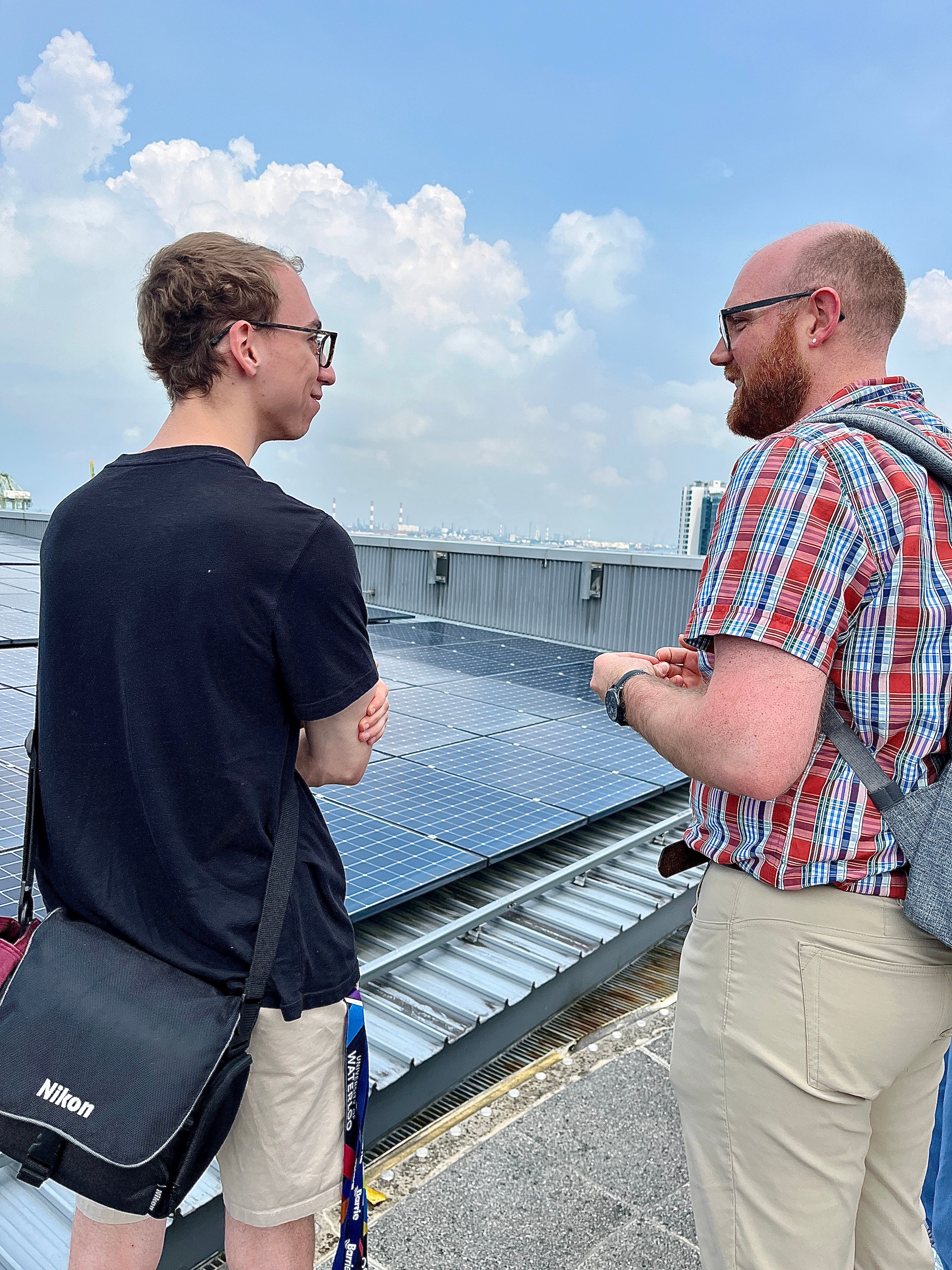
Dr. Peter Crank and a student discuss climate change on a solar rooftop.
As students arrived in Singapore, they were initially struck by the vertical greenery on buildings, the density of urban parks, the efficiency of the public transportation system, and the lack of litter on the ground. They initially praised Singapore’s efforts in doing so much for sustainability in such a small country and reflected on all the ways that Singapore felt more sustainable than Canada.
But as our time went on, they began to think more critically about sustainability in Singapore. Sure, the streets are clean and green, but at what cost? A common refrain was that Singapore felt more “planned” or “curated” than organic or natural. Students also noted that the more collectivist society of Singapore allowed for quicker government action but less opportunity for individualism. And they noted the ways that Canada is outperforming Singapore in sustainability, like in our composting efforts in Waterloo and in the high level of renewable energy in our electricity mix—two components missing from Singapore’s sustainability.
This field course also gave me the opportunity to reflect. On sustainability, yes, but more so on the opportunities to teach in hands-on learning environments. While the students were learning from me, I also got to learn from them as their fresh perspectives allowed for new insights on urban sustainability. I greatly enjoyed being stretched as an instructor and getting to share my favorite places and closest colleagues in Singapore with the students. And share my favorite foods.