Two SERS members contributing to newest IPCC report
Vanessa Schweizer and Andrew Trant are helping shape the next global scientific assessment that will guide world leaders
This article is taken from the Waterloo News story by the Waterloo Climate Institute and Faculty of Environment.
The world has converged on Belém, Brazil’s gateway to the Amazon, to sharpen climate commitments and move from promises to implementation. It’s all happening at the 30th Conference of the Parties (COP30) to the United Nations Framework Convention on Climate Change (UNFCCC).
But setting priorities like this isn't clear-cut. Leaders are faced with political and financial tradeoffs to consider, but must also weigh the multiple, feasible and effective options to reduce greenhouse gas emissions. This is where decision-makers turn to the most up-to-date scientific assessment on climate change available: the IPCC’s Sixth Assessment Report. It summarizes the state of knowledge on climate change, its widespread impacts and risks and details climate change mitigation and adaptation solutions.
With the latest report now two years old, the global scientific community is once again hard at work evaluating the current state of climate change and preparing to equip leaders with fresh evidence and tools. Two of those experts are from our School of Environment, Resources and Sustainability and are members of the Waterloo Climate Institute: Dr. Vanessa Schweizer and Dr. Andrew Trant. We caught up with them to learn their roles in producing the upcoming Seventh Assessment report, how it relates to their work at Waterloo and what keeps them motivated.
Dr. Vanessa Schweizer
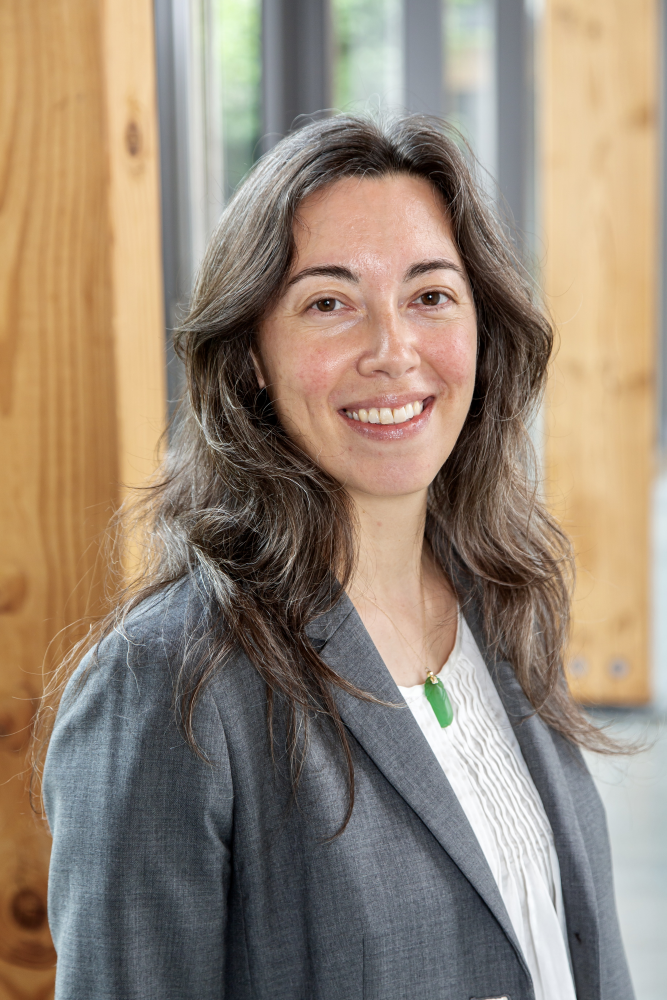
At Waterloo, Schweizer’s research focuses on collective decision-making in the context of climate change, exploring how communities and governments articulate aspirations, exercise foresight, and negotiate tradeoffs between pursuing different climate actions. Her work spans the practical implications of economic activities, including how the technologies we use and our behaviours — for example, eating more meat or imported foods — impact the climate. One of her core projects examines direct air capture. As an emerging technology that removes carbon dioxide from the air, it raises complex questions about energy use, cost, and planning for a net-zero future which she is exploring.
Schweizer is contributing her expertise to the upcoming IPCC report as part of Working Group III on Mitigation, focusing on the chapter Projected Futures in the Context of Sustainable Development and Climate Change. As a review editor, she’ll examine the connections between economic activities, sustainability, and climate impacts. “No single country has sustainable development totally figured out,” she explains. “For this chapter, I am looking at all the recent scientific studies on our economic activities, how sustainable they are, and how they relate to climate change.”
“This IPCC work connects directly to my research at Waterloo,” she says. “We’re all trying to decarbonize and stop greenhouse gas pollution as quickly as possible, but we also need to consider how to clean up the pollution that already exists. Technologies like direct air capture could play a role in shaping new sectors for what sustainable development looks like in the future, which is exactly the kind of real-world challenge I study.”
“To the extent that I love the natural world, I feel it’s important to take care of it. I care about having a peaceful, cooperative world and a healthy planet. The climate change problem is so big that countries will need to cooperate to achieve the best outcomes.”
Dr. Andrew Trant

Trant’s research examines how climate change and human activity interact to shape ecosystems over time. His fieldwork spans Nunatsiavut in northern Labrador and the Heiltsuk and Wuikinuxv Territories in the Great Bear Rainforest on British Columbia’s Central Coast. Through close collaboration with Indigenous communities, his work explores how ecosystems are adapting to environmental change and how traditional knowledge can inform more resilient, place-based approaches to biodiversity conservation.
Trant is lending his expertise in biodiversity to the latest IPCC report as part of Working Group II on Impacts and Adaptations. As a review editor on the chapter Ocean, Coastal and Cryospheric Biodiversity Ecosystems and their Services, he will focus specifically on assessing the accuracy of indicators, methods and methodologies used to measure climate impacts and responses.
“I really do think that it is the most important document that we have on this planet. I think that the solution we are working towards runs through this document and it's critical for aiding governance on this issue at a global scale.”
“What fuels my commitment to working on bigger projects like the IPCC are the people, friends, colleagues, and collaborators, I’ve had over the years and continue to work with today. They’re the reason I love what I do.”