



Welcome to the Geographies of Health in Place (GoHelP) lab, led by Susan J. Elliott, PhD, in the Department of Geography and Environmental Management at the University of Waterloo.
News

2026 International Medical Geography Symposium (IMGS)
GoHelP lab members participated in the 2026 International Medical Geography Symposium (IMGS), Geographies of Wellbeing: Environments, Transitions, and the Futures of Societal Wellbeing, held at Toronto Metropolitan University. The symposium brought together researchers and practitioners to explore how environmental, social, and spatial transitions shape health and wellbeing. GoHelP members shared their research and engaged in interdisciplinary conversations on equity, environmental change, and the future of health geography.
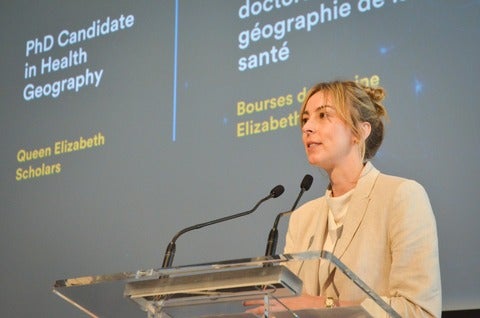
Alexa Bennett Featured as Keynote Speaker at Universities Canada Event
Alexa Bennett delivered the keynote address at Scholar to Scholar: Advancing Knowledge, Impact and Community, a Universities Canada event celebrating the achievements and impact of scholarship recipients, alumni, and academic partners. As a Flight 302 Legacy Award recipient and Queen Elizabeth Scholars instructor, Alexa shared insights on the value of international scholarship programs in advancing research, collaboration, and global impact.
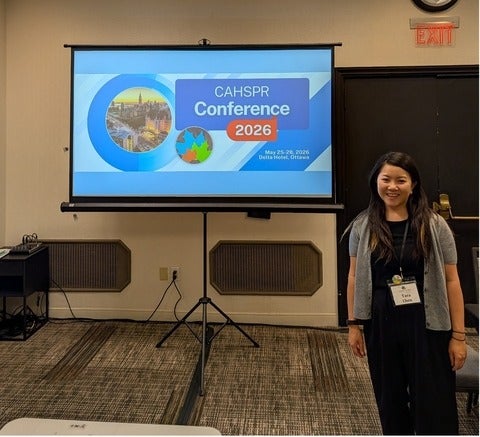
Tara Chen at the Canadian Association for Health Services and Policy Research
GoHelP Lab member Tara Chen, PhD Candidate, presented her doctoral research at the Canadian Association for Health Services and Policy Research (CAHSPR) conference in May 2026.
Blog

Cynthia Musah Awarded SSHRC Canada Graduate Research Scholarship – Doctoral for Environment-Health Research
Cynthia is a doctoral researcher whose work explores how environmental degradation and water insecurity linked to illegal small-scale gold mining (galamsey) affect women's psychosocial health and wellbeing in Ghana. Drawing on community-engaged and participatory research approaches, her work centres women's experiences and perspectives to better understand the health and social impacts of the galamsey crisis. Supported by the SSHRC Canada Graduate Research Scholarship–Doctoral, her research advances evidence that informs community-led responses and promotes environmental justice and gender equity. Read more about her journey and research here.

Yuki Yeung Awarded SSHRC Canada Graduate Research Scholarship – Doctoral for Climate-Health Research
Yuki is a doctoral researcher whose work focuses on climate change as a pressing public health challenge, shaped by both lived experience and applied research on environmental health and climate adaptation. She has contributed to projects on extreme heat, disaster resilience, and community-informed climate-health policy in Canada, building strong links between research and practice. Supported by the SSHRC Canada Graduate Research Scholarship – Doctoral, her work continues to advance evidence-and-place-informed approaches to strengthening climate resilience and health equity, read more about her journey and research here.

Taylor's experience at LUPUS 2025
Taylor is an undergraduate Science and Business student at the University of Waterloo. During her co-op term, she is working as a research assistant in Dr. Elliott’s GoHelP Lab on the GAPS project. Learn more about her experience and the opportunity she had to present her research poster at LUPUS 2025.