Congratulations to our six outstanding teams who have advanced to the Technovation Global 2026 Semi-Finals! This is an incredible achievement and a moment of pride for the entire Waterloo Chapter community.
On June 5th, 2026, Technovation Global officially announced the semi-finalists for the 2026 Challenge, and we were thrilled to see six Waterloo Chapter teams on that list! Building on the earlier announcement of four Beginner & Junior teams, we are especially excited to celebrate the addition of two Senior Division teams, Power Puck Girls and Team Spade, who have also progressed to the next stage of the competition.
These teams have demonstrated exceptional creativity, technical skill, and dedication in developing solutions that tackle real-world challenges. Their hard work and passion continue to showcase the strength of innovation within our community.
You can view the projects below and see firsthand the inspiring ideas these teams have brought to life.
What Comes Next?
The journey isn’t over yet! The semi-finalists’ online project submissions will now move into another round of judging, taking place June 5–15. This stage will determine which teams advance even further in the competition.
The next major milestone will be the announcement of Finalists and Regional Winners during the Virtual Global Celebration on July 2nd, so be sure to save the date!
This exciting event will be live-streamed online, bringing together participants, mentors, and supporters from around the world to celebrate the achievements of young innovators. In previous years, the celebration has been hosted on YouTube starting at 10:00 AM ET. Technovation Global will share more details about this year’s event soon.
Once again, congratulations to all six teams on this remarkable accomplishment. We are proud of everything you’ve achieved so far and can’t wait to cheer you on in the next round!
Beginner Division Semi-Finalists
Welcome Care by Dynamic Duo :)
Team Members:
Shanvi K & Havya A

About:
Imagine starting a new life in Canada. You're scared, tired, and don’t know where to find proper healthcare. Every year, more than 380,000 permanent residents move to Canada, and about 1 in 5 do not speak English or French. Because of language barriers, many newcomers struggle to communicate with doctors. This makes it hard to explain symptoms or understand medical advice. It can also be difficult to find clinics or doctors who speak their language. Because of this, some newcomers may get misdiagnosed. That’s why we created WelcomeCare, an app that helps immigrants find doctors who speak their language!
Ethical Considerations:
To make sure our app was safe and had a positive impact, we focused on helping newcomers access healthcare more easily. Many immigrants face language barriers when speaking with doctors, which can lead to confusion or misdiagnosis. Our app helps users find clinics and doctors who speak their language so they can communicate clearly and feel comfortable. We prioritized privacy by not collecting or storing personal information. This protects users’ data and allows people to use the app without worrying about their information being shared. We also made the app inclusive and respectful. It supports multiple languages and has simple navigation, so people from different backgrounds can understand and use it. To reduce environmental impact, our app is fully digital, which means it does not require paper or materials. We also asked mentors and community members for feedback to make sure our idea was helpful and safe for users.
Learning Journey:
Throughout this Technovation season, our team learned things and faced challenges. Our biggest challenge was choosing the right idea. At first, we wanted to continue the mental health app we made last year, but after a week, we decided to try something new. Then we tried a carpooling app idea, but it didn’t feel right. We were worried we wouldn’t find an idea in time, but after brainstorming and researching problems, we decided to create a medical app to help newcomers find clinics and doctors speaking their language. To make sure our information was reliable, we used trusted sources such as government websites and reports. We learned that over 380,000 residents come to Canada a year, and 1 in 5 immigrants face language barriers. We created prototypes and talked with our mentor, who helped us improve features. We thought of coding with Thunkable, but after research and mentor advice, we decided to use MIT App Inventor. We also tested the prototype with mentors and asked for feedback. Users said it would be easier to see what languages doctors speak, so we simplified the design and improved layout. Technovation taught us that growth comes from the journey and challenges we overcome.
Pitch Video
Technical Video
PLENTYOFFOOD by Input/Output
Team Members:
Quynh Ly C & Vanya G

About:
PLENTYOFFOOD is a free food-providing app designed for those looking to donate or receive food. Functioning like Facebook Marketplace, you set up your profile as Donor or Client. The Donor provides food to the Client by dropping off the food at a Hot-n’-Cold box. The Client then goes to the nearest Hot n’ Cold box, and enters the code they were given into the padlock. Hot-n’-Cold boxes are a pair of boxes that you will find in every neighbourhood. For security purposes, there is a padlock on each box. Join PLENTYOFFOOD to combat hunger and food waste! Easy as pie!
Ethical Considerations:
Our app is safe for everyone because you can choose to go anonymous or use a pseudonym. By using our app, you never have to meet anyone in person. To pick up food, you simple travel to the Hot n' Cold box. Your identity is completely safe! Our app doesn't hurt the planet, in fact, it helps the planet, as it eliminates food waste. Our app is sure that we don't harm the environment simply because we don't support hunger, littering, or food wastage. Our vision for the future is for people to use our app without worrying about safety or the environment.
Learning Journey:
Our experience in Technovation Girls Waterloo has been amazing, despite some challenges along the way. We learned advanced block coding to create an app using MIT app inventor to help our community. During the competition we overcame barriers such as important extracurricular activities that made it harder to work on our app simultaneously. We tried to prevent the use of AI, but sometimes it was necessary for our code. We enjoyed every in-person session. Each time, we learned something new to implement into either our lives or our app. For our facts, we made sure to use legitimate sites, for instance, the official Waterloo Food Bank website and Too Good To Go’s website, which seemed valid and professional. We had some fun along the way, but here we are, finally finished our project. We used our judgement, along with checking multiple websites and trustworthy sources to ensure that our data is plausible. We were guided properly by our mentor (QL’s aunt), she encouraged us to put our best foot forward during these past few months. Overall, it was an amazing experience that taught us persistence, passion and other skills. We are so grateful to participate in this competition. Thank you.
Pitch Video
Technical Video
Junior Division Semi-Finalists
P.D. Pathways by Aanya and Noella
Team Members:
Aanya M & Noella Z

About:
Parkinson's disease is a common progressive neurodegenerative disease that affects movement, causing tremors, stiffness, slowness (bradykinesia), and balance issues. Currently, there is no cure, only physiotherapy exercises that can alleviate symptoms. Over 10 million people struggle with Parkinson's. We built an app with machine learning-powered augmented reality games designed for Parkinson's patients. By gamifying physiotherapy exercises, Parkinson's patients will become more consistent. Adapting to the needs of Parkinson's patients, we built and trained our own neural network model to identify leg poses. Our app targets the UN Sustainable Development Goal #3: Good Health and Well-being.
Ethical Considerations:
We considered ethics in our app by making user privacy a priority in our app’s design. The app uses augmented reality and the device camera to track movement. The camera is only used to detect body movements in real time and no video footage. Instead, the app only saves the score and movement results generated by the game. This reduces privacy risks while still allowing users to track their progress over time. By limiting data collection, we have an app that is safe and respects user privacy.
Learning Journey:
A non-technical challenge that we faced was during user testing. When contacting different long-term care homes and Parkinson's disease specialists, we realized that testing our app with Parkinson's disease patients in our area is extremely hard as they are a very vulnerable demographic. This led to other ways of testing our app like through family members and professors who do work in this area. This allowed us to still gain valuable feedback to help improve our app even though our fist plan didn't work.
Sources:
When gathering information for our project, we made sure that the information was legitimate by using the 5 W Question framework that is recommended by the University of Waterloo to determine if the information was right for us. The 5 W Questions are:
Who is the author?
What is the purpose of the content?
Where is the content from?
Why does the source exist?
How does this source compare to others?
We used this framework when reflecting on the sources that we were using for this project to help ensure the information is accurate.
Pitch Video
Technical Video
Community Care Loop by The Stellar Squad
Team Members:
Kavira M R G, Madeline R, Lydia R-Y, & Zara A

About:
Community Care Loop is a privacy-first, community-based elder safety app for seniors living alone. A low-cost PIR motion sensor captures movement data and sends it to the app, without asking elders to manage technology. The app allows a Family Admin to set personalized monitoring windows based on the elder’s routine at home. If no motion is detected during an expected window, the app triggers a configured alert sequence to trusted volunteer neighbors and family members. By placing volunteer neighbors at the heart of the care circle, Community Care Loop creates a compassionate, and community-driven safety net for isolated older adults.
Ethical Considerations:
We considered ethics by making privacy, dignity, consent, and safety central to our design. Instead of cameras or invasive monitoring, Community Care Loop uses a low-cost PIR motion sensor that notices activity without capturing images or conversations. A Family Admin can set alert windows, care-circle members, and escalation steps based on the elder’s routine and preferences, so the system remains personalized and respectful. We also limited alerts to sharing only the minimum needed information. To reduce harm from false alarms, we designed personalized alert windows instead of rigid monitoring rules. Most importantly, our app supports human connection by linking trusted volunteer neighbors and family members, rather than replacing care with technology.
Learning Journey:
Our journey taught us that trust comes before technology. Many seniors were initially uncomfortable sharing personal information, so we spent time in trusted faith-based gathering places, including churches and community centres, to build familiarity before asking for feedback. We learned that many elders were unwilling to use complex technology, which led us to use passive PIR motion sensing and introduce a Family Admin role to handle app installation, setup, and alert-window configuration. We also saw that some seniors living alone may lack daily support, which inspired our volunteer-neighbor model.We also did a monitoring-station with actual components to demonstrate to elders.
Sources:
Our team decided information was legitimate by starting with a carefully designed survey that helped us understand the real need. We asked seniors about age, living situation, comfort with apps and electronic devices, willingness to involve volunteer neighbors, community engagement, and whether help would be available during a fall or emergency. These answers showed us that many seniors were not comfortable using complex technology and that some lacked immediate support. We then strengthened those findings by demonstrating our prototype to seniors, documenting feedback with photos, presenting the idea to Dr. Khadija, and reviewing existing medical alert systems (e.g Life-Assurance-Canada).
Technical Video
Senior Division Semi-Finalists
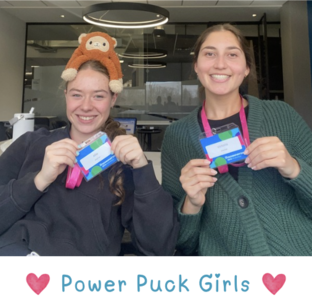
CareCompass by Power Puck Girls
Team Members:
Allie H & Victoria S
About:
After spending hours in unfamiliar emergency rooms and being redirected to other facilities, we saw how inefficient and stressful accessing care can be. Our project aims to simplify this process by helping users quickly determine where to go by providing nearby locations, wait times and services provided. Ultimately, it empowers users to make faster, more confident healthcare decisions when it matters most.
Ethical Considerations:
We prioritized ethics by ensuring user privacy, secure data use, and accurate information. The app does not store or track user injury data nor does it provide medical diagnoses. Instead it completes its sole use of guiding users toward appropriate care options. We also emphasize equitable access by designing the platform to be inclusive and accessible to all individuals, ensuring that everyone can receive suitable, appropriate and timely care regardless of their background or circumstances.
Learning Journey:
Our team started with little experience in Swift, C++, or business planning, which was a major challenge. We overcame this by taking online courses, seeking guidance from experienced programmers, and learning from professionals familiar with hospital systems. Driving three hours to each Technovation meeting also helped us grow closer as a team. We realized not everyone needed to master every skill. Instead, one member focused on coding while another focused on the business side. Strong communication and collaboration were key. This experience taught us to learn quickly, divide responsibilities effectively, and work as a cohesive team despite initial knowledge gaps.
Sources:
Our team ensured our information was legitimate by relying on credible and authoritative sources. We used official Ontario government health data and verified hospital capabilities by directly contacting hospitals through calls and emails. We prioritized primary sources whenever possible and cross-checked information to confirm accuracy. Additionally, we were careful not to make medical diagnoses ourselves, instead focusing on providing general guidance based on verified data. This approach helped us maintain accuracy, reliability, and ethical responsibility throughout our project.
Pitch Video
Technical Video
Speakly by Team Spade
Team Members:
Lakshmi S & Chetna P

About:
Speakly is an AI-powered personal public speaking coach designed for teens looking to improve their speaking skills. With a click of a button, students can record their response to a given unique prompt and Speakly instantly scans the voice for filler words, tone, and pacing. It then provides a grade and personalized tips to improve for next time. With daily reminder notifications and contacts for real-time coaches, users will be able to track their daily progress building confidence and skills for the real the world. Every voice deserves to be heard.
Ethical Considerations:
In developing Speakly, safety was our number one priority. Since the target market for this app is mainly teenagers and minors, all voice and video data is secured and never shared with third party. We also kept in mind that our market is unique and diverse so we ensured that our AI provides unbiased feedback regardless of dialects, accents, or speech patterns. Additionally, we recognized that public speaking anxiety is a very real issue prominent in this generation. As a result, we ensured that the feedback provided is always fair and constructive and never discouraging. Most importantly, Speakly was built to encourage confidence in one's ability to speak out and we believe that every student deserves the tools to communicate.
Learning Journey:
This year's Technovation journey has certainly been a unique one. One major challenge we faced was identifying a meaningful problem. Initially, our ideas were broad and didn’t connect to us personally. Eventually, we focused on a seemingly small day-to-day issue that affects many: communication confidence. While building Speakly, we struggled quite a bit with the integration of AI in our feedback. Initally, we had planned to train an AI model to detect filler words in speech. However, due to time constraints, we became resourceful and utlized the chatbot that was available within MIT App Inventor.
Sources:
We ensured our information was legitimate by gathering primary data through surveys and conversations with students in our target audience. We asked our peers and individuals of different age groups, including middle and high school students. We also talked to teachers on their perspective of this problem. We designed questions to understand their challenges with communication and confidence, then analyzed patterns in their responses. We also cross-checked these findings with credible online acdemic sources to confirm accuracy. By combining user feedback with reliable research, we made sure our decisions for Speakly were based on both lived experiences and trustworthy information.