On Saturday, May 2nd, students exhibited technology at the University of Waterloo that tackled real-world problems, from helping Parkinson’s disease patients through augmented reality to creating an emergency alert system for seniors living alone.
These weren’t university students, but elementary and high school students, part of the Technovation Girls Waterloo’s Regional Pitch Event (RPE).
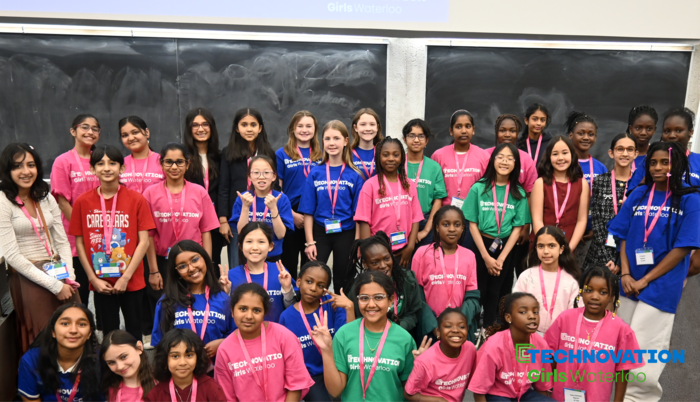
At the RPE, participants showcased their months-long project, where they developed an app to tackle a community-facing problem.
With more than 140 chapters worldwide, Technovation Girls aims to empower young women to become technology and business leaders. In 2018, Professor Jo Atlee, the director of the University of Waterloo’s Women in Computer Science(WiCS), launched the Waterloo Chapter to inspire girls and gender diverse youth to explore computing. Over the past two years, she worked closely with Samantha Jewett, the WiCS Outreach Coordinator and the Waterloo Chapter Ambassador, to recruit more participants from Southwestern Ontario.
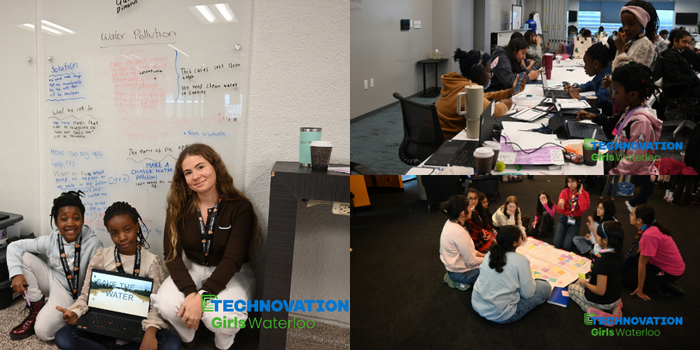
From creating pitches to testing mobile apps, the Technovation participants put their innovative minds to the test.
In this free four-month program, participants ages 8 to 18 work in teams to develop an app that tackles a community-facing problem related to the United Nations Sustainable Development Goals. They gain tech-entrepreneurship skills, including coding, user testing, and marketing. However, the organizers believe the real value is the sense of community.
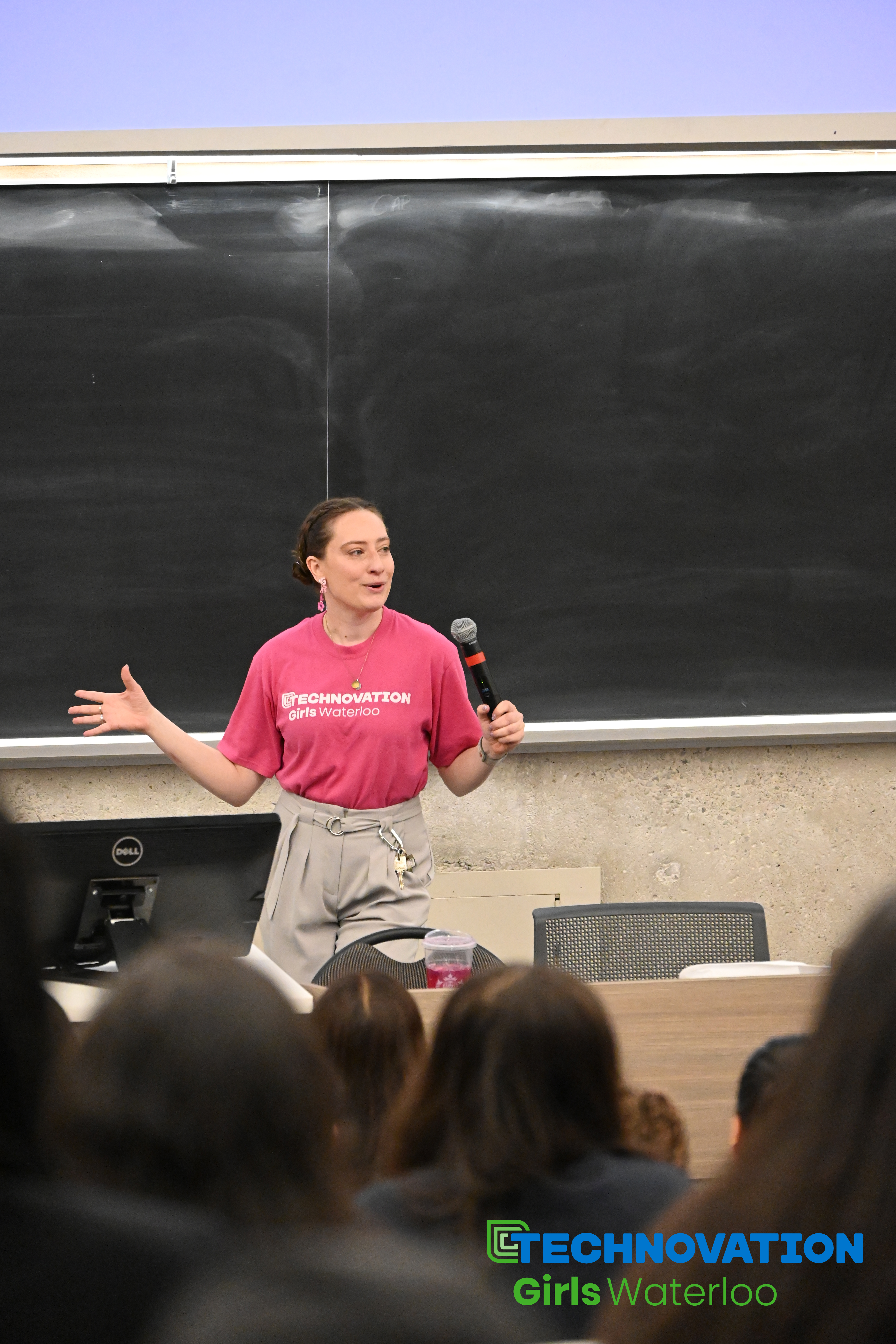
“As someone who studied physics in university, where like 20% of students were women, I definitely understand what it’s like to be underrepresented,” says Samanatha. “I’m a girly girl, but I felt like I couldn’t be myself in the classroom. I wished I had a community like Technovation when I was younger.”
By harnessing the university’s entrepreneurship culture and the city’s tech scene, the Waterloo Chapter recruited resources and volunteer coaches. They hosted weekly online workshops and monthly in-person working sessions at local tech companies, such as SAP and GHD. Altogether, the teams received support at every step of their project.
This year, the Waterloo Chapter’s RPE garnered its largest turnout, with 145 attendees and more than 40 teams competing. Each division won awards, the highest being the grand prize. The grand-prize finalists, except the senior division, will advance to the Technovation Semi-Global finals.
“The overall quality of work was exceptionally high, with many teams going beyond expectations by incorporating machine learning, advanced technologies, and even sophisticated hardware,” says judge and Waterloo PhD candidate, Enamul Haque. “I was impressed by their depth of research, creativity, and real-world impact. It made the judging process genuinely challenging, as so many teams were deserving of top recognition.”
Read below to learn more about the grand prize projects.
Beginners (ages 8-12)
PLENTYOFFOOD
Vanya and Quynh Ly are combating food insecurity and waste with their app, PLENTYOFFOOD. It allows users to share perishable food that can’t be accepted by food banks, such as fruits or fresh meals, with their community
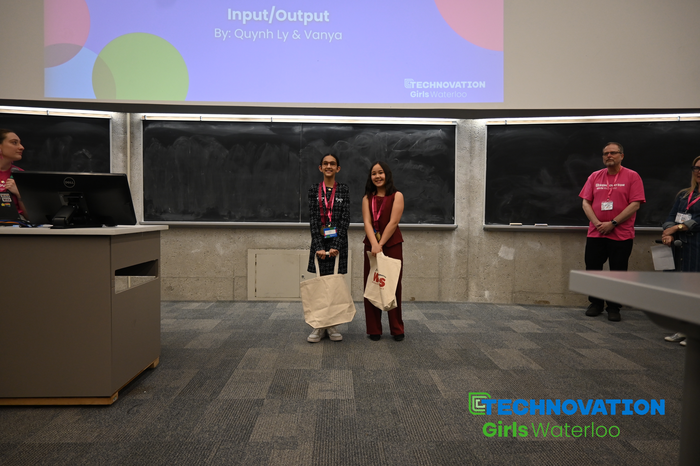
Similar to a platform like Facebook Marketplace, users can create listings for food they want to donate and indicate whether it contains any allergens. If someone express interest, the donor can drop off their food at one of PLENTYOFFOOD’s hot-and-cold boxes.
What impressed the judges was how the team considered safety concerns. Each hot-and-cold box is protected with a padlock, and recipients are provided with a code to unlock it. Judges also enjoyed the team's dedication to research and user feedback.
WelcomeCare
Havya and Shanvi highlighted how many immigrants face language barriers in accessing Canada’s healthcare system. Oftentimes, they struggle with explaining their symptoms or understanding medical advice, leading to miscommunication or worse, misdiagnosis.
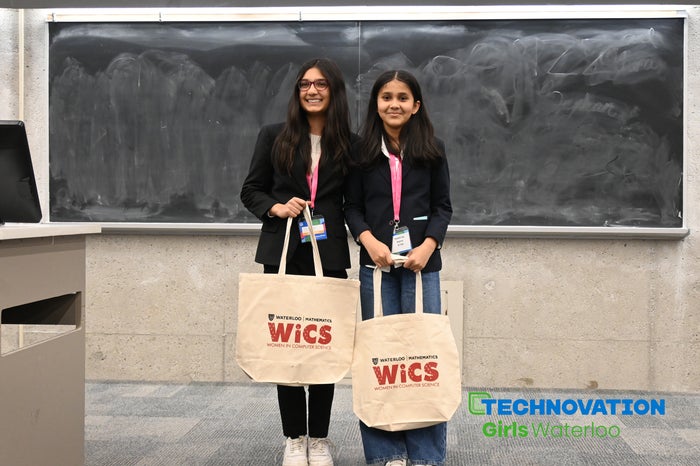
Fortunately, they created WelcomeCare, an app that lists nearby doctors and their respective languages — making healthcare more accessible and personalized.
The duo consulted with the newcomer community and identified five problems, which guided the design of their app. Their level of research and community engagement was recognized by the judges.
Juniors (ages 13-15)
Community Care Loop
During their pitch, Kavria recounted how her elderly neighbour gave her phone number to the neighbourhood in case of an emergency, since she lives alone. Even though she took all the right precautions, she once fell and wasn’t found for days because she couldn’t reach for her phone.
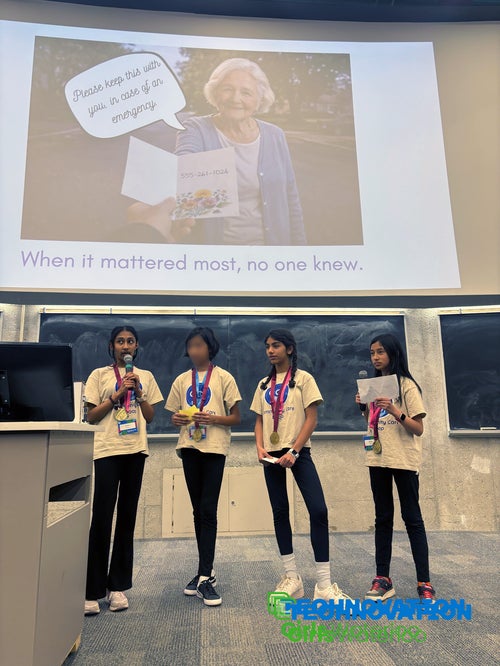
This situation inspired Kavira and her teammates, Lydia, Madeline and Zara, to tackle this problem through community support and technology. They created a monitoring system that leverages motion sensors that analyzes a senior’s routine and send motion events to the app. If the app senses any unusual activity, it will alert a volunteer to check up on the homeowner.
The judges commended the team for their prototype, especially its sophisticated hardware, and real-world impact.
P.D. Pathways
Over 10 million people struggle with Parkinson’s disease, a progressive brain disorder that affects movements, causing poor balance and stiffness. With no cure, people with Parkinson’s disease must mitigate their symptoms through consistent at-home physiotherapy exercises. However, these exercises can be boring and repetitive, leading to demotivation.
Aanya and Noella teamed up to convert physiotherapy exercises into augmented reality games, inspired by Subway Surfers and Flappy Bird. Their app uses TensorFlow, a machine learning model, that can estimate poses and track movement. Now, physiotherapy can feel less like a chore and more like an adventure.
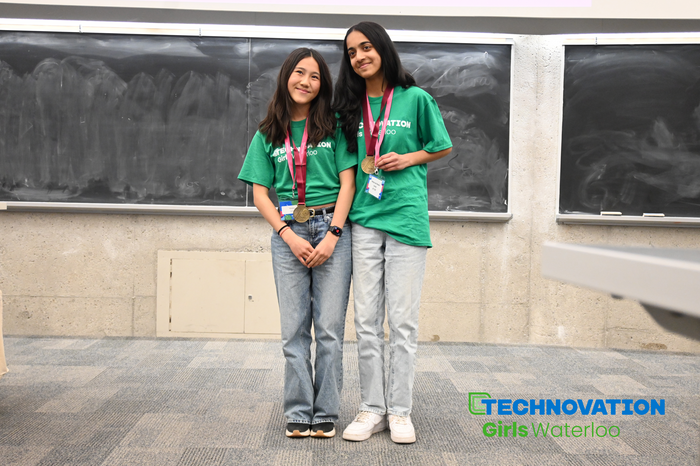
The team was praised for their “technically strong” product and in-depth research, as they consulted professors from the University of Waterloo and Northern Illinois University to understand the experiences of Parkinson’s disease.
Seniors (ages 16-18)
Grand Prize: CareSpace
Allie and Victoria recounted how their teammate sprained her ankle during a hockey game. Injured in an unfamiliar city, she went to several hospitals but kept on leaving because they didn’t provide X-ray services. Inspired, the duo created CareSpace to make healthcare access faster and easier.
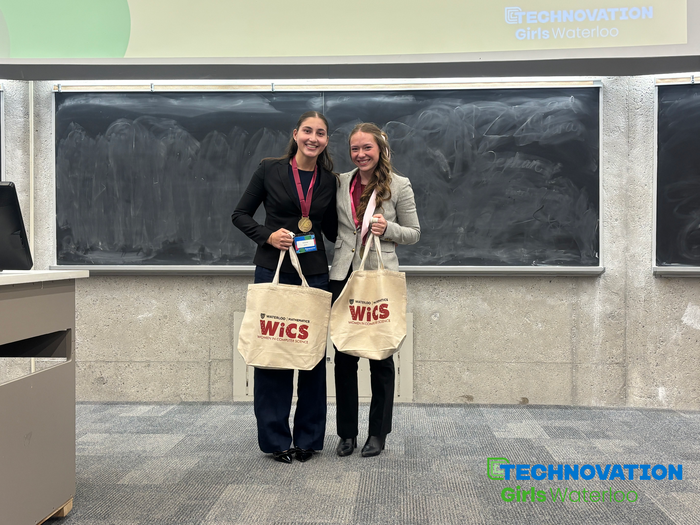
Under the app’s map view, users can find nearby hospitals filtered by wait times, available services and facility issues. This all-in-one approach can help Canadians find the right care at the right time and right place.
Stepping into the programming landscape from a robotics background, Allie faced many challenges like learning how to code and debug. This hard work paid off as Allie and Victoria won the Grand Prize.
The winners for the Best Pitch and User Design awards can be found on the WiCS website.