Robyns’s Aster, aster à longues feuilles
Symphyotrichum robynsianum (J. Rousseau) Brouillet & Labrecque is a northern species occurring in wet or damp, open, sandy, gravelly, or rocky grounds, often calcareous, cracks in rocky streams or lake shores, limestone alvars, seasonally wet glades and swales, jackpine outwash plains in Québec, northern Ontario, eastern Manitoba, northern Michigan, central and northern Wisconsin, and northeastern Minnesota (Brouillet et al. 2006; FNA). Ray florets are usually dark blue-violet, rarely white. The name Aster longifolius Lam. has been misapplied to this taxon. The species has been reported to include decaploids 2n=80 and and octoploid 2n=64. The limits of its northern range need further study. The species is considered to be related closely related to Sy. novi-belgii.
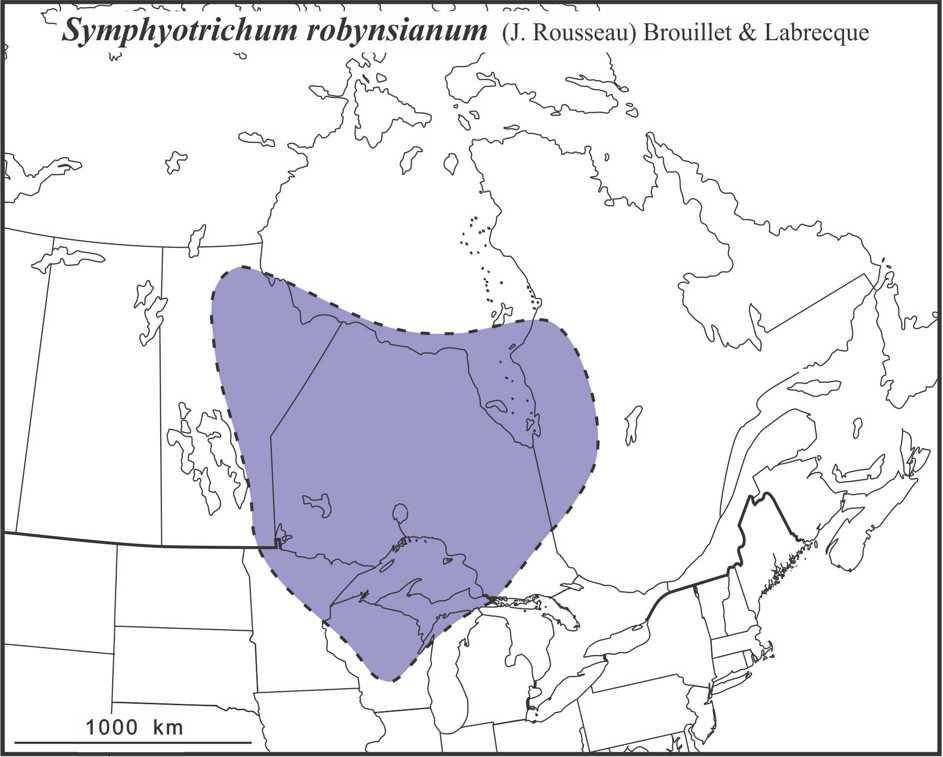
Brouillet, L., J.C. Semple, G.A. Allen, K. Chambers and S. Sundburg. 2006. Symphyotrichum Nees. pp. 465-539. In Flora North America Editorial Committee, eds. Flora of North America. Vol. 20. Asteraceae, Part 2. Astereae and Senecioneae. Oxford University Press, New York.
Last revised 13 May 2025 by J.C. Semple
© 2025 J.C. Semple, including all photographs unless otherwise indicated
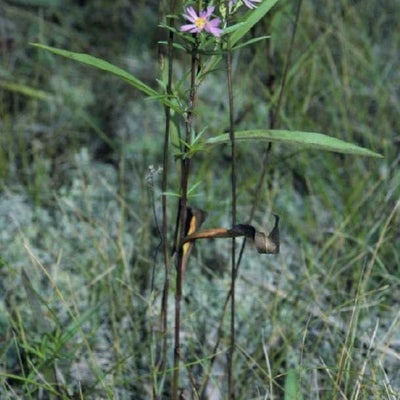
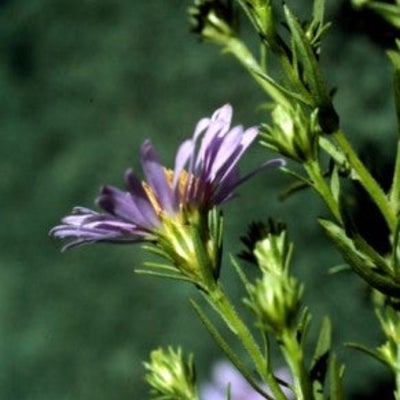
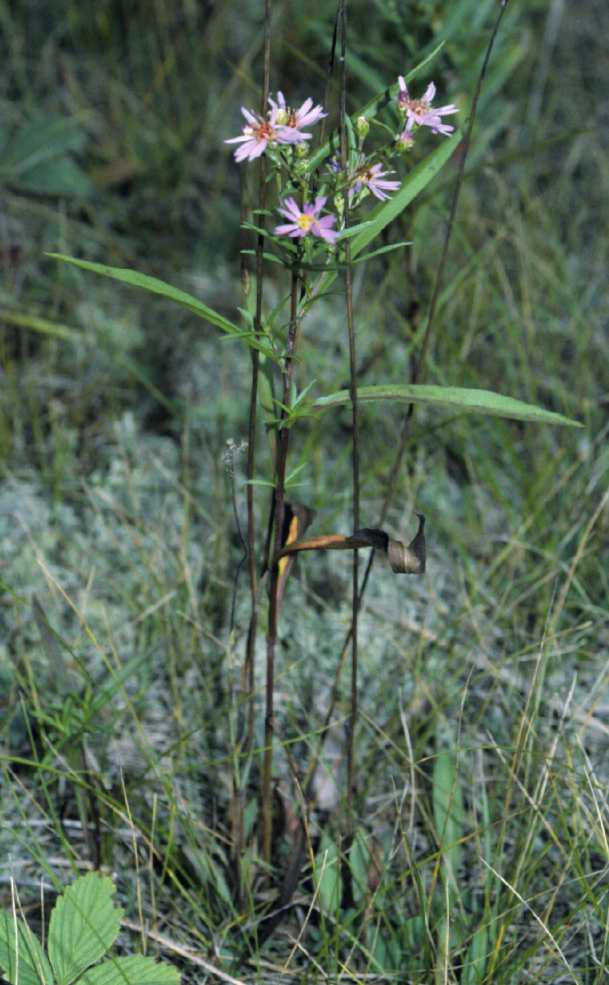
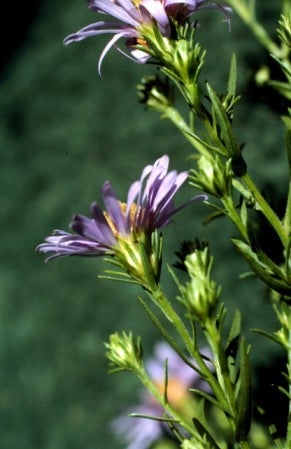
1-2. Symphyotrichum robynsianum. 1. Habit, Semple 6774, Pointe aux Pins, Algoma Dist., Ontario. 2. Involucre and ray florets, Semple & Brouillet 6937, Sauk Co., Wisconsin.