Western Mountain Aster
Symphyotrichum spathulatum (Lindley) G.L. Nesom (Brouillet et al. 2006; FNA) occurs in the mountains from southern Northwest Territories, Canada south to northern New Mexico and west to southern California. The species is distinguished from other species in sect. Foliacei by having basal leaves that are persistent to flowering, stem cauline leaves that are narrowly elliptic to linear, inflorescence arrays that are usually few-branched, bracts subtending heads 0–3+ and fruits that are hairy, 2.5–3.5 mm.
The species includes diploids (2n=16), tetraploids, (2n=32), hexaploids (2n=48), and octoploids (2n=64) and some interploidy level hybrids.
Symphyotrichum spathulatum is a variable species and hybridizes with S. eatonii, S. foliaceum, and S. hendersonii.
Three varieties have been recognized:
1 Leaves linear var. yosemitanum (A. Gray) G.L. Nesom
1 Leaves narrowly elliptic to oblanceolate
2 Plants 40–80 cm; heads usually 10–50 var. intermedium (A. Gray) G.. Nesom
2 Plants 20–50(–60) cm; head usually 3–10 var. spathulatum
Brouillet, L., J.C. Semple, G.A. Allen, K. Chambers and S. Sundburg. 2006. Symphyotrichum Nees. pp. 465-539. In Flora North America Editorial Committee, eds. Flora of North America. Vol. 20. Asteraceae, Part 2. Astereae and Senecioneae. Oxford University Press, New York.
Last revised 14 May 2025 by J.C. Semple
© 2025 J.C. Semple, including all photographs unless otherwise indicated


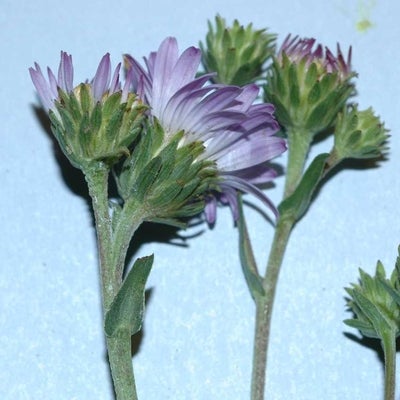

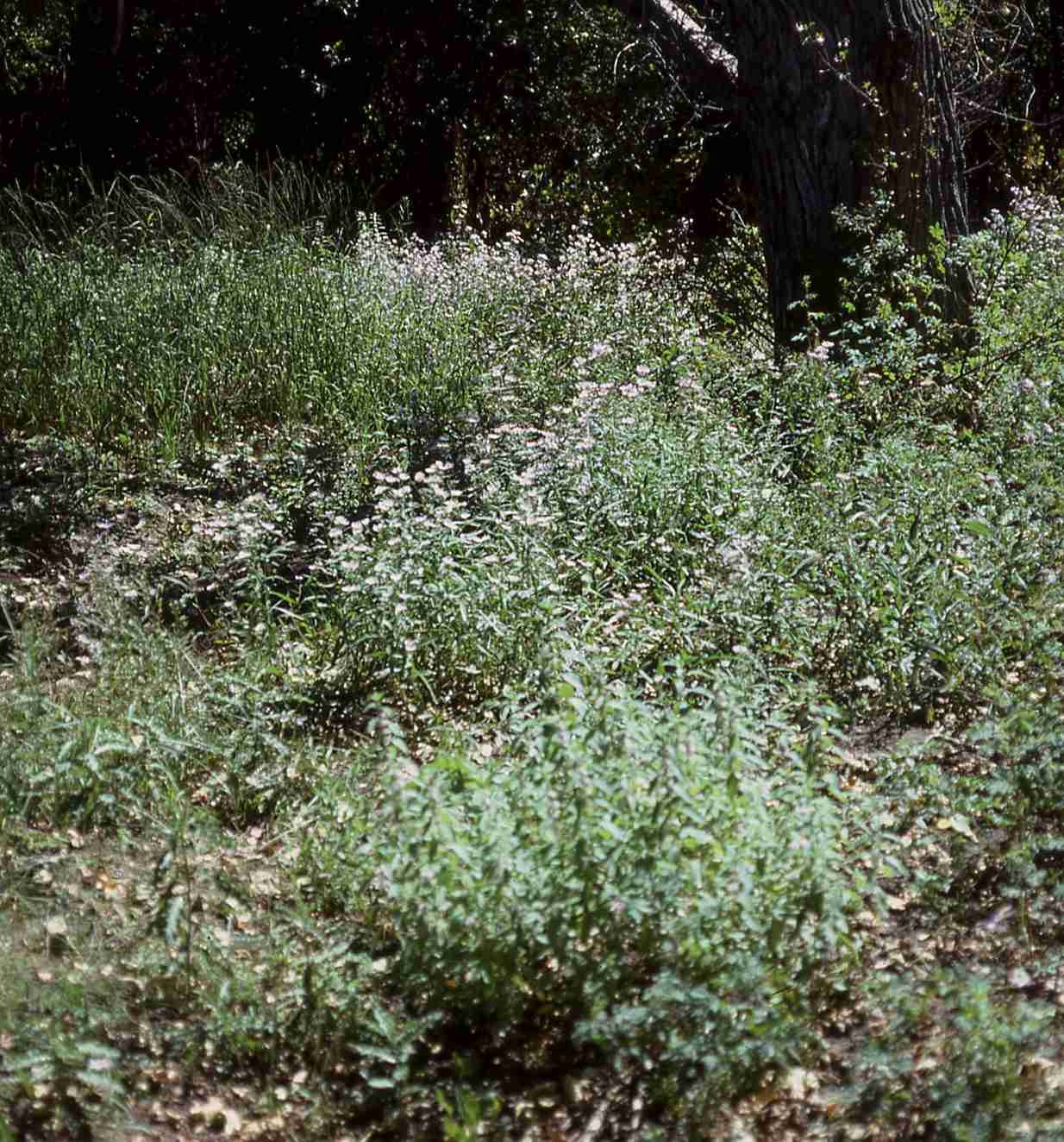
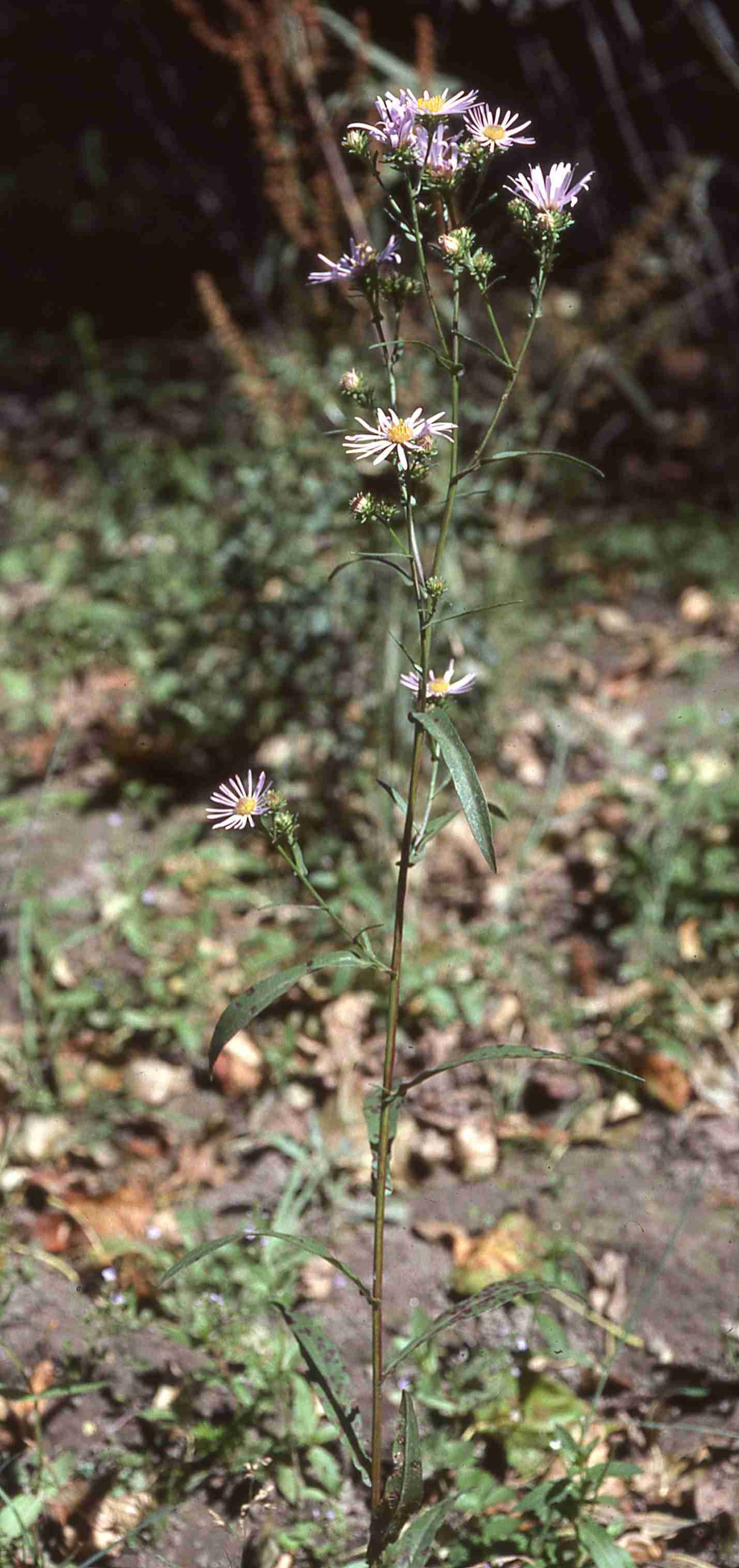
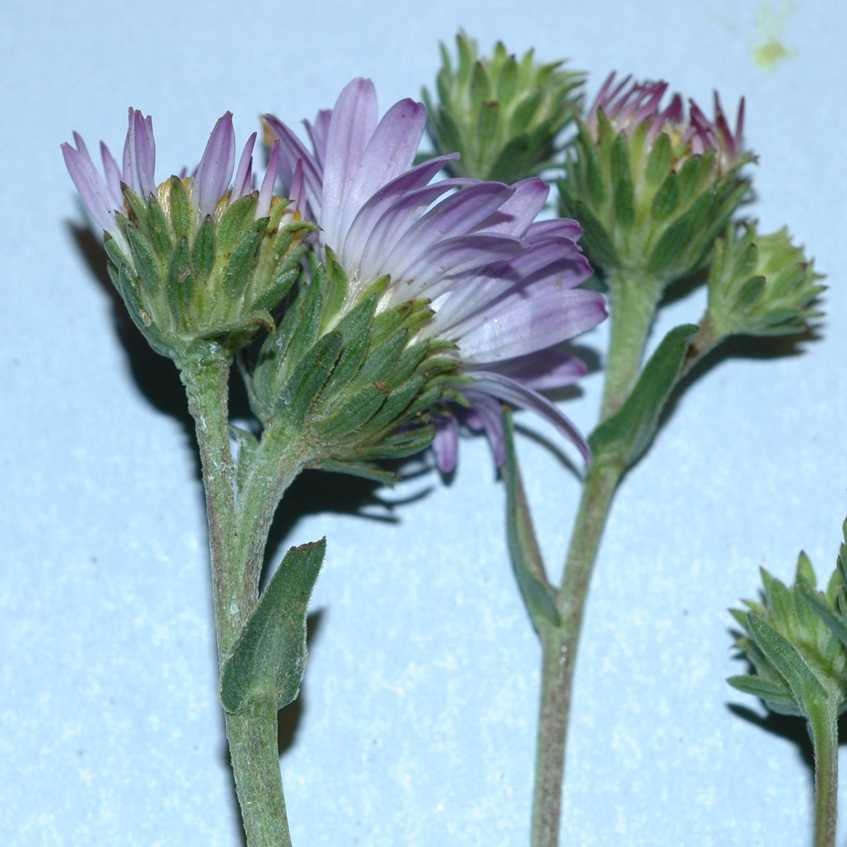
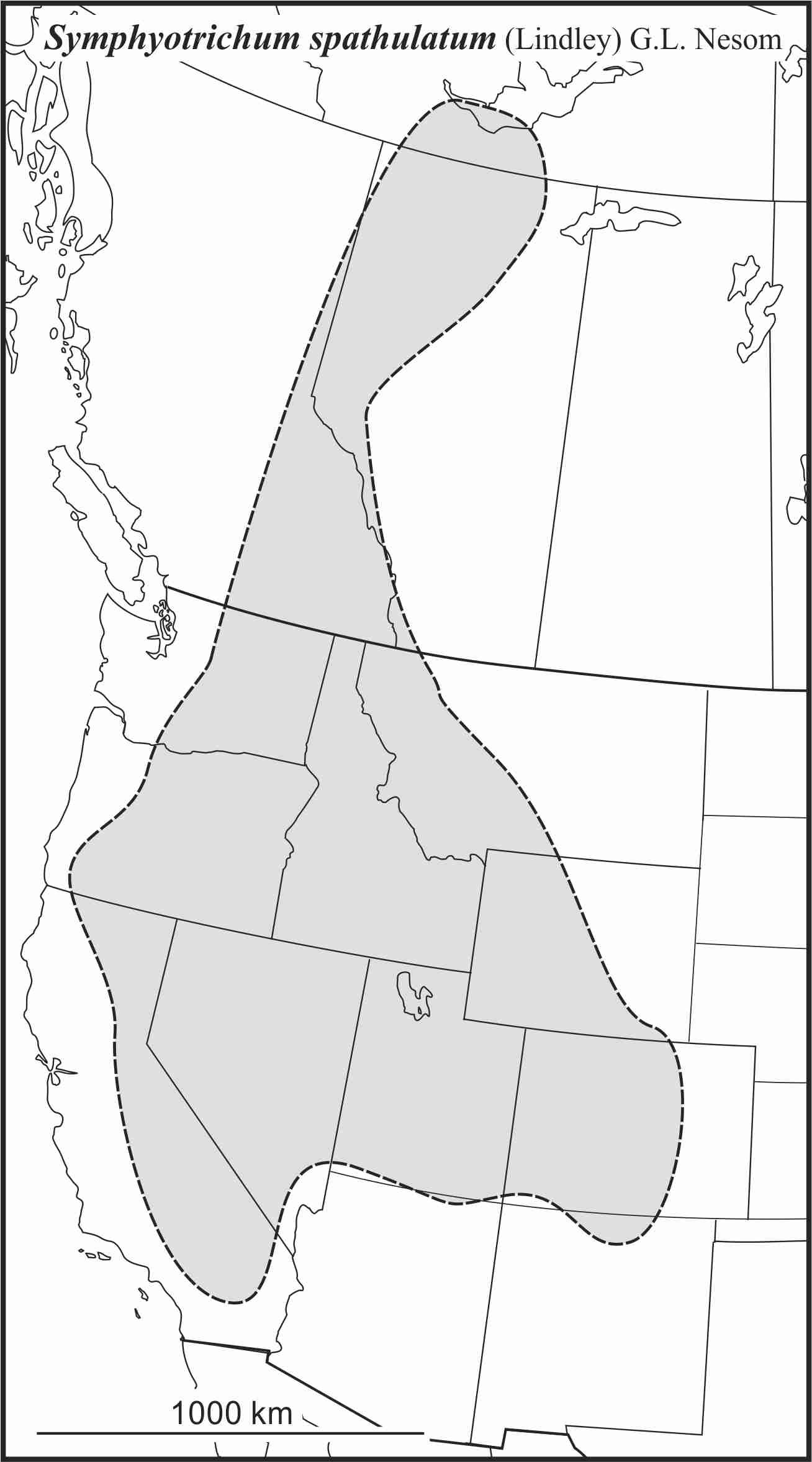
1-4. Symphyotrichum spathulatum. 1-2. Small population and inflorescence, Semple & Brouillet 7199, Idaho. 3. Flowering heads, Semple & B. Semple 11361, Blaine Co., Idaho. 4. Range map draft JCS.