Lindley's Aster, Fringed Blue Aster, aster ciliolé
Symphyotrichum ciliolatum (Lindley) Á. Löve & D. Löve is native to open, often ± calcareous, boreal deciduous forests (aspen or aspen-birch-fir-spruce), edges of woods, clearings, aspen or bur oak thickets, sometimes open pine forests, streambanks, trails, roadsides across Canada and adjacent northern states in the US (Brouillet et al. 2006 FNA). Basal leaf bases are shallowly cordate to rounded; involucres are (4–)5–6.5 mm tall; ray florets are pale to deep blue or bluish purple. The species sometimes hybridizes with Sy. laeve in the central and western portion of the range and with Sy. novi-belgii in the east. The species is hexaploid (2n=48).
Brouillet, L., J.C. Semple, G.A. Allen, K. Chambers and S. Sundberg. 2006. Symphyotrichum Nees. pp. 465-539. In Flora North America Editorial Committee, eds. Flora of North America. Vol. 20. Asteraceae, Part 2. Astereae and Senecioneae. Oxford University Press, New York.
Last revised 13 May 2025 by J.C. Semple
© 2025 J.C. Semple, including all photographs unless otherwise indicated.


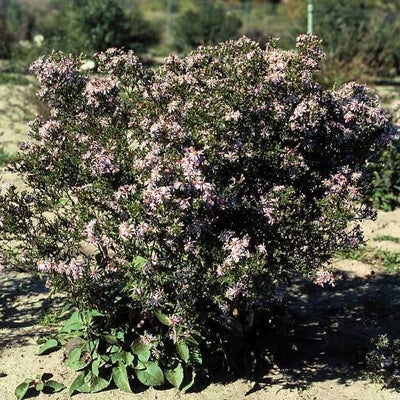


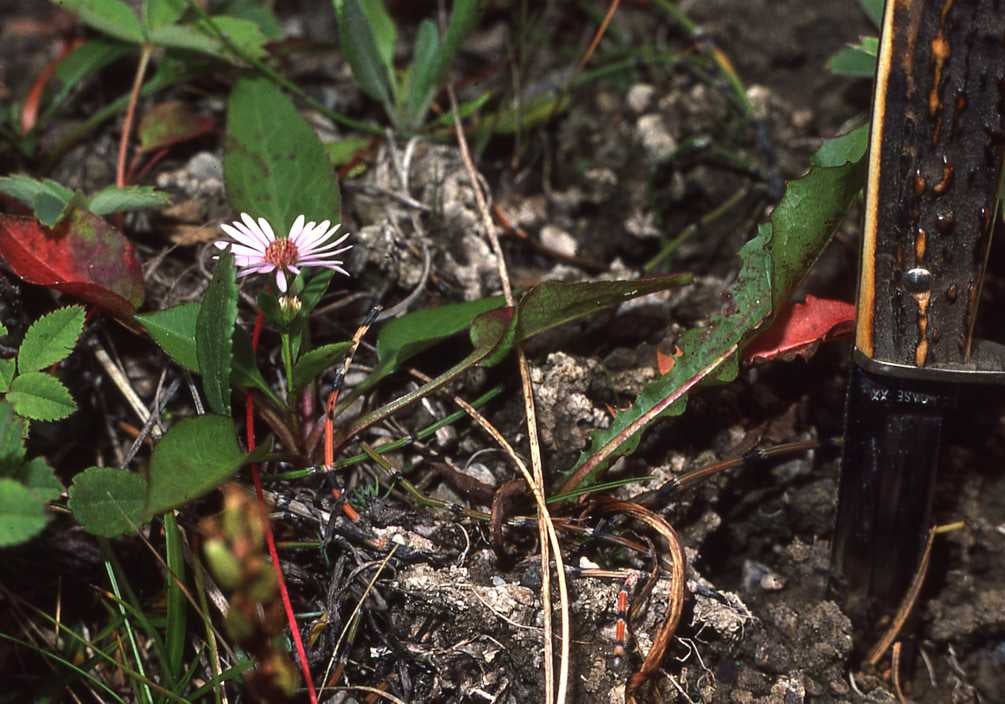
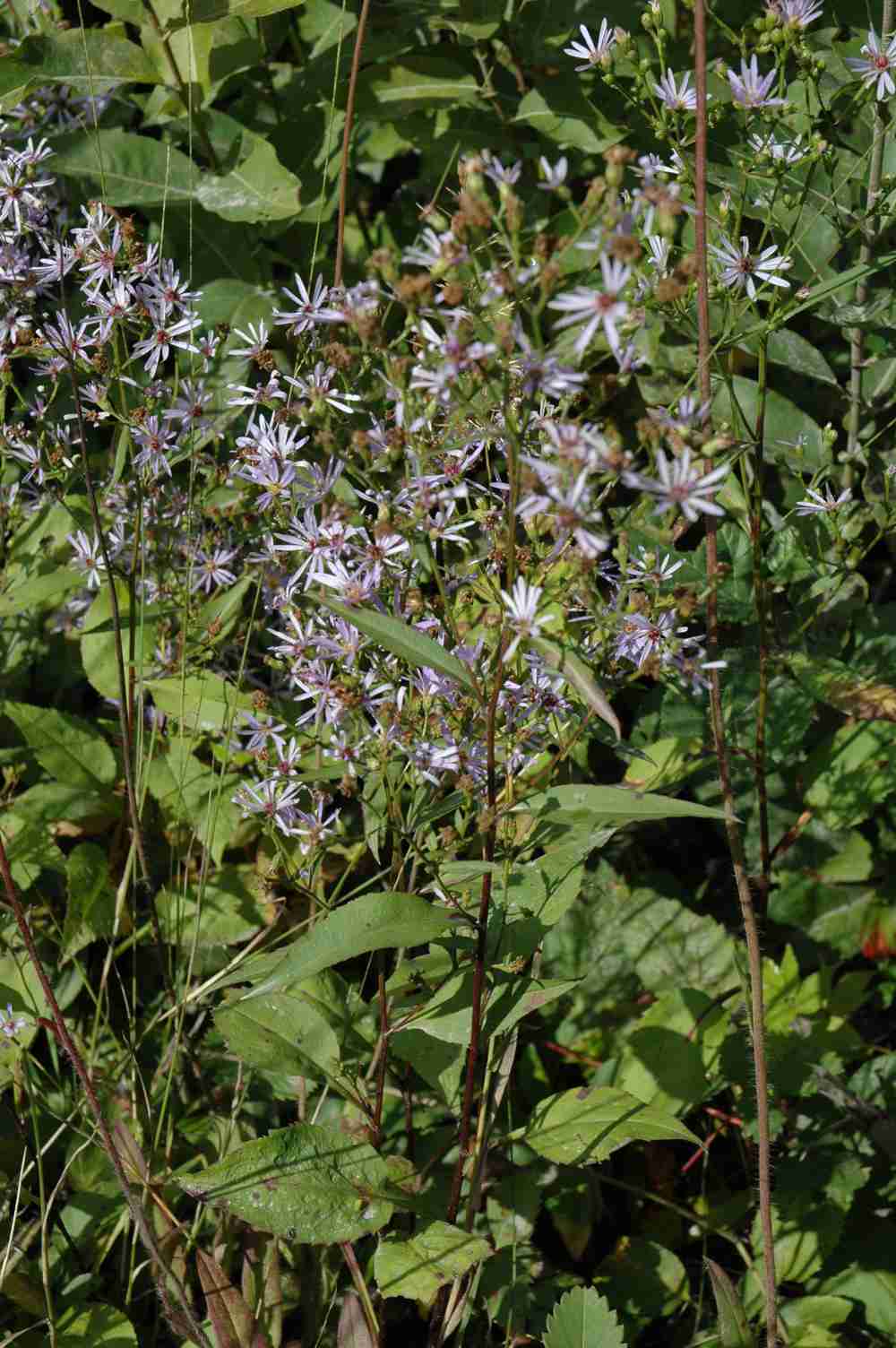
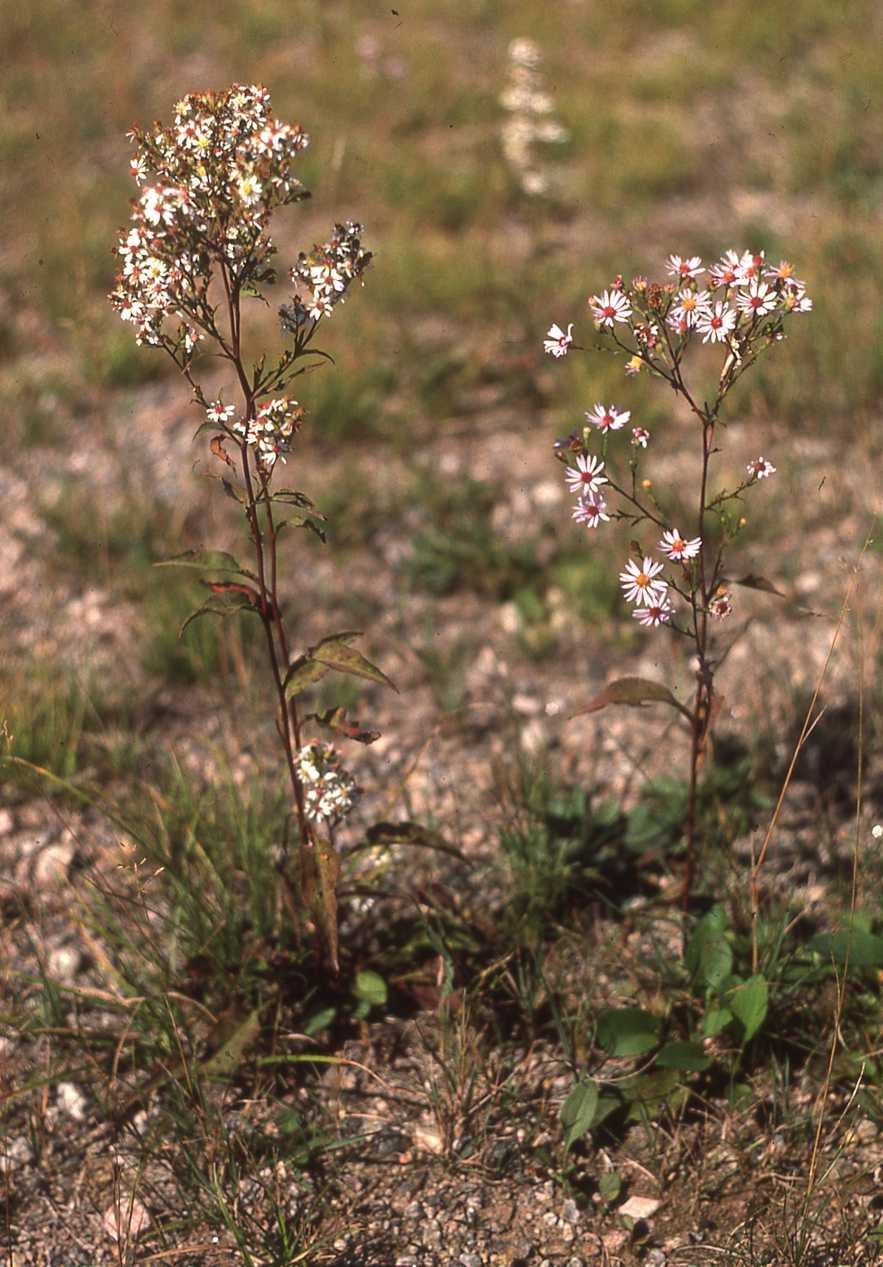

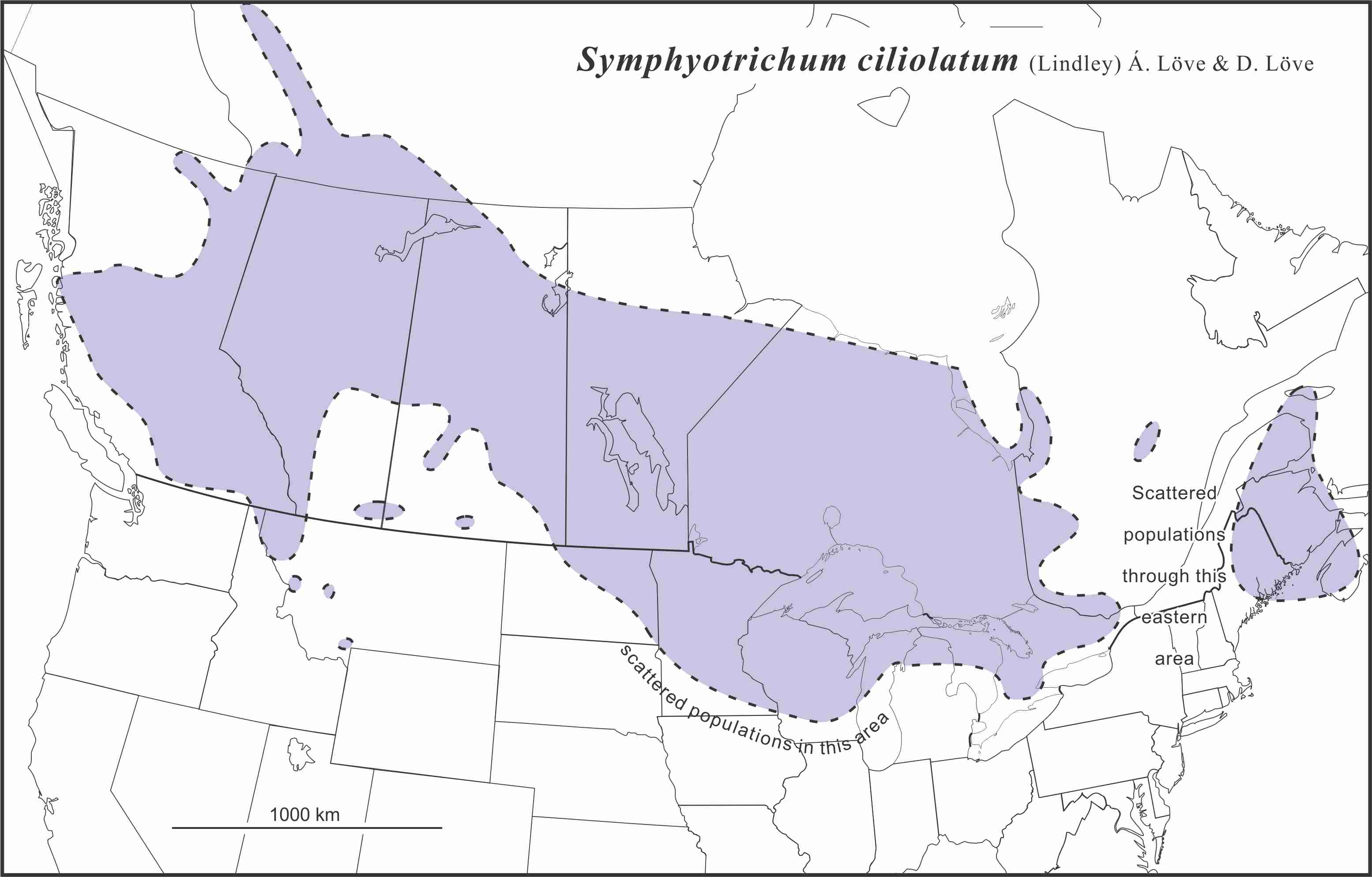
1-6. Symphyotrichum ciliolatum. 1. Tall shoot, Nahanni Butte, Northwest Territory, Canada. 2. Dwarf shoot, Semple & Brouillet 4334, Jasper N.P., Alberta. 3. Mid size plant, Semple 11440, Parc Gaspésie, Québec. 4. Small shoots, Semple 3699, Muskoka Dist., Ontario. 5. What happens to a small plant in the experimental garden U Waterloo. 6. Range map draft JCS.