Mayan Goldenrod
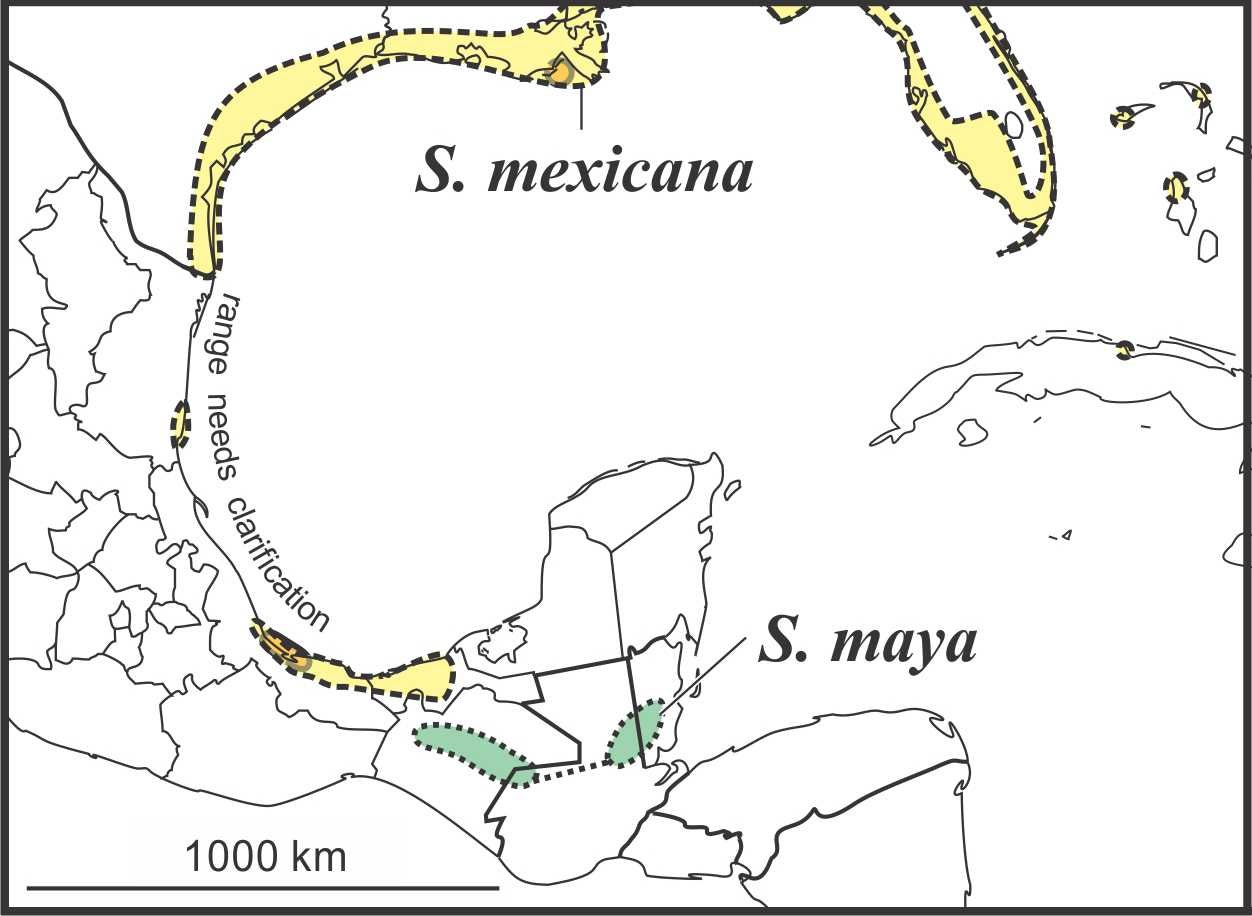
Solidago maya Semple is native to the highlands of Chiapas, Mexico and the Maya Mountains of eastern Guatemala and central and southwestern Belize (460-2200 m).The species was described from a small number of herbarium collections (Semple 2016) and was included in a multivariate study of the Solidago sempervirenscomplex (Semple et al. 2016) that includes S. azorica, S. maya, S. mexicana, S. paniculata, and S. sempervirens. Historically, members of the species have been treated as S. stricta sensu authors not Ait., S. mexicana, or as S. sempervirens var. mexicana. In the multivariate analysis, S. maya was most similar to some individuals of S. virgata and S. mexicana from Florida. Inflorescence variation in S. maya is like that occurring in S. mexicana, but the stem usually has fewer, smaller upper leaves than S. mexicana. In Mexico, S. mexicana is restricted to along the coast at or near sea level from Tamaulipas to Tabasco, which is allopatric with the range of S. maya. Like other species in subsect. Maritimae, S. maya prefers moist soils of slopes, bogs and marshes.
The chromosome number of the S. maya is unknown.
Semple, J.C. 2016. Solidago maya (Asteraceae: Astereae: S. subsect. Maritimae) a new species of goldenrod from southern Mexico, Guatemala and Belize. Phytoneuron 2016-72: 1–8.
Semple, J.C., T. Shea, H. Rahman, Y. Ma, and K. Kornobis. 2016. A multivariate study of the Solidago sempervirens complex (Asteraceae: Astereae: S. subsect. Maritimae). Phytoneuron 2016-73. 1-31.
Last revised 11 April 2025 by J.C. Semple
© 2025 J.C. Semple, including all photographs unless otherwise indicated


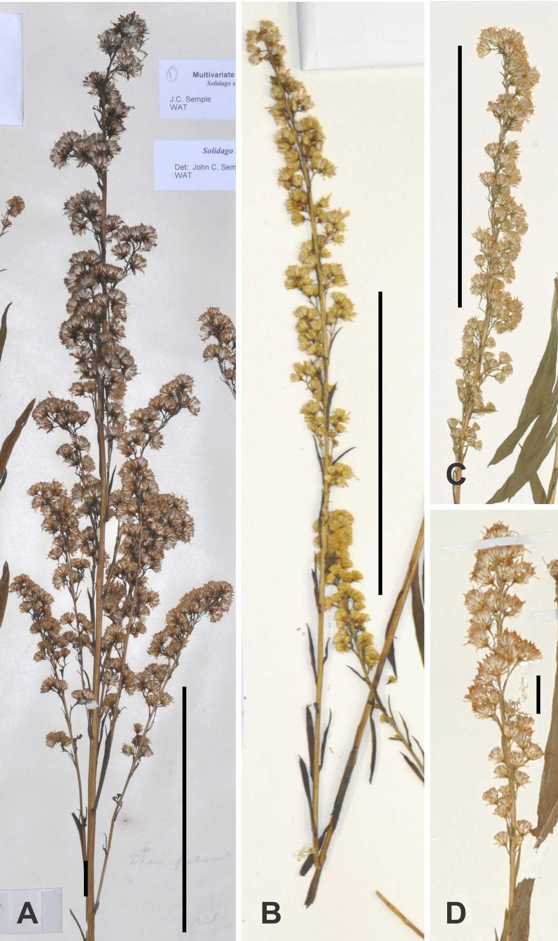
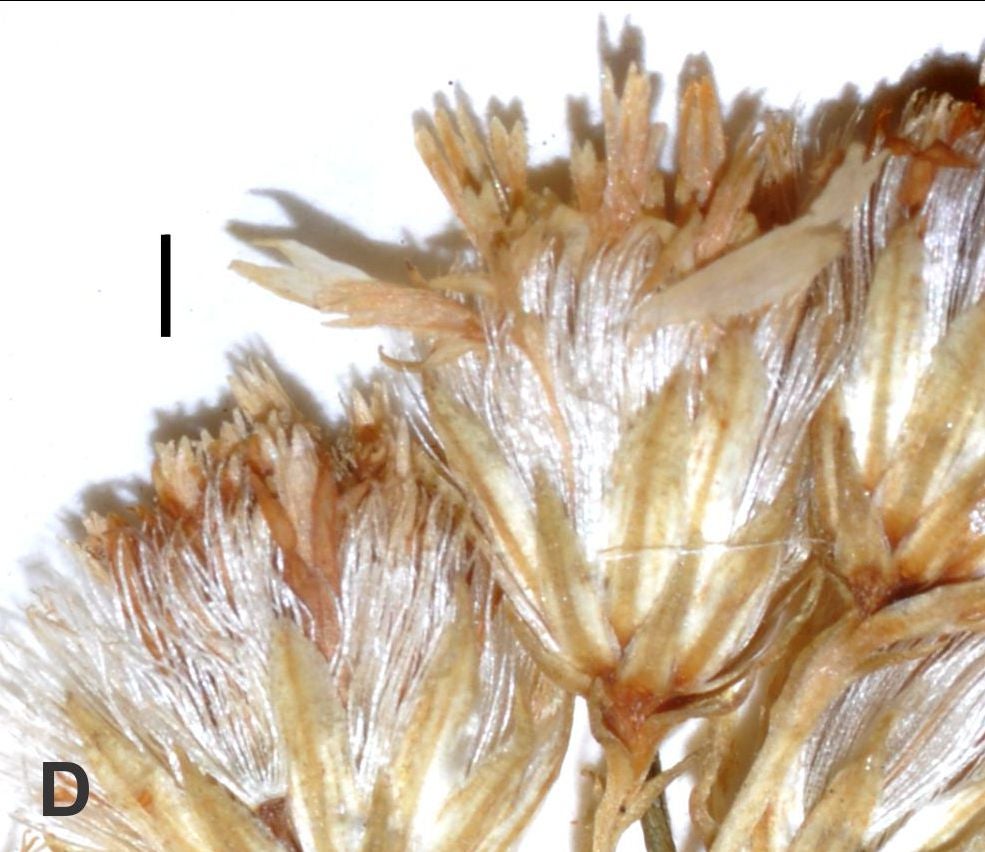
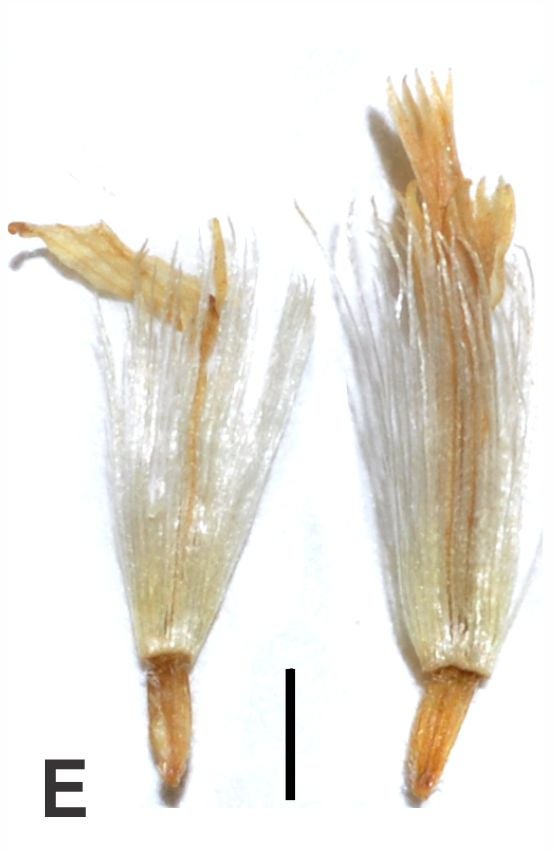
1-4. Solidago maya. 1. Holotype, Breedlove & Thorne 21282 MO, Chiapas, Mexico. 2. Inflorescences, Fig 4A-D Semple (2016). 3. Heads, Fig 3D Semple (2016). 4. Ray and disc floets at anthesis, Fig 3E, Semple (2016).