Dr. Carey King
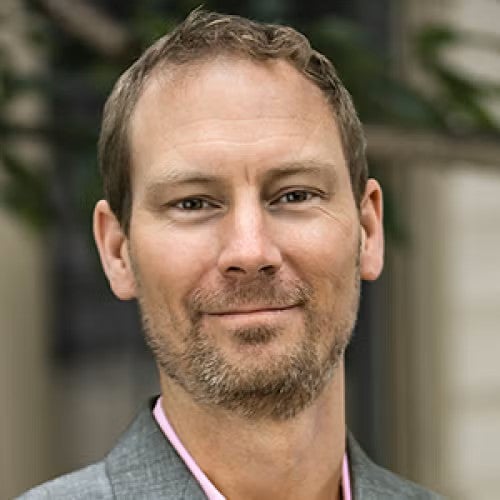
You may view Prof. King's talk here..
As part of WICI's "Particles to Markets" Complexity Day, WICI is pleased to announce a talk by Dr. Carey W. King.
Dr. Carey W. King is a Research Scientist and Assistant Director of the Energy Institute at The University of Texas at Austin, where his work sits at the intersection of energy systems, economics, and public policy. His research focuses on how energy availability, costs, and constraints shape economic growth and energy transitions over the long term, with particular emphasis on net energy, macroeconomic modeling, and the energy–water–food nexus.
Dr. King holds both a B.S. (with high honors) and a Ph.D. in Mechanical Engineering from UT Austin and has additional affiliations with the Jackson School of Geosciences and the McCombs School of Business, where he teaches on energy technology and policy. He has published extensively in leading journals such as Nature Geoscience, Environmental Science & Technology, Environmental Research Letters, and Energy Policy, and is a frequent public commentator on the economic dimensions of the energy transition.
“Energy and Economic Complexity: Insights from Data and Macroeconomic Modeling”
Abstract: To understand the complexity and interdependency between the financial and real economy, we should model economies using both monetary or financial variables as well as biophysical variables such as energy, materials, and population. In doing this we have a better chance to understand the long-term trends describing the economy and society. The relationship between energy use and GDP and the declining cost of food and energy, relative to all economic activity or gross domestic product, are two characteristic long-term trends of industrialization and the use of fossil-fueled machinery. By integrating financial and physical principles into macroeconomics, we can create a more realistic assessment of whether our future scenarios, such as related to a low-carbon transition, might be constrained by physical or monetary constraints.
This talk discusses Dr. King’s progress and continued pursuit for a more accurate, yet still tractable, macroeconomic modelling that can explain both financial and physical economic historical data. The talk will highlight the Human and Resources with MONEY (HARMONEY) stock-flow consistent input-output and biophysical economic modelling framework, as well as key characteristic trends describing the social metabolism and complexity (using information theoretic metrics) of the economy.
Join us May 13, 2026, 11:30 am in Faculty Hall PSE 7303. Please register to attend.