Get out there!
Take your learning beyond the classroom and gain hands-on experience in the field.
In Earth and Environmental Sciences at Waterloo, you’ll have many opportunities to get outdoors and learn by doing. Whether it’s an Ontario field trip, an international opportunity, or exploring resources right here on campus, you’ll engage directly with the natural world as part of your study.
Learn close to home
Field trips are part of the curriculum right from the beginning and continue through into fourth year. Get outside and learn more about the rocks and minerals found in our province on one of our Ontario field trips.
Start out right with our first-year mixer at Elora Gorge, one of Ontario’s most beautiful natural landscapes, where you'll meet professors and fellow incoming students. In second year, our minerology course includes a weekend field trip to Bancroft, the mineral capital of Canada, where you learn to evaluate the properties of minerals and rocks. And in your final year, the applied wetlands science course includes a tour of an urban wetland where you'll learn about wetland water sources, soil types, vegetation, and invasive species.

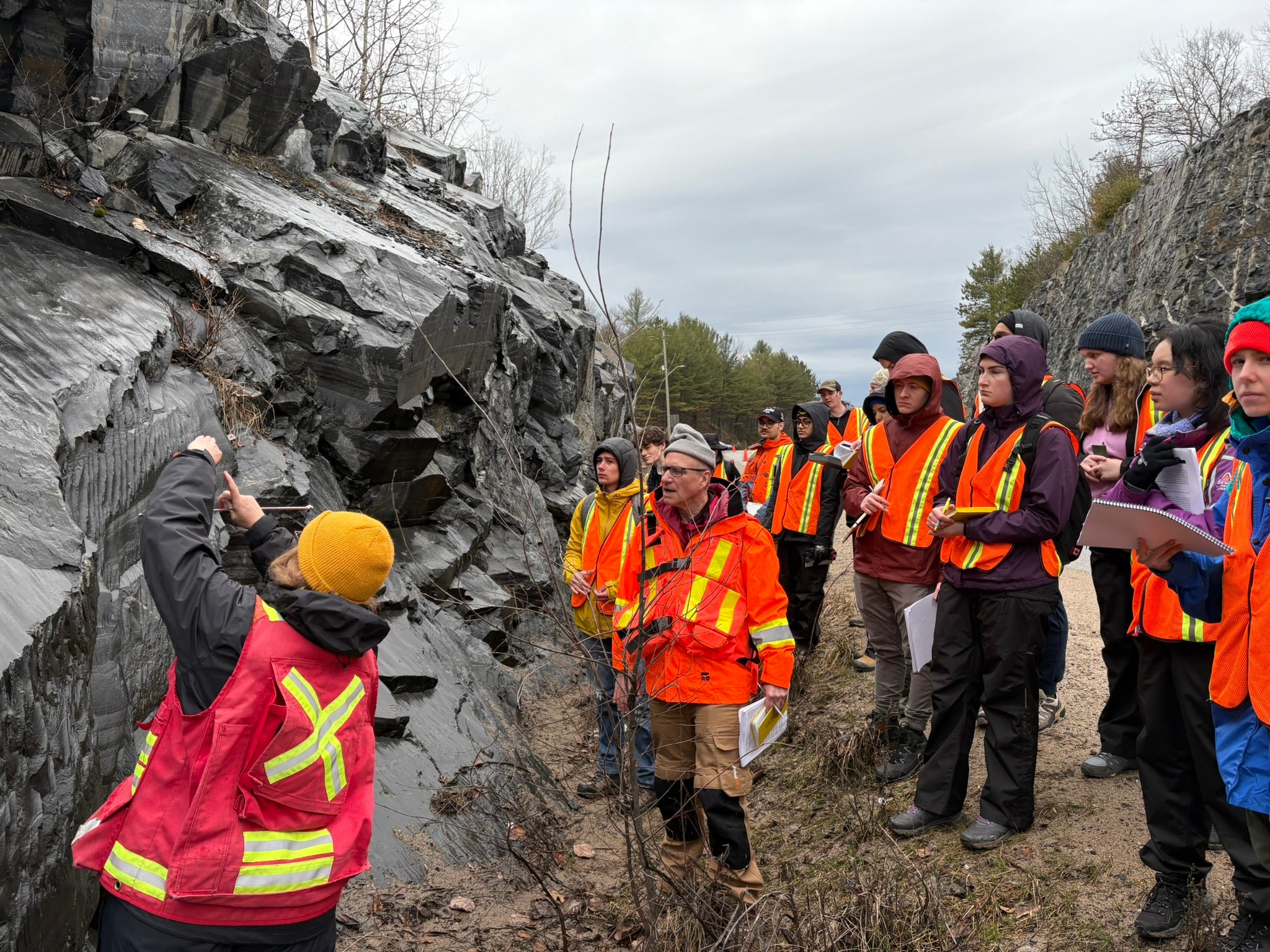
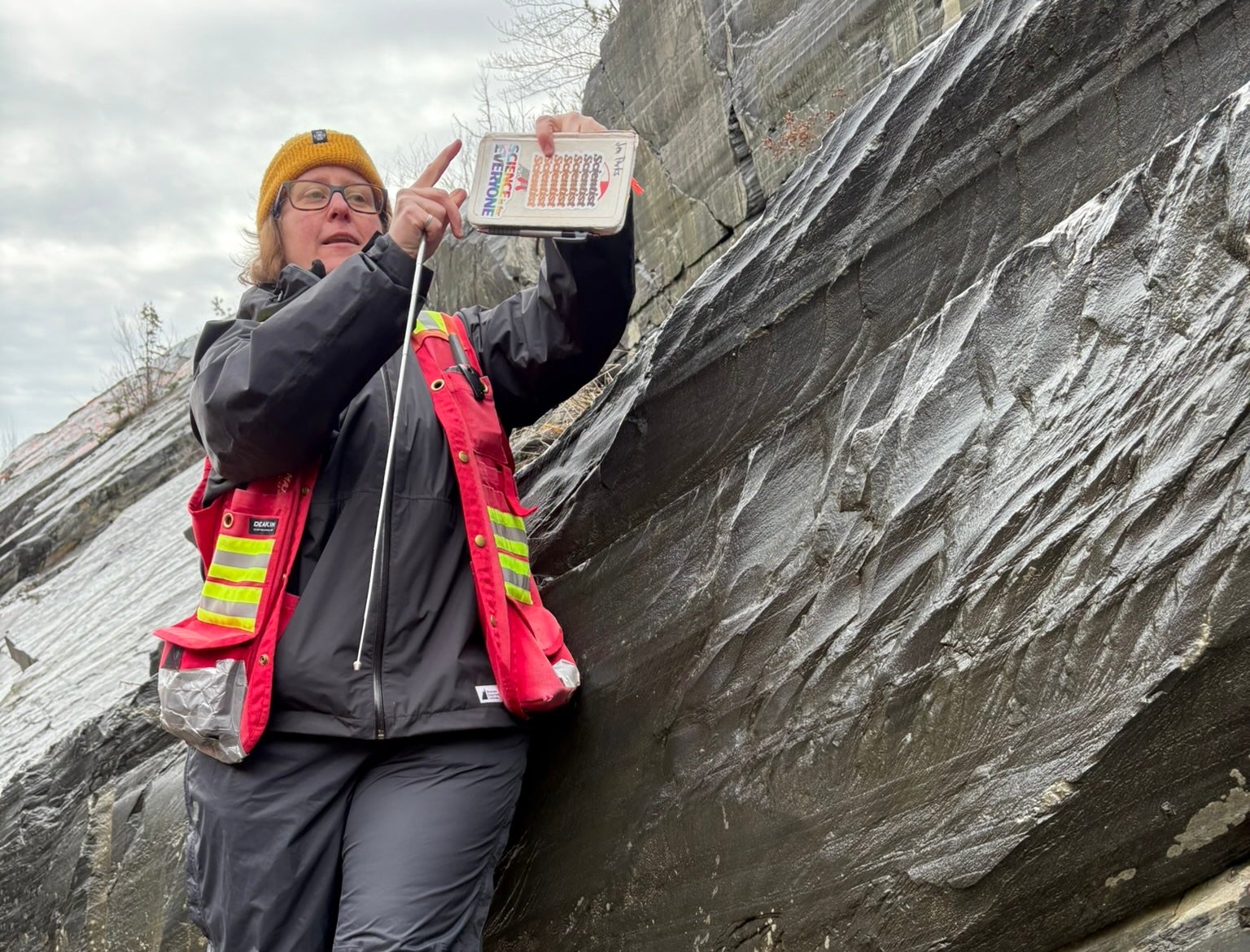
Instructor Jen Parks shows students how to measure and interpret rocks.

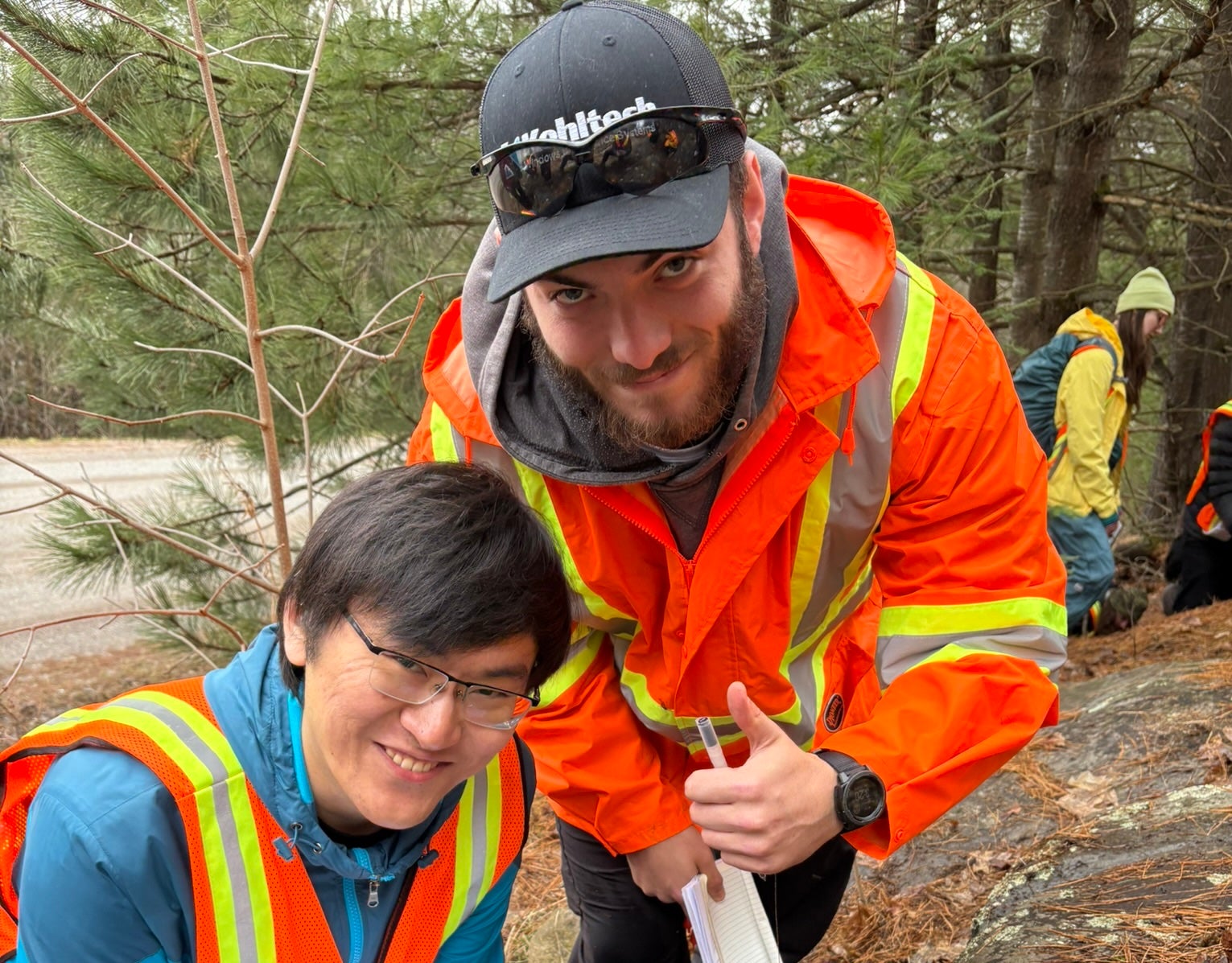
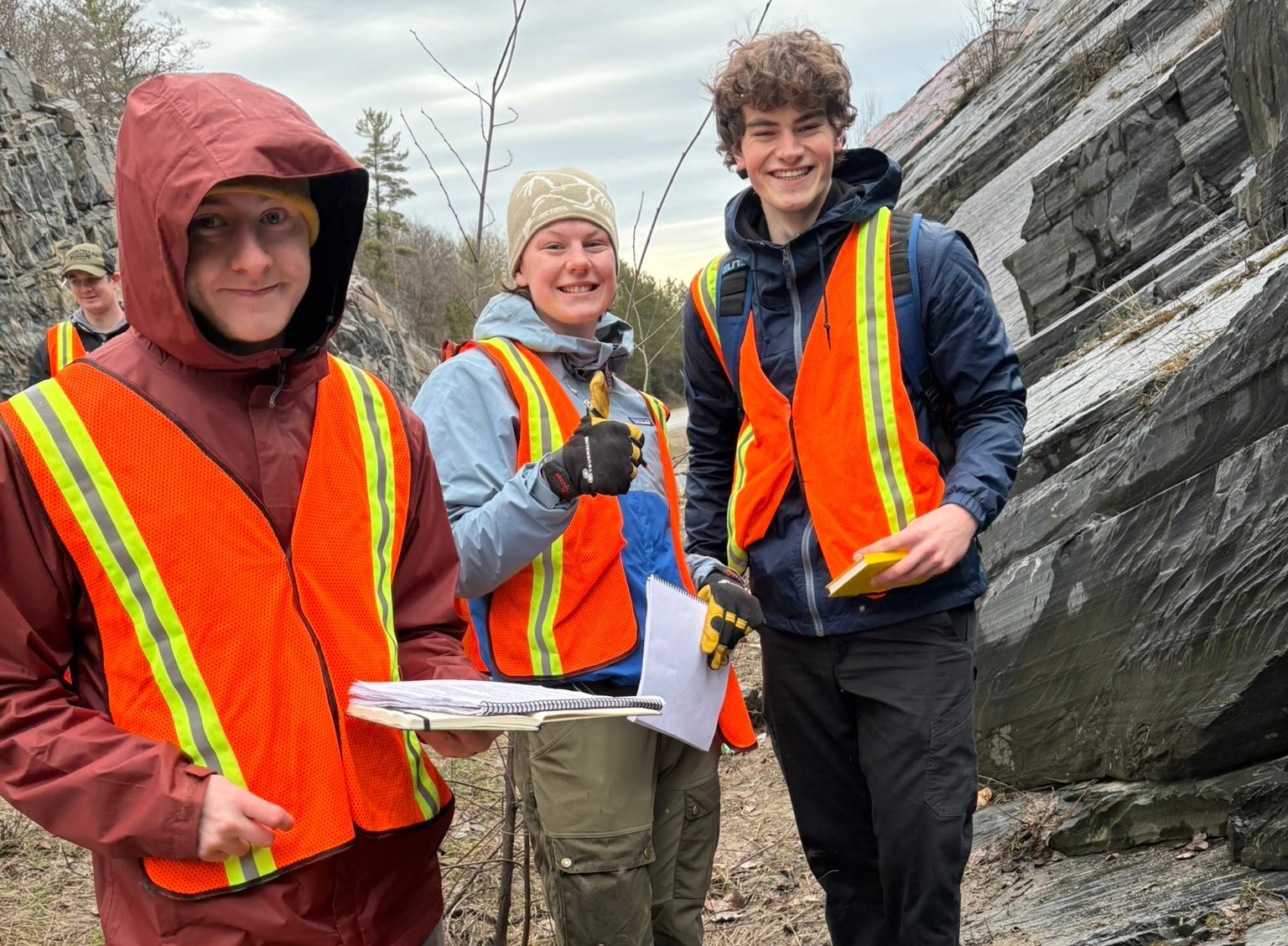
Giving the "thumbs up" after finding and measuring sedimentary structures needed to interpret a folded sequence of rocks.

Examining the mineralogy of a unique rock related to an ancient meteorite impact.

Instructor Shoufa Lin uses a map to provide context for a roadside rock exposure.

Instructor Shoufa Lin helps students prepare for another day of mapping.

Refining maps after multiple days of mapping in the field.

Having fun in the field.

Instructor Jen Parks teaches students about measuring and interpreting cleavage and bedding.
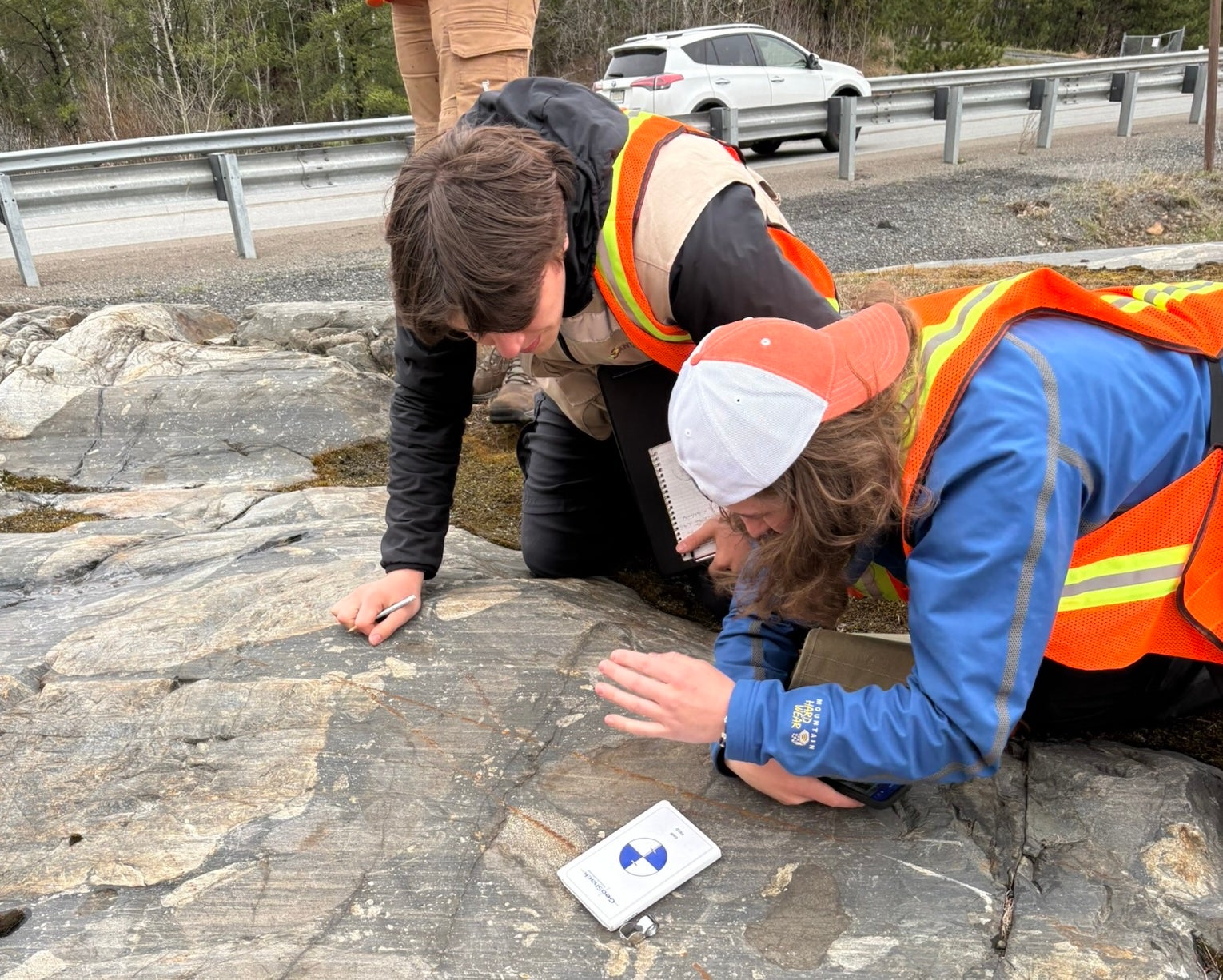
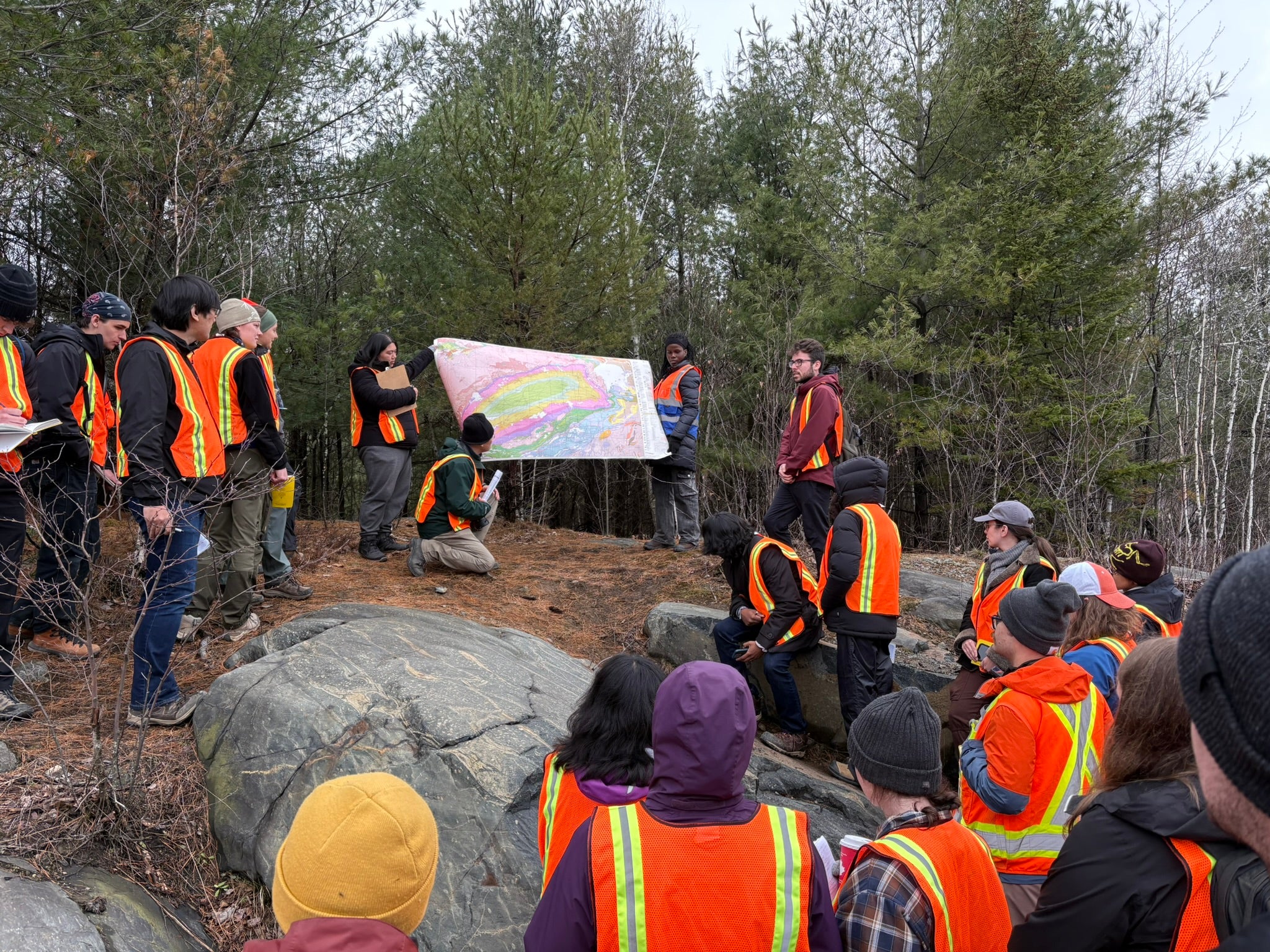
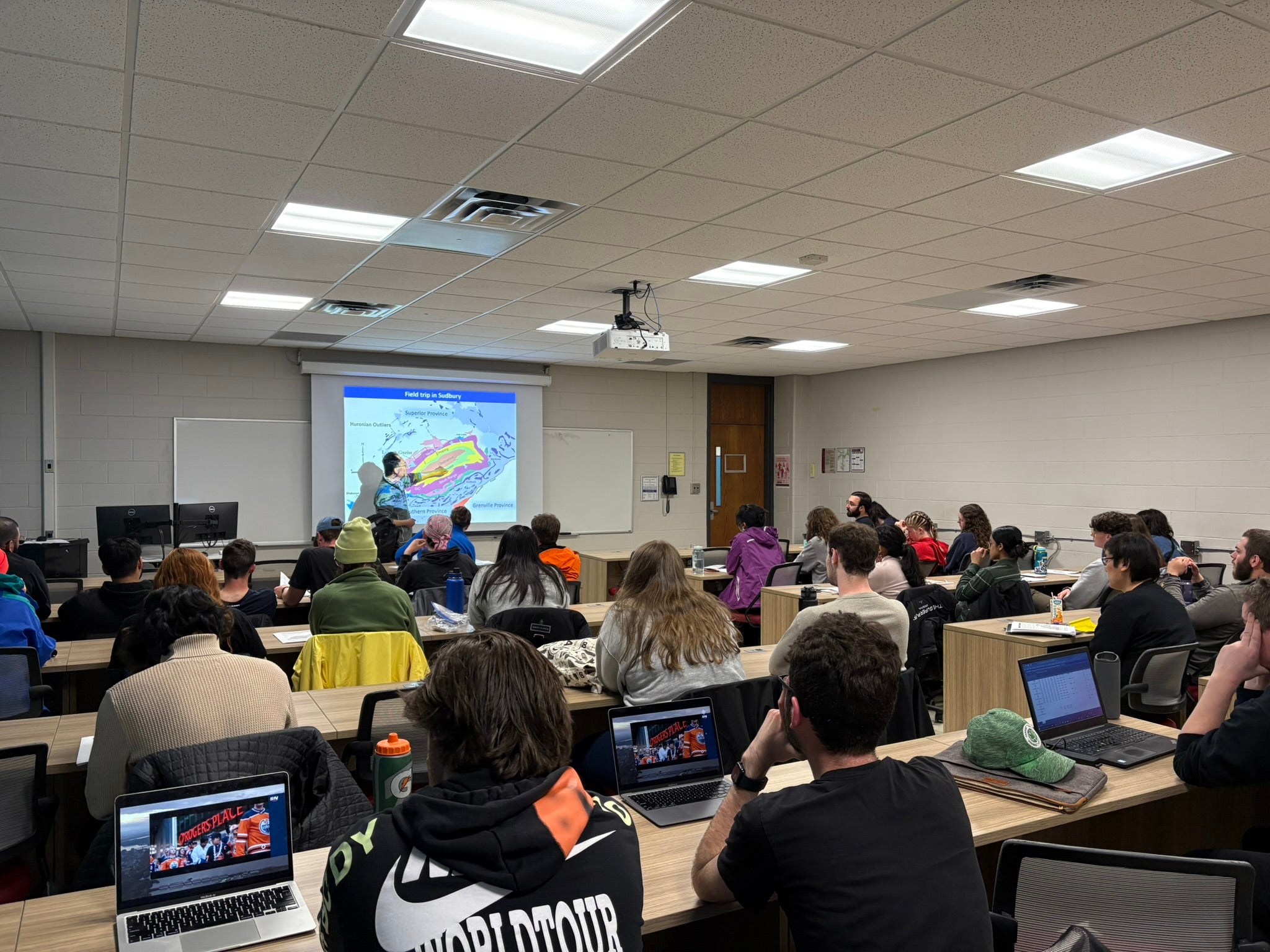
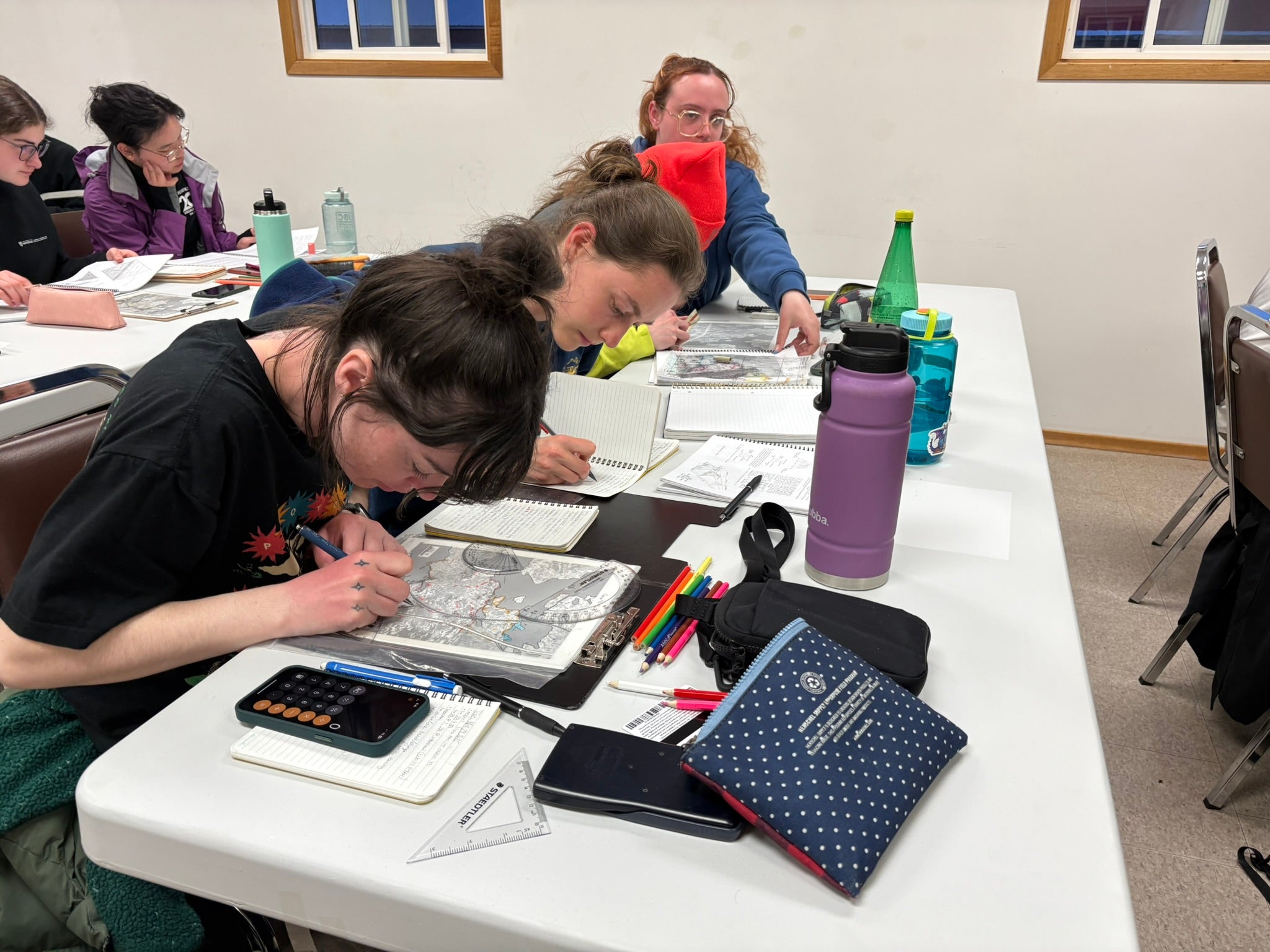
EARTH 390: Methods in geological mapping
Students in third year apply the skills and concepts they’ve learned in previous courses to solve a variety of geological problems on this 10-day field course required for all students in the program.
Full-day field trips to Espanola, Sudbury, and Manitoulin Island teach students about rock types and ages, honing skills in preparation for a four-day mapping exercise at Whitefish Falls. Students have to the unique opportunity to explore this area of cultural significance to Indigenous Peoples and world-class exposure of rock with the permission of Whitefish River First Nation.
Experiencing hydrogeology in the field
An Earth Sciences degree brings a University of Waterloo co-op student to British Columbia, Yukon, and Northern Ontario
Experiential learning is essential for bridging the gap between theory and real-world application. For Nathalie Boal, it has been a fundamental part of her learning experience and the foundation of her next step into graduate research.
Study farther afield
Upper year students can also participate in an international field trip with destinations varying from year to year. Past experiences have included Costa Rica and Italy. Students spend two weeks exploring the local landscape.

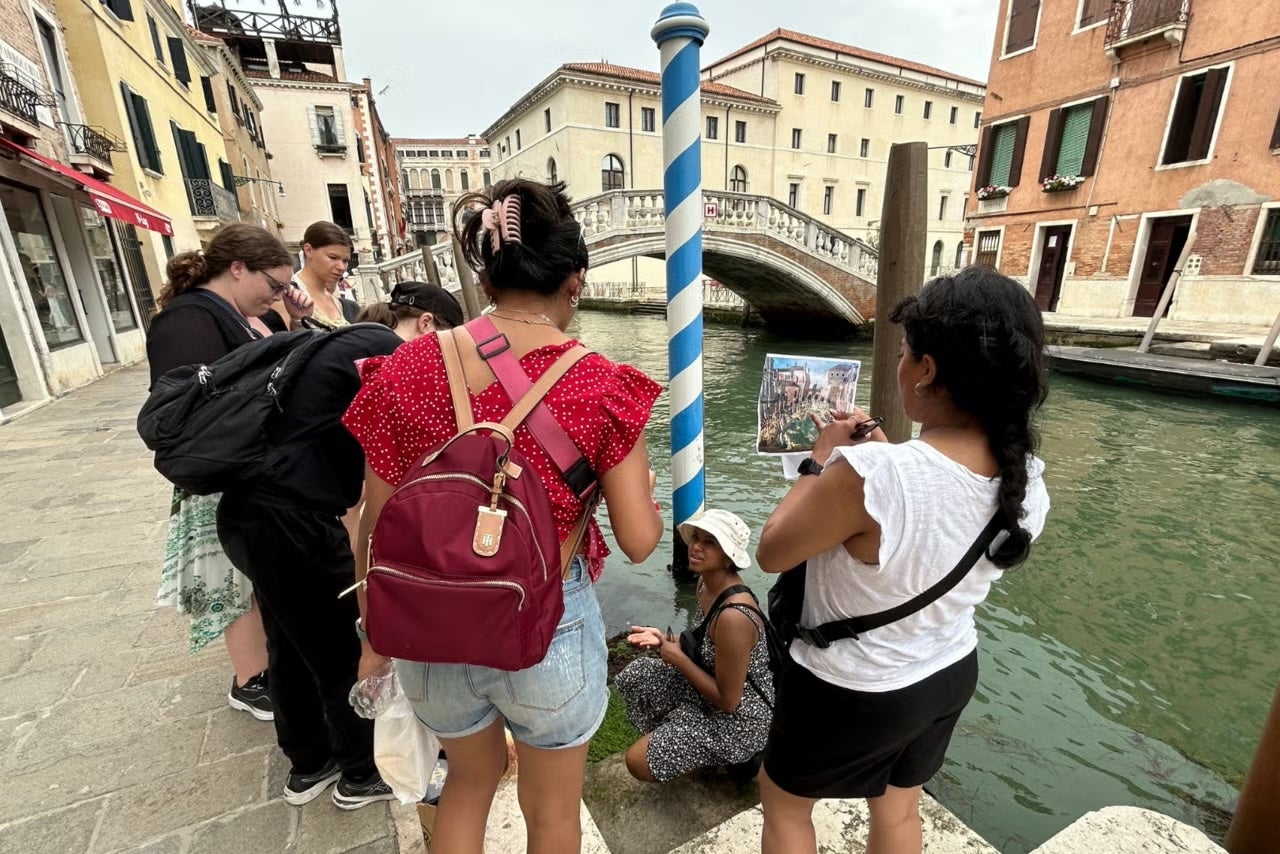
Visiting the canals in Venice.

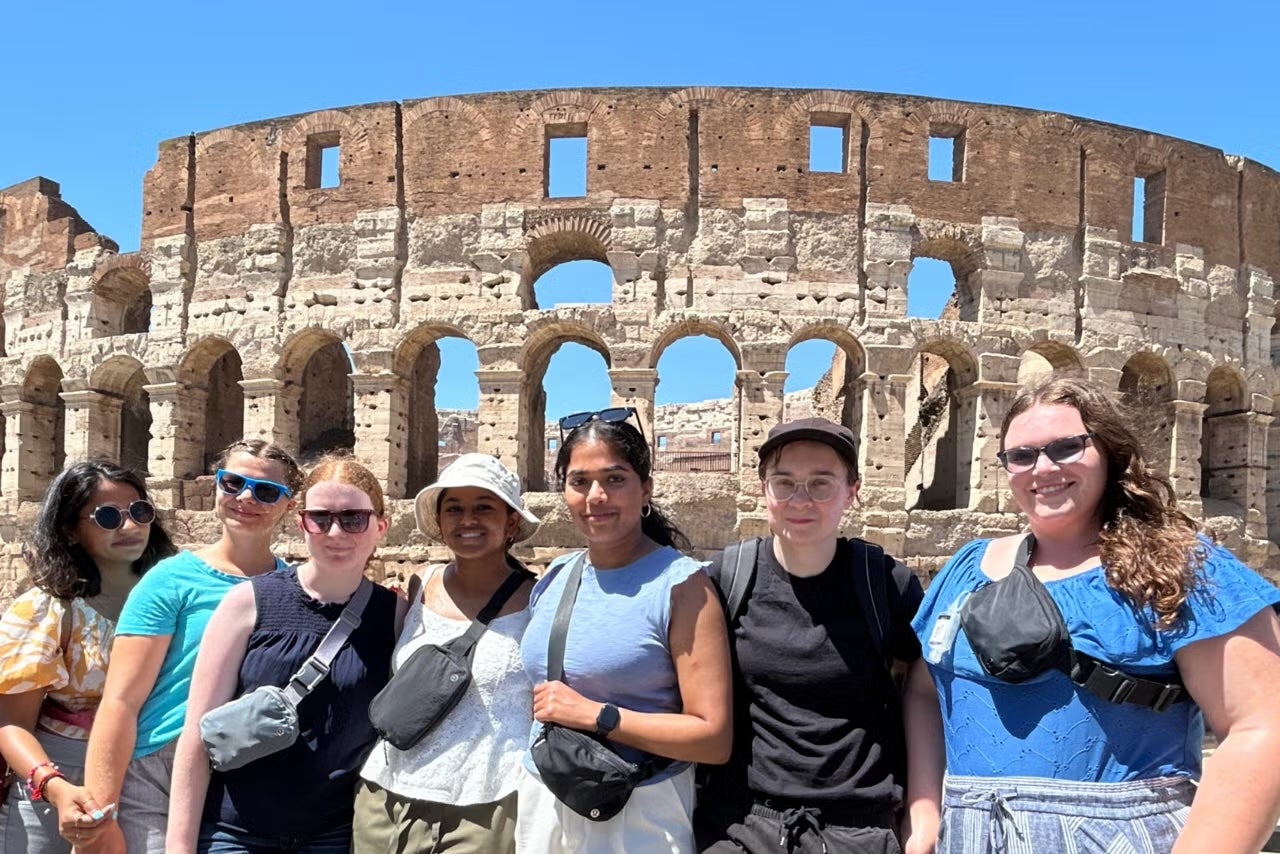
Posing in front of the Colosseum in Rome.

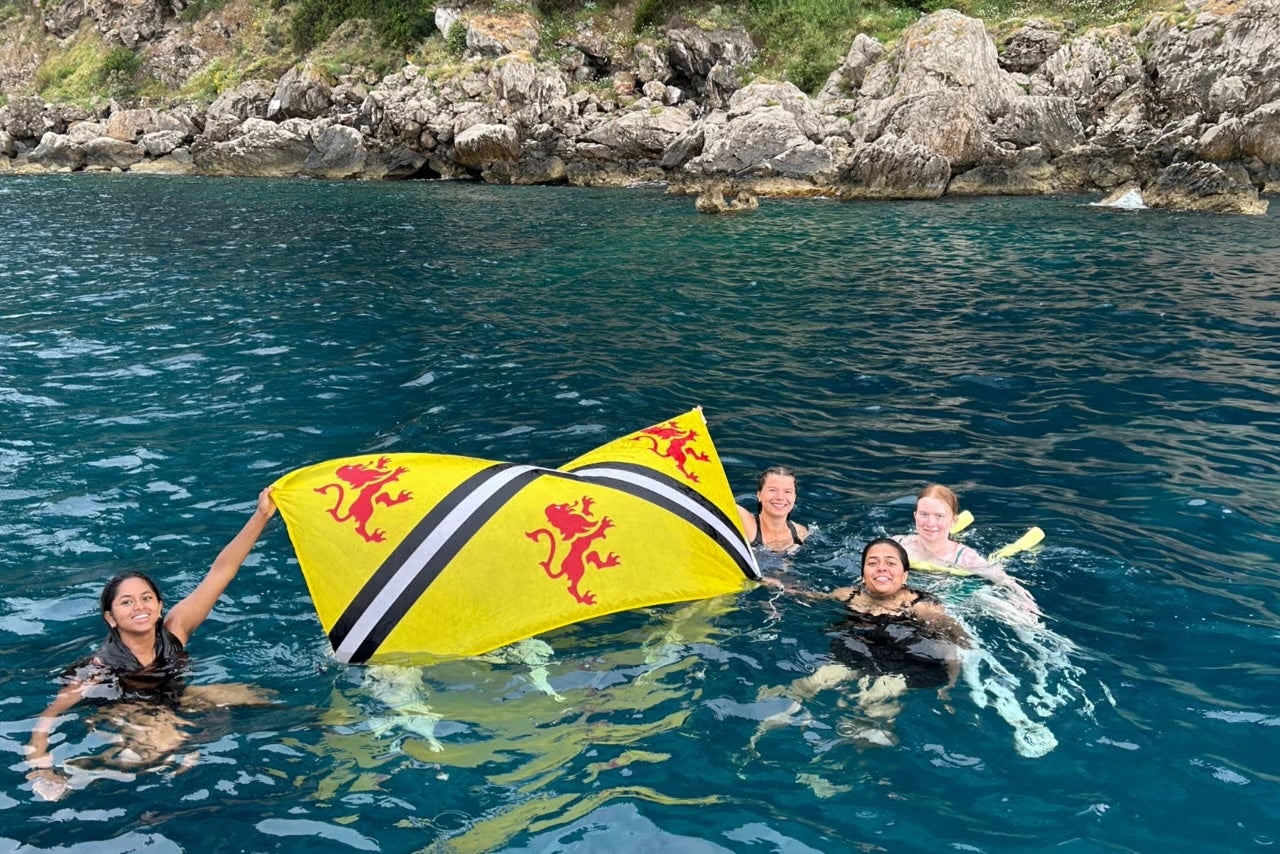
Swimming with the Waterloo flag in Italy.

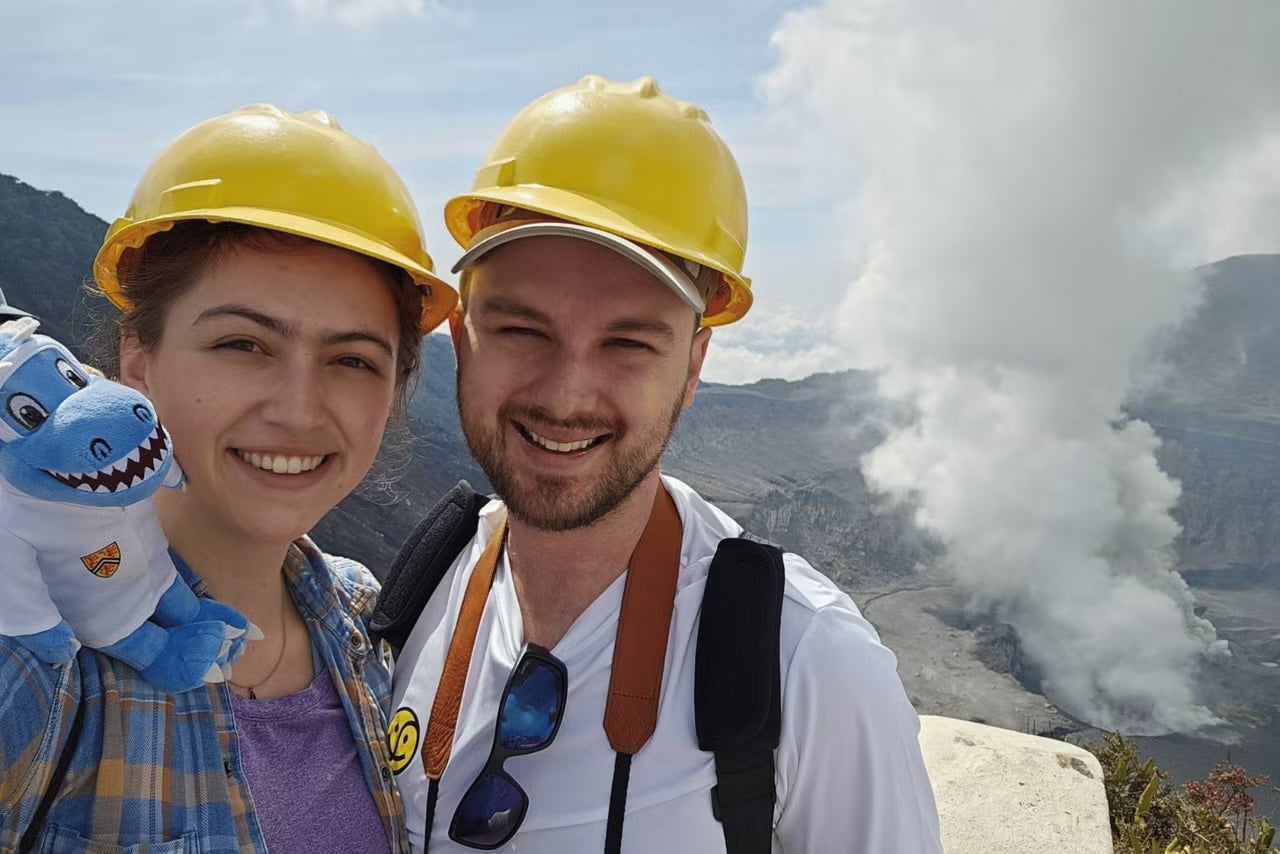
Olivia Clay (left) and Daniel Dudziak (right) pose with Cobalt while on a field trip to Costa Rica.

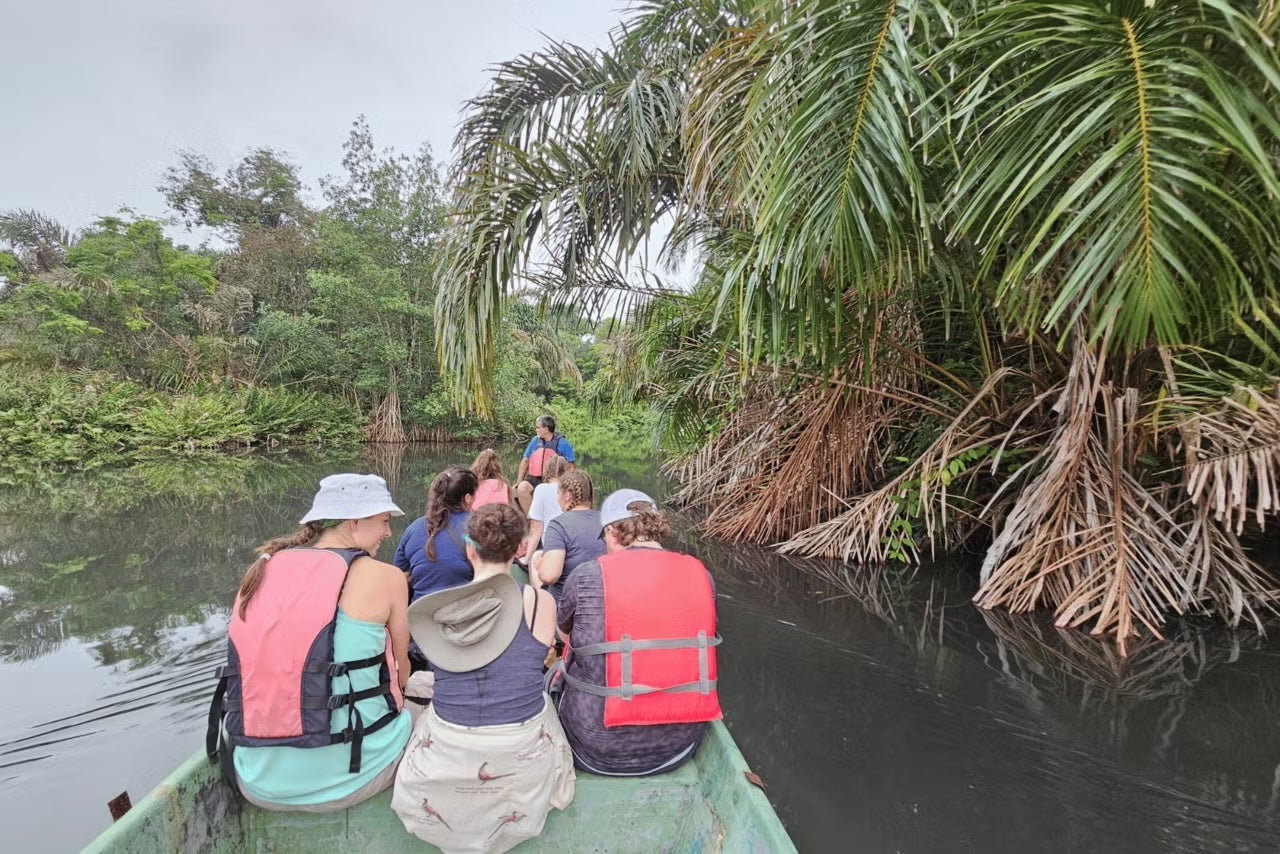
Exploring Costa Rica by boat.

Learning from Dean Chris Houser in the field in Costa Rica.

Students explore the Mekong Delta in Vietnam.

On the Mekong River in Vietnam.
Italy, 2024
In 2024, a group of students led by Dean Chris Houser spent time exploring Italy. Using St. Thomas University in Rome as home base, they travelled across the country, visiting stunning beaches, the historic streets of Rome, the enchanting canals of Venice, and the ruins of Pompeii – all while earning field course credit.
Costa Rica, 2024 and 2025
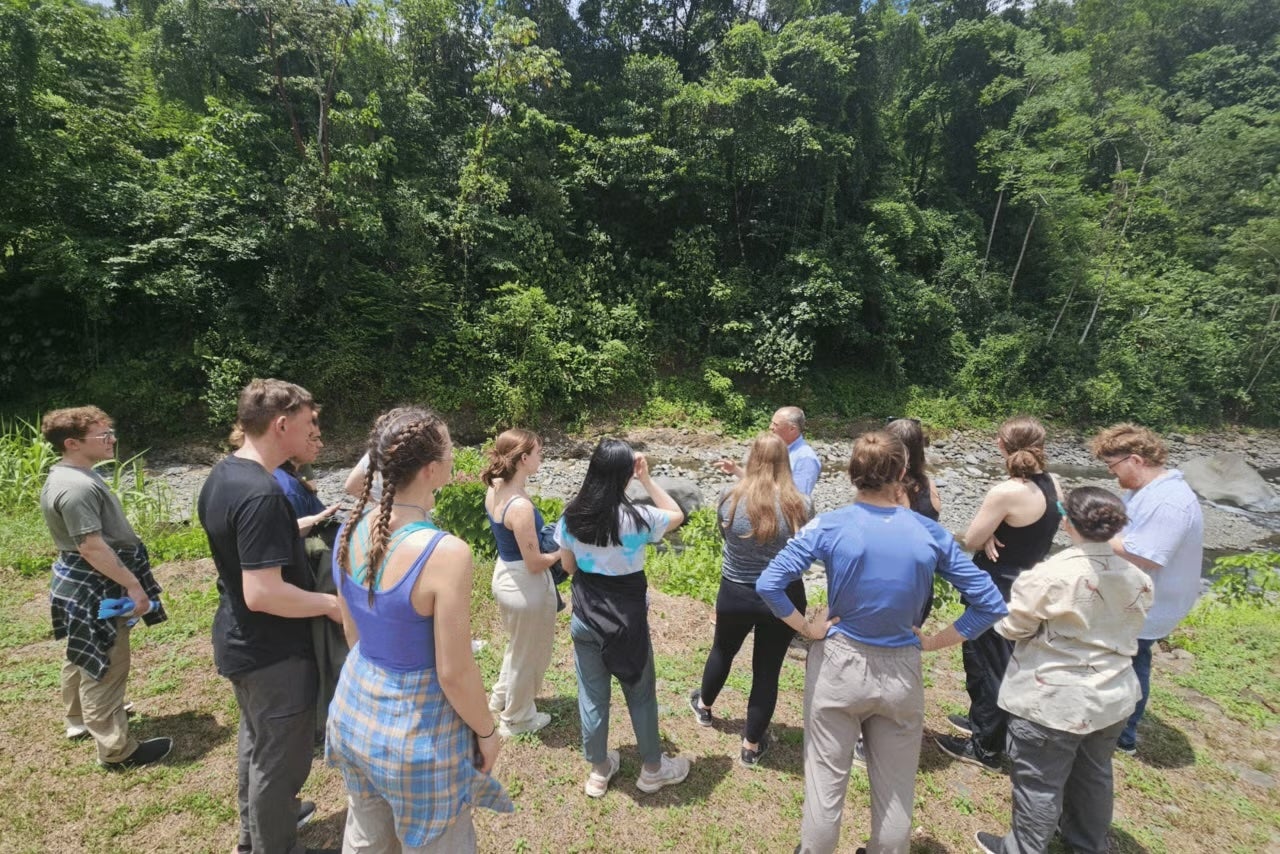
In 2024 and 2025, Houser led two more groups of students to Costa Rica for hands-on courses in ecohydrology. They explored rainforests and coastlines, ziplined through the canopy, stood at the edge of an active volcano, and swam beneath a waterfall, all while learning directly from local experts about the ecological and geological systems shaping the region.
Vietnam, 2025
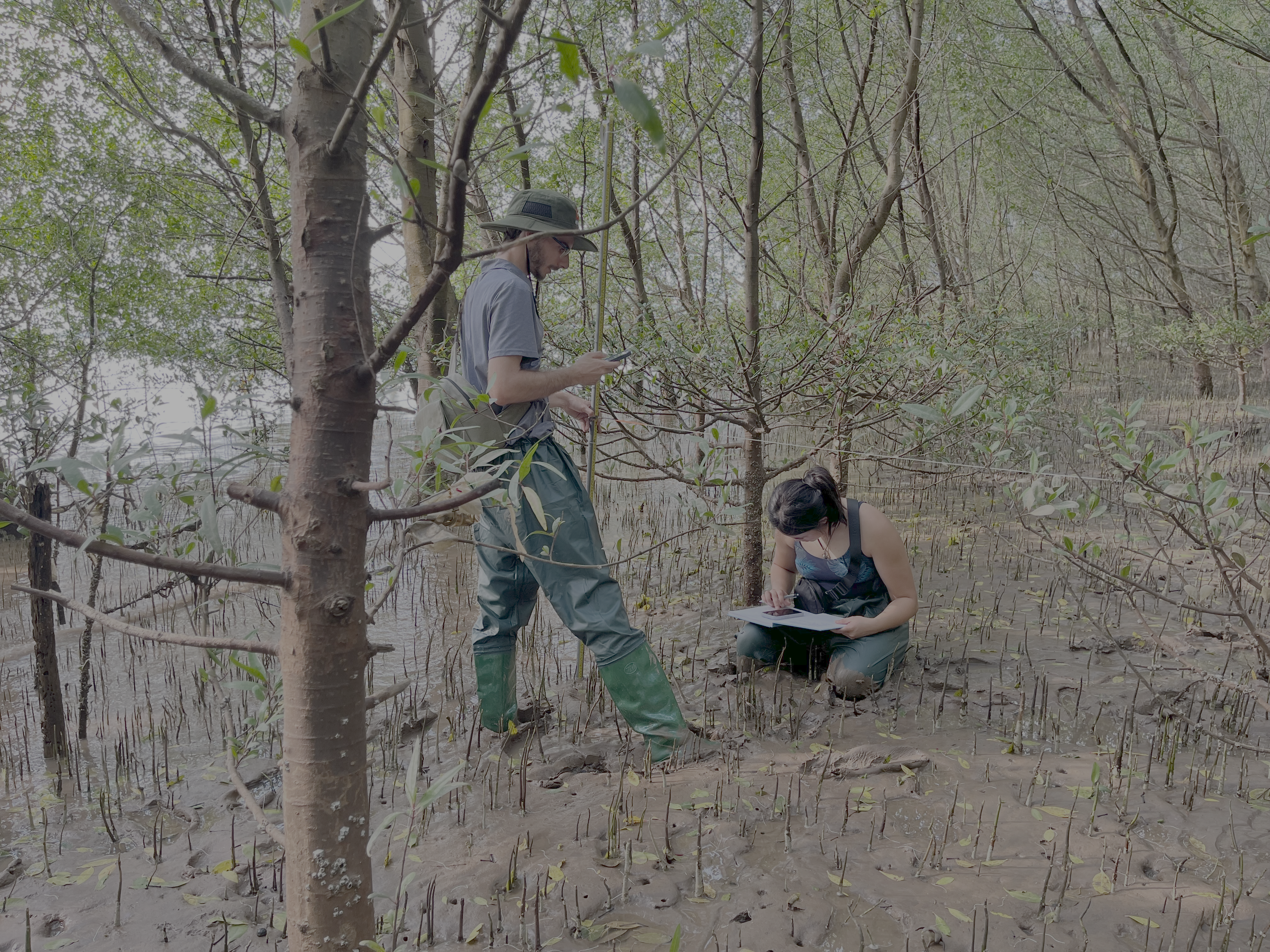
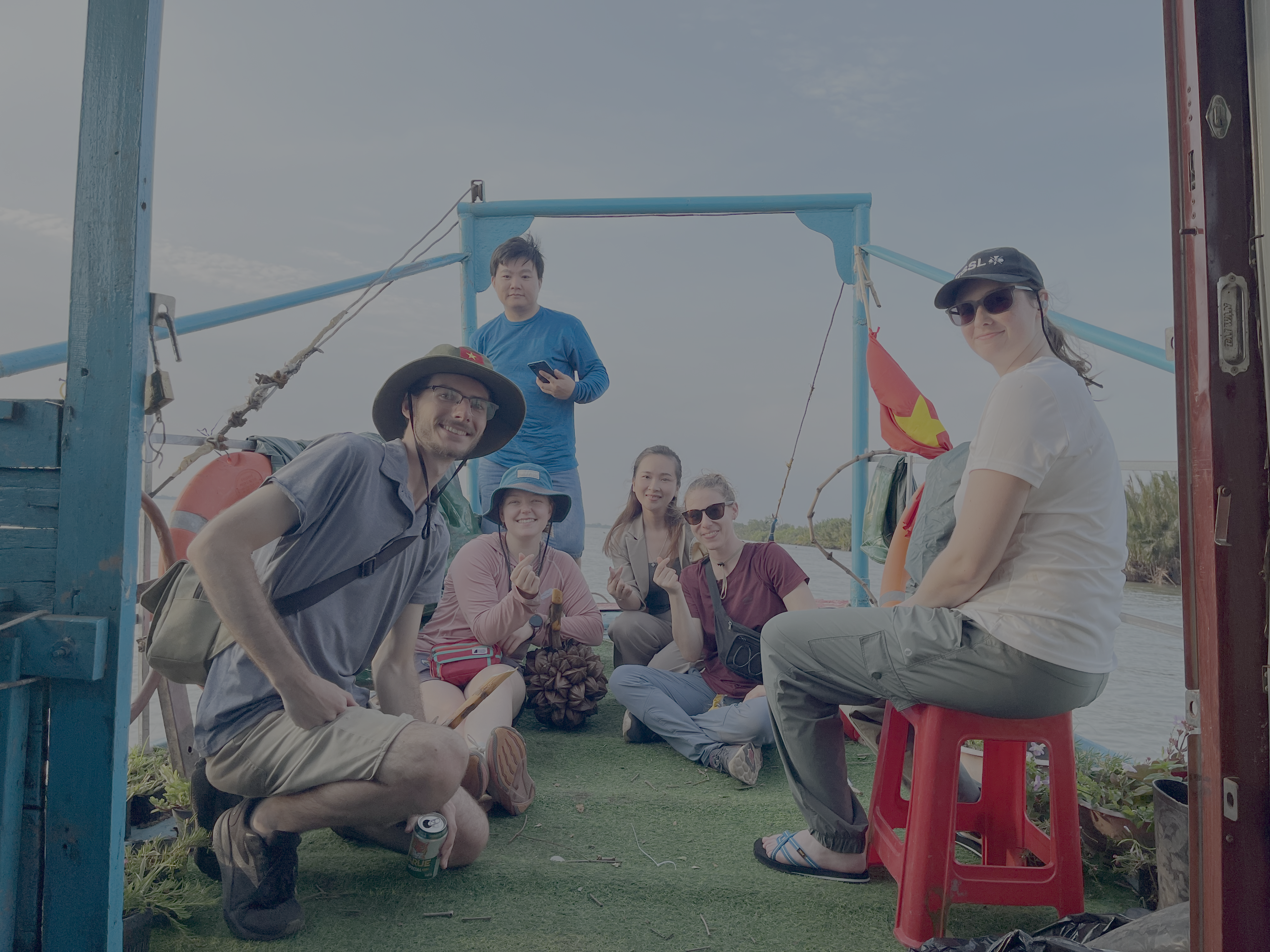
Over winter break in 2025, Dr. Phillipe Van Cappellen led a field course to the Mekong Delta in Vietnam to explore one of the largest and most fertile mega-deltas in the world. Working directly in the field with experts and local communities, students learned about the natural processes that created the delta and the human impact on its hydrology, landforms, and ecosystems.
Upcoming field trips
Learn more about upcoming international field experiences for students in Earth and Environmental Sciences, including funding to support trip costs.
Explore the natural world in your own backyard
Even in between field trips, hands-on experience is never far away. Our on-campus resources allow students to get up close and personal with rocks and other specimens from all over the province, country, and beyond.
Earth Sciences Museum
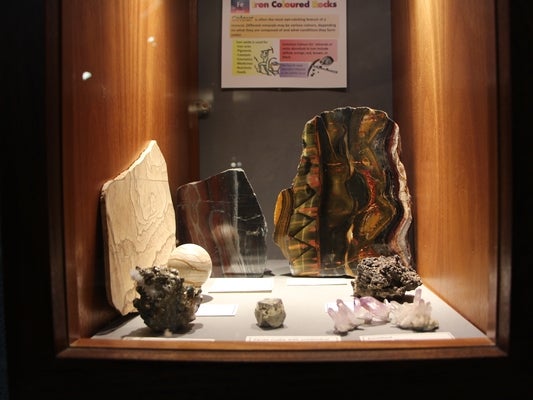
The Earth Sciences Museum is home to a collection of over 5,000 minerals, rocks, fossils, artifacts, and meteorites. These specimens come from all over the world, from right here in Ontario to as far away as the Northwest Territories, China, Madagascar, and Brazil.
Gain a deeper appreciation and understanding of the Earth’s environments, materials, and processes as part of a course or on your own. It’s free to visit.
Peter Russell Rock Garden
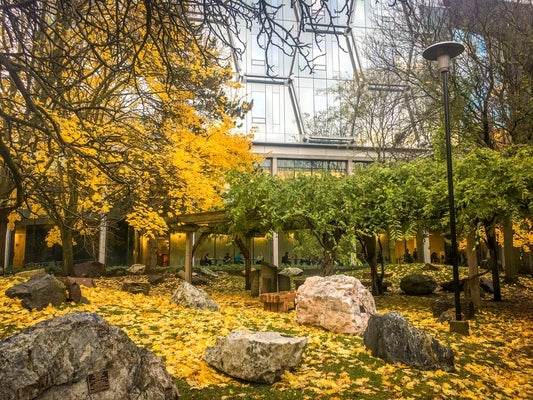
The Peter Russell Rock Garden (PRRG) has become a landmark at the heart of the main campus. It’s the largest geological garden in Ontario and houses more than 100 rock and mineral specimens spanning 4 billion years.
The specimens in the PRRG were collected from all over North America, from the Yukon to PEI to Arizona and Pennsylvania. Courses such as EARTH 121 and 235 make use of them in labs, but if you can’t wait, you’re welcome to explore on your own. Download the garden map along with the self-guided tour transcript, and walk yourself through the collection. The garden is open year-round.