
Environmental challenges can seem overwhelming. We’re constantly bombarded with news and information about air and water pollution, climate change, habitat and species loss, food shortages and other problems that threaten humanity.
In the School of Environment, Resources and Sustainability (SERS), we understand the seriousness of these challenges. But we are equally focused on solutions, and on offering the degree programs, skills and knowledge needed to protect, restore, reform and transform the social and ecological systems that we all depend on.
What will an ERS degree mean for you? It means the opportunity to get your boots dirty and participate in hands-on learning in classes, co-op jobs, field work opportunities, and research projects.
It means integrating ecology and social sciences, and connecting practical skills in ecosystem monitoring and restoration, with environmental policy analysis, impact assessment and collaborative decision making.
And it means working with faculty that are nationally and internationally recognized for their expertise in biodiversity conservation and restoration, food systems sustainability, water governance, climate change and energy transitions, and in understanding the politics of social change.
In SERS, we believe it’s possible to navigate to a more sustainable future. Our mission is to help chart that course, and our programs will prepare you for environmental careers with purpose and impact.
Reach out to find out more about our academic programs, the exciting careers available to our graduates (check out our careers page!), and our award-winning research. We hope you’ll join us!
News
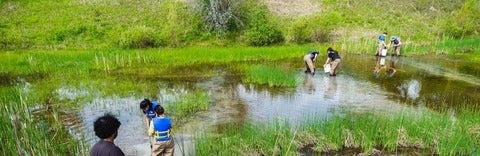
SERS signs MOU with Canadian Wildlife Federation
SERS and the Canadian Wildlife Federation signed a Memorandum of Understanding which will see us collaborate to advance biodiversity conservation and educational innovation across Canada and pursue new academic and research projects together.
Jennifer Clapp named AAG Honorary Geographer
The American Association of Geographers (AAG) has recognized Dr. Jennifer Clapp as their AAG Honorary Geographer for 2026. Congratulations Jennifer!
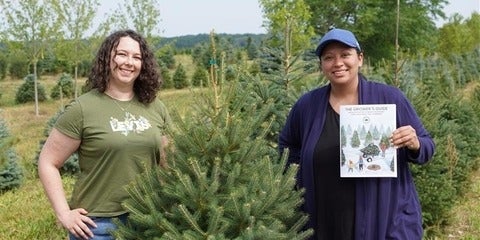
Christmas Tree Lab helps growers all year long
Housed in the Faculty of Environment and directed by Dr. Kelsey Leonard, the University of Waterloo’s Christmas Tree Lab empowers Christmas tree growers year-round with research and science-based tools that strengthen sustainability and resilience across the industry.
Blog
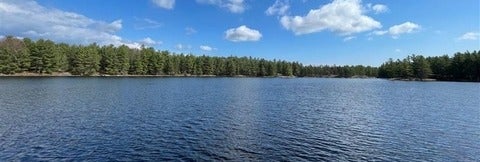
A new look at ecohydrology trends
A new paper led by SERS PhD student Mackenzie Jones in Dr. Chantel Markle’s Lab takes a global look at how researchers are studying the interactions between ecology and hydrology, an interdisciplinary field known as ecohydrology. Find out how we can advance wildlife ecohydrology research and how it can help guide future conservation and management efforts. There's a wonderful infographic which communicates the information as well.

Considering the environmental impacts of industrial tequila production
Have you considered the environmental impacts of industrial tequila production?
While many consume the beverage, in Jalisco State in Mexico, the region’s ecosystems are being destroyed and replaced by a uniform crop that is prone to pest outbreaks.
Prof. Brendon Larson and colleagues outline several issues with industrial production of tequila and highlight a shift to the more traditional use of mezcal.
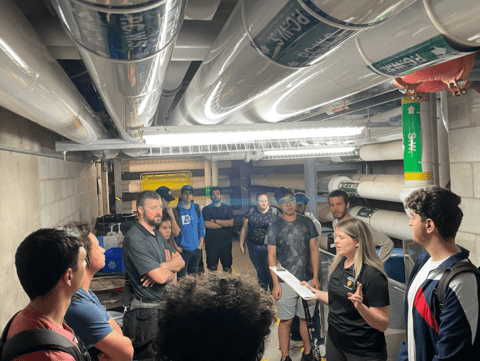
Exploring energy inside and out of the classroom
After a period of time in an administrative role, Dr. Ian Rowlands returned to the rhythm of being a 'regular' professor. He offered a brand new, experiential learning course on "Energy and Society in Ontario" which comprised classroom and field trip instruction.