Blog

Filter by:

Limit to posts where the title matches:
Limit to posts where the date of the blog post:
Date range
Limit to posts tagged with one or more of:
Limit to posts where the audience is one or more of:
Monday, December 1, 2025

A new look at ecohydrology trends

A new paper led by SERS PhD student Mackenzie Jones in Dr. Chantel Markle’s Lab takes a global look at how researchers are studying the interactions between ecology and hydrology, an interdisciplinary field known as ecohydrology. Find out how we can advance wildlife ecohydrology research and how it can help guide future conservation and management efforts. There's a wonderful infographic which communicates the information as well.

Have you considered the environmental impacts of industrial tequila production?

While many consume the beverage, in Jalisco State in Mexico, the region’s ecosystems are being destroyed and replaced by a uniform crop that is prone to pest outbreaks.

Prof. Brendon Larson and colleagues outline several issues with industrial production of tequila and highlight a shift to the more traditional use of mezcal.

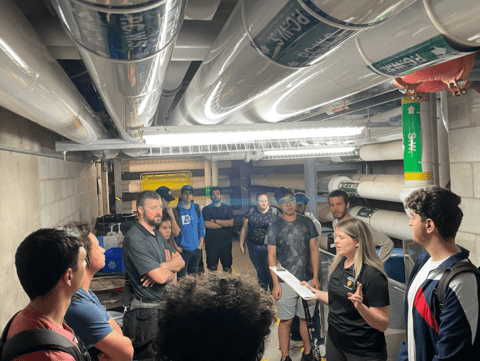
After a period of time in an administrative role, Dr. Ian Rowlands returned to the rhythm of being a 'regular' professor. He offered a brand new, experiential learning course on "Energy and Society in Ontario" which comprised classroom and field trip instruction.

Wednesday, September 24, 2025

Beyond Borders' Ghana field school

Interested in seeing the world, while also building career and research skills?

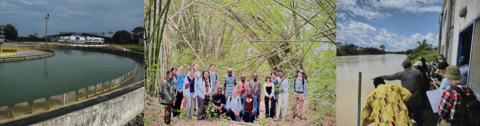
Third year ERS student Jordan Wilton spent two months of the spring 2025 term studying environmental issues through the Beyond Borders: Field School in Ghana. Check out the blog and video diary Jordan created during the course.

Prof Bob Gibson presents background on regional assessments taking place for the Ring of Fire area – the northern Ontario’s hot prospect mining area improbably named after a 1960s Johnny Cash song.

Despite all the hurry-up moves, the extent and timing of any Ring of Fire mining remains anyone’s guess.

A photography-based study with Conservation Halton and SERS researchers offered a practical, low-cost engagement method with community members to reflect on connections to Hamilton Harbour and their support for local conservation initiatives culminating with a well-attended exhibition of the photos.

Dr. Leah Jones-Crank reflects on the spring 2025 field trip course which explored the complexity of urban sustainability through a case study of Singapore. As the 10-day field course progressed, the 20 students and two instructors engaged their critical thinking skills to reflect on the environmental, social, and economic connections within Singapore.