Blog

Filter by:

Limit to posts where the title matches:
Limit to posts where the date of the blog post:
Date range
Limit to posts tagged with one or more of:
Limit to posts where the audience is one or more of:
Friday, August 14, 2026

Coordinating clean water

PhD student Fridah Silas calls for a coordinated adoption of agricultural Best Management Practices at the watershed scale rather than the individual farm scale for the best result for water quality improvements.
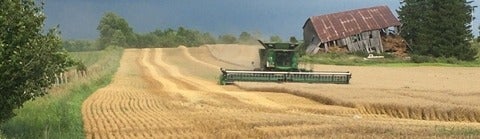

Henri Chevalier, a SERS PhD student, writes that “Farmers are facing a cost squeeze as seeds, fertilizers, machinery and land become more expensive. In Canada, the value of machinery per farm rose … a 35-fold increase even after inflation.” 

In an article in The Conversation, Chevalier notes that many farms have to keep getting bigger just to survive, and that this growth imperative is unsustainable, for the environment and for farmers themselves.

Have you considered the environmental impacts of industrial tequila production?

While many consume the beverage, in Jalisco State in Mexico, the region’s ecosystems are being destroyed and replaced by a uniform crop that is prone to pest outbreaks.

Prof. Brendon Larson and colleagues outline several issues with industrial production of tequila and highlight a shift to the more traditional use of mezcal.

Wednesday, March 26, 2025

Fossil fuels and our food systems

Fossil fuels are widely used all across the economy, including in food systems. Dr. Jennifer Clapp has been working with colleagues on a new project that seeks to uncover where we rely on fossil fuels in our food system to assess where and how we can shift away from them. In one podcast episode, she walks through fossil energy use associated with a typical bag of corn chips.

Dr. Jennifer Clapp's article in The Conversation argues that hunger persists across the world because we allow injustice and inequality to endure. If we are serious about ending it, we need bold political action, not just scientific breakthroughs.

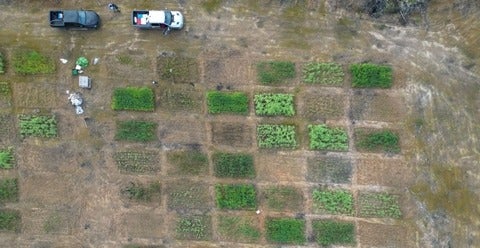
The Soil Ecosystems Dynamics Lab at SERS, under the leadership of Dr. Maren Oelbermann, is collaborating with the BioSoil North team at Memorial University of Newfoundland. Together, they are using a multidisciplinary approach to address the challenges of harnessing Happy Valley-Goose Bay's potential for sustainable commercial crop production. The research focuses on developing sustainable agricultural techniques to enhance soil fertility and crop yields in this northern boreal area while sequestering carbon and mitigating greenhouse gas emissions.