News

Filter by:

Limit to news where the title matches:
Limit to items where the date of the news item:
Date range
Limit to news items where the audience is one or more of:
Limit to news items where the faculty or school is one or more of:

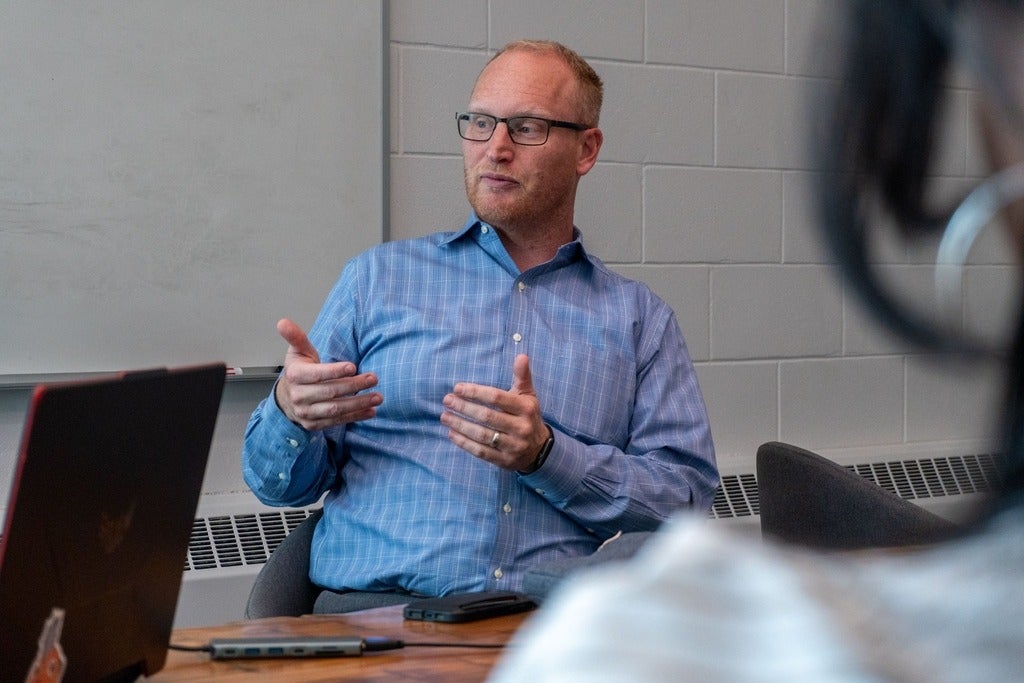
On October 19, Ben Dachis, Vice President of Research and Outreach at Clean Prosperity and a member of FCI’s advisory board, sat in as FCI co-op students presented their work. For Tony Lin and Steven Men, it was a working session with an advisor who has been part of their project from the start. Their Growth Management Platform (GMP) shows cities how a growth decision ripples through development charges, property taxes, emissions and traffic. Dachis compared those trade-offs to a balloon: squeeze one side and the other bulges. He urged the team to build the structure first, add detail later, and share their work early, flagging assumptions so the people who hold better data can step in. The GMP is now close to a minimum viable product.

Preethi Raghuraman, a junior product manager at FCI, and Krishnam Jhalani, an FCI co-op student, joined Managing Director Eryn Stewart in Iqaluit for their first trip north. They met with the Nunavut Economic Development Association (NEDA), FCI's longtime partner on a tool to help Community Economic Development (CED) officers in Nunavut's 25 hamlets create and track their CED plans. Listening to NEDA reshaped the project. Long plans often end up on a shelf, staff change over time, and internet connectivity is limited, so the tool is shifting toward short visual summaries, progress tracking between plan cycles, spoken input, and private storage for each hamlet's documents. "Once we sat down with the people it's being built for," says Preethi, "it was clear the best version could only come from listening."

When a 13-year-old girl stops riding her bike to school, the reasons usually extend far beyond the bike path. During their initial on-campus residency week for the Master of Future Cities (MFC) program, student teams analyzed municipal transportation data and developed practical strategies to address why women and young girls opt out of cycling networks. Using Waterloo as a primary case study, one team introduced "Bridging the Cycling Gap," mapping the transition into early adolescence through a fictional persona named Maya and proposing a gamified social app to reward riders for using municipal cycling routes.

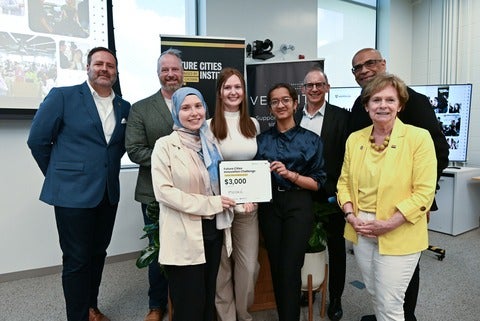
The Future Cities Institute founded by CAIVAN partnered with Velocity to host the Future Cities Innovation Challenge. The high-intensity, two-week sprint brought interdisciplinary student teams together to build data-backed business concepts targeting the Canadian housing crisis, modern infrastructure demands, and municipal service systems.

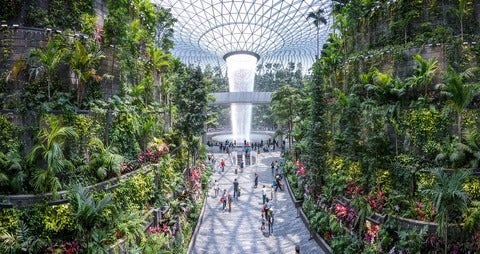
Graduate students from the Master of Future Cities (MFC) program recently returned from an intensive, two-week field course in Singapore. Organized by the Future Cities Institute founded by CAIVAN, this experiential learning trip allowed students to step out of the classroom and see how long-term foresight, multi-purpose infrastructure, and high-density housing strategies are deployed in the real world.

The Future Cities Institute founded by CAIVAN has appointed veteran planner and transportation researcher Clarence Woudsma as Co-Director, Academic. Bringing three decades of applied expertise in logistics and mobility policy to the leadership team, Woudsma will steer the institute's academic direction and oversee the Master of Future Cities (MFC) graduate program, where students learn to develop data-backed approaches for building resilient communities.

FCI researchers attended the Nunavut Economic Development Association Conference in Iqaluit to present and pilot an AI-powered Community Economic Development Planning Tool with community leaders and administrators. Workshops surfaced real challenges around fragmented planning, connectivity, and language access, and reinforced FCI's grounding principle that responsible, effective tools are built only after listening closely to the people they are meant to serve.

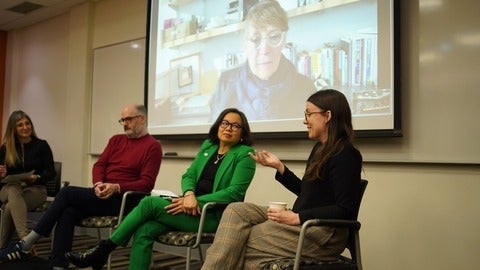
That’s a wrap on World Cities Week 2025!

This year’s program brought together students, researchers, and practitioners for a dynamic mix of panels, workshops, and hands-on sessions exploring how cities can adapt, connect, and thrive in an ever-changing world.

Each conversation reflected the energy and creativity that define the University of Waterloo and the Future Cities Institute, where ideas move from research to real-world impact through collaboration across disciplines.

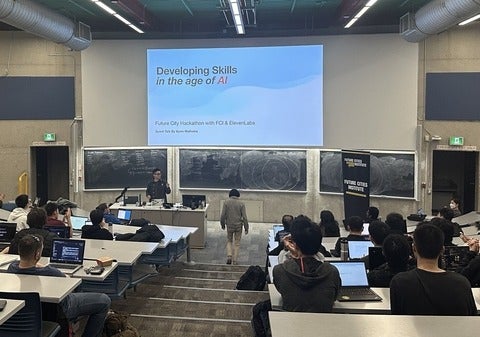
The Future Cities Institute gathered at the University of Waterloo for a fast-paced hackathon exploring how AI and agentic technologies can support the cities of tomorrow.

Co-sponsored by the Future Cities Institute and ElevenLabs, the day brought together students, researchers and builders to design tools for housing, mobility, and community services, with a strong focus on voice and co-pilot applications.

A huge thank you to guest judges from Google, NVIDIA, and ElevenLabs.

FCI member Dr. Jeff Casello joined CTV News for a live interview on the use of AI-powered traffic lights, highlighting both the promise and the practical realities of bringing this technology to different urban contexts. 

Reflecting on a Quebec town’s success using AI to ease gridlock, Dr. Casello noted that adaptive systems can meaningfully improve traffic flow when supported by the right infrastructure. Larger cities like Toronto, he explained, face additional layers of complexity that make implementation more challenging. Higher traffic volumes, layered governance, and older infrastructure make it more difficult to replicate Kirkland’s dramatic success. As Casello noted, while Toronto could benefit from adaptive signals, it won’t see the same “really large increases in performance.”