Events

Filter by:

Limit to events where the title matches:
Limit to events where the first date of the event:
Date range
Limit to events where the type is one or more of:
Limit to events tagged with one or more of:
Limit to events where the audience is one or more of:
Friday, July 14, 2017 11:45 am - 11:45 am EDT (GMT -04:00)

RAC1 Journal Club/Seminar Series

Efficient quantum memory in naturally trapped Rare-Earth ions

Mahmood Sabooni, IQC

The ability to map, store quantum states of light (e. g. single photon) to matter and later retrieve is one of the important building blocks of quantum information processing. Such a device is called a quantum memory for light.
Wednesday, July 26, 2017 12:00 am - Friday, July 28, 2017 12:00 am EDT (GMT -04:00)

Women in Physics Canada

The Women in Physics Canada (WIPC) conference, hosted by the University of Waterloo, Faculty of Science, Department of Physics & Astronomy and the Institute for Quantum Computing, will bring together early career scientists to present their research and hear plenary talks from leaders in physics.

We welcome attendance by people of all genders.

Register

Friday, July 28, 2017 11:45 am - 12:45 pm EDT (GMT -04:00)

RAC1 Journal Club/Seminar Series

Dimensionality-driven orthorhombic MoTe2 at room temperature.

Joey Zhong

We use a combination of Raman spectroscopy and transport measurements to study thin flakes of the type-II Weyl semimetal candidate MoTe2 protected from oxidation. In contrast to bulk crystals, which experience a phase transition from monoclinic to the inversion symmetry breaking, orthorhombic phase below ~250 K, we find that in moderately thin samples below 10 nm, a single orthorhombic phase exists up to and beyond room temperature.

Monday, July 31, 2017 2:30 pm - 2:30 pm EDT (GMT -04:00)

Optical precursors: From fundamentals to applications

Colloquium featuring Heejeong Jeong - Hong Kong University of Science and Technology

Optical precursors are transient electromagnetic wave packets propagating precisely at the speed of light in vacuum through a dispersive and absorptive dielectric. Even though its existence was conjectured by Sommerfeld and Brillouin 100 years ago, the detection seemed to be impossible due to its exceedingly small amplitude and femtosecond time scale in ordinary linear dispersive media. 

Friday, August 18, 2017 1:00 pm - 1:00 pm EDT (GMT -04:00)

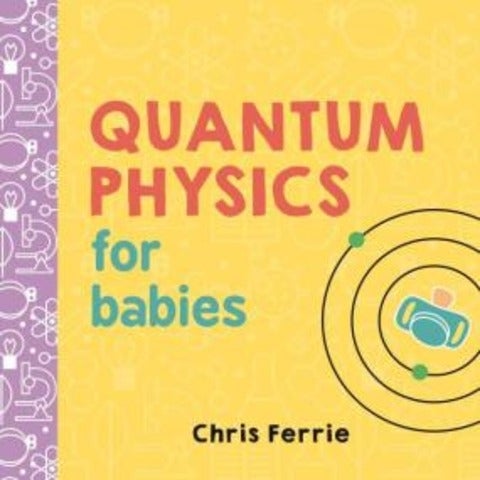
IQC Special Seminar: Quantum Physics for Babies

Chris Ferrie: Quantum Physics for Babies 

In a recent survey, nearly 1 in 3 Americans said they would rather clean a toilet than do a single math problem. Tell someone on the street that you are a physicist, or worse, a mathematician, and you’ll be acknowledged with a “I hated math in school” or “I was never any good at math.” Tell them you are a quantum physicist and you’ll be lucky if you get a response. Chris Ferrie plans to vanquish those doubts and fears by introducing children to quantum physics. But, how young is too young? Enter Quantum Physics for Babies.

Hear from author and quantum theorist Chris Ferrie, IQC and University of Waterloo, Faculty of Mathematics alumnus, about his experience in communicating quantum information science to a larger audience. This general talk is suitable for all audiences.

Tuesday, August 29, 2017 11:00 am - 11:00 am EDT (GMT -04:00)

Robust and high-fidelity control for quantum computation

Hsi-Sheng Goan - Department of Physics and Center for Quantum Science and Engineering, National Taiwan University, Taipei

An essential prerequisite for quantum information processing is precise coherent control of the dynamics of quantum systems or quantum bits (qubits). Most of the control sequences implemented in quantum experiments are developed and designed based on the assumption of having ideal (closed) quantum coherent systems.

Behrooz Semnani, PhD candidate, Department of  Electrical and Computer Engineering, University of Waterloo  

Recent rapid advancements in nanofabrication technologies have widened the realm of possibilities in nanophotonics, nonlinear and sub-wavelength optics. Realizing nonlinear optics in subwavelength scale paves the way for low cost integrated photonics. Ultra-high-Q photonic crystal nanocavities and nanostructured materials are examples of such structures. Those structures offer very small mode volume guaranteeing highly enhanced field intensity.

Tuesday, September 12, 2017 11:00 am - 11:00 am EDT (GMT -04:00)

Self-testing QRNG: A lot of randomness for little trust!

Hugo Zbinden, Université de Genève

An approach to quantum random number generation based on unambiguous quantum state discrimination (USD) is developed. We consider a prepare-and-measure protocol, where two non-orthogonal quantum states can be prepared, and a measurement device aims at unambiguously discriminating between them.

Tuesday, September 12, 2017 1:00 pm - 1:00 pm EDT (GMT -04:00)

Seminar: Successes and limits in engineering photon pair sources

Evan Meyer-Scott, Universität Paderborn 

I will present a realization of a great photon pair source based on parametric down-conversion, and discuss a not-so-great limit to the performance of photon pair sources in general. The former is a fully fiber-coupled waveguide pair source with 46% raw heralding efficiency, and no optical alignment required. The latter restricts the achievable heralding efficiency, when spectrally filtering the photons to increase the purity.