The outline method is one of the most commonly used note-taking methods for university students. In fact, it’s possible you’re already using it!
The outline method is easy to use and adjust for different purposes — taking lecture notes, reading notes and studying.
Try it out in your next lecture using this downloadable resource:
How to use it
The outline method helps you organize ideas in a hierarchical approach. Here are the steps:
-
Start with writing the main topic at the top
-
Then, move to the sub-topics — these are branches from the main topic
-
Finally, add details for each idea
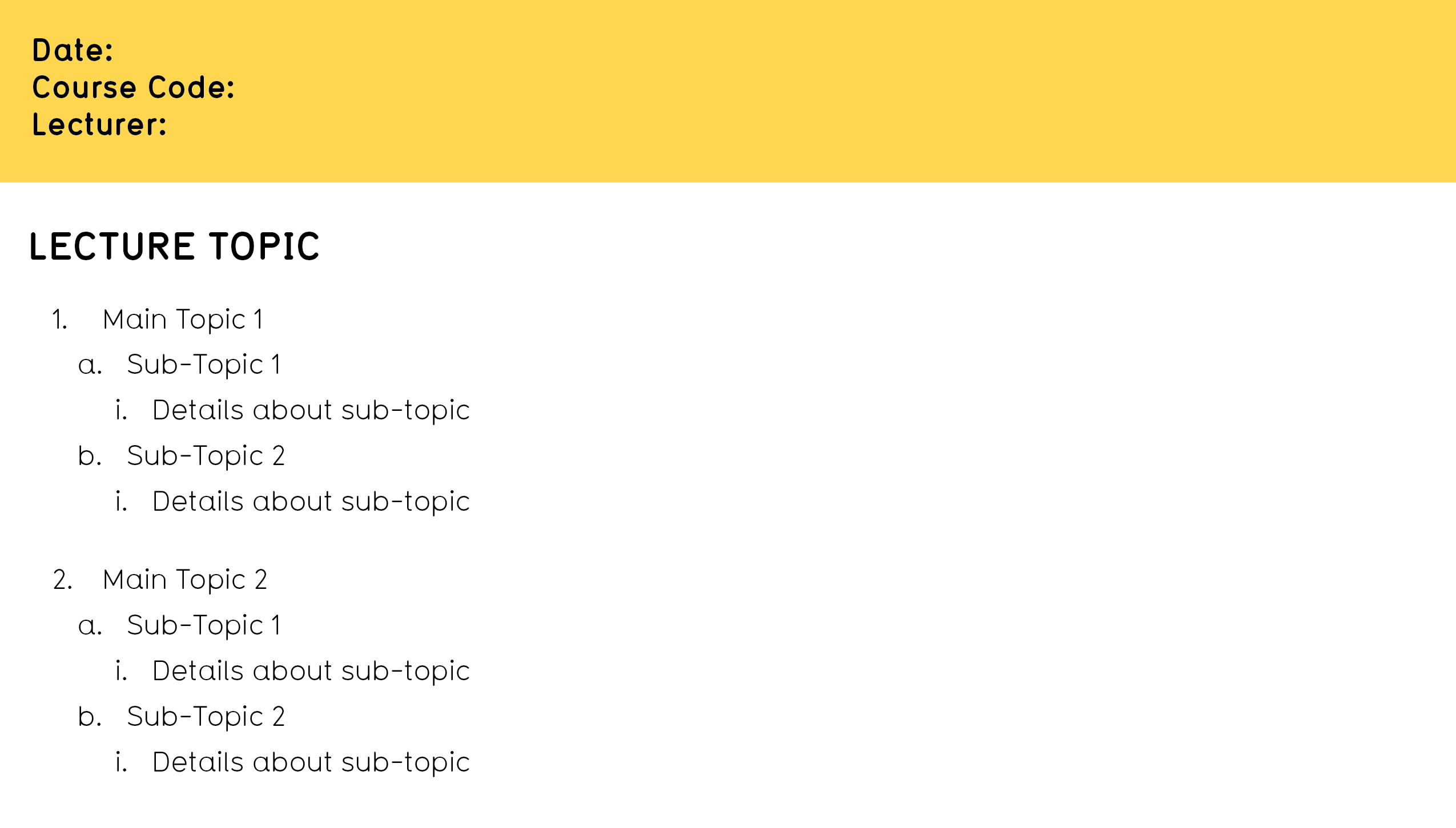
You might use numbers and letters to label headings and subheadings — it can help you show relationships and can look like this:
When to use it
Taking quick lecture notes
Choose the outline method when you’re recording notes in the order of how information is presented during the lecture.
This is a fast note-taking method — so you might have to go through your notes after lecture and rewrite or reorganize some parts.
Structuring a paper
Start by listing all your subheadings of the paper as “main topics”. Then, add arguments as “sub-topics” and supporting evidence as details.
Summarizing content for tests/exams
Each book chapter or learning resource can be listed as a “main topic”. Keywords, concepts and other major ideas can be listed as “sub-topics”.
You can use the details section to remind yourself of page numbers and where to find important information.
Take your notes to the next level
If you’re ready for something more advanced, try combining the outline method with other note-taking methods.
Outline method + Cornell method
You can integrate the outline method into the Cornell method. You’ll use an outline method in the “notes” section of the Cornell note, then add extra information to “clues” and “summary”.
Outline method + concept mapping
These two methods of note-taking use similar headings — main topic or topic, then subtopic and details.
If you take notes during lectures using the outline method, you can easily transfer them to a concept map later to help you visualize connections.