You might feel overwhelmed when carving out time to study for multiple exams while attending classes, labs, and completing assignments. What if we told you that there’s a way to study effectively without overwhelming yourself during exam week?
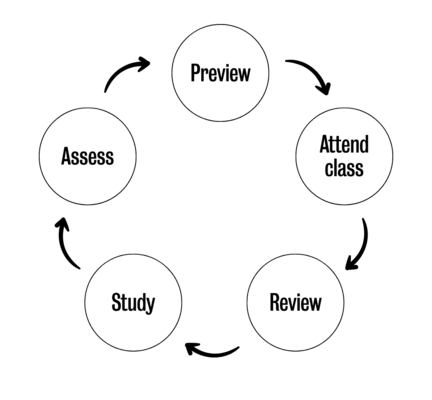
The study cycle is a five-step process that integrates studying for exams into your daily routines.
Each stage reinforces content you've learned in different ways to optimize memory retention.
Stage #1 - Preview
Before each class, skim provided and previous lecture notes, chapter readings, and create preliminary questions that you have about the topic of the upcoming lecture.
Why? — Preview, reinforces information that you need to know throughout the term and can prevent cramming for tests and exams.
Stage #2 - Go to Lectures
Attend class to build on the foundational information you’ve stored in your brain from the preview stage.
During the lecture make sure you:
- Write down answers to the preliminary questions you’ve created for yourself.
- Note areas that you find confusing.
This prepares you to apply what you’ve learned in class to assignments, tests, and exams.
Stage #3 - Review
Revisit all the lecture notes you took at the end of each day by creating a summary of the main takeaways, a list of important terms and concepts, and include relevant examples.
Reviewing your notes reinforces new information you learned and helps identify gaps in your knowledge. Fill in gaps by speaking to your instructor or TA as soon as possible.
Step #4 - Study
Studying involves practicing what you know through application. Completing assignments forces you to repeat and practice applying what you know so that you retain these skills no matter how many new things you learn in a term.
Hint: You might know how to explain something, but can you apply the concept accurately and consistently in different contexts?
Stage #5 - Assess
Examine your progress by surveying the results of your assignments:
- Have you demonstrated that you know what you’re supposed to know?
- Do you know it well enough to teach it to others or to apply it in different contexts consistently and accurately?
Regular self-assessments help you stop, start, and continue habits. Seek help when you get stuck in a habit or identifying what you need to stop, start and continue.