Quantum Nano Collision Seminar Series: Professor Kevin Musselman
As part of the Water Institute's WaterTalks lecture series, Amy Pruden, W. Thomas Rice Professor, University Distinguished Professor, Via Department of Civil and Environmental Engineering, Virginia Tech, USA will present: Harnessing 'Omics to Inform Strategies to Mitigate the Spread of Antimicrobial Resistance as a One Water Challenge.
All students are invited to meet prominent women in nanotechnology to hear about their history, exciting research, and how they chose their successful career paths. This seminar will provide valuable information to all students, particularly female students, who may be interested in graduate work and careers in S&T but do not know what avenues are open to them.
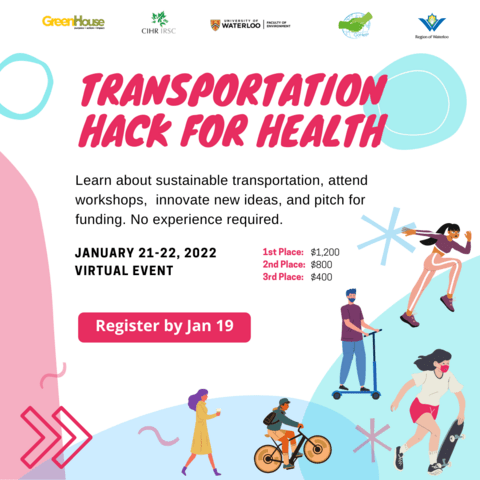
Interested in transforming the local transportation system to achieve climate action? Explore solutions in sustainable transportation at the Transportation Hack for Health.
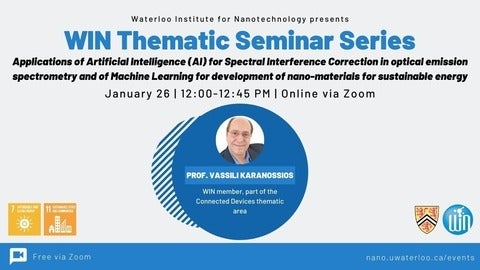
The Waterloo Institute for Nanotechnology (WIN) has four main thematic research areas; Smart and Function Materials, Connected Devices, Next Generation Energy Systems and Therapeutics and Theranostics. To showcase the work going on within these areas, we will be holding monthly WIN Thematic Seminars featuring our members and their research group members.
New Innovation Research Challenge Seeks Proposals for Novel Applications of BlackBerry Technologies to Advance Progress Against UN Sustainable Development Goals
Held virtually, this will be a relaxed workshop style event that sees a brief review of the history of student organizing and the accompanying posters that supported those movements. We'll then livestream some music and people can then take time to just chill and draw.
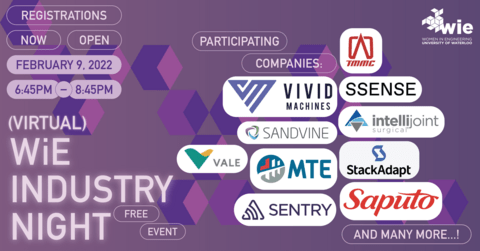
Want more information and tips on what industry leaders are looking for in a candidate? Not sure what to do after you’ve finished your degree? Then this event is for you!
Hear from Lee Fairclough, President of St. Mary's Hospital
In her most recent book, Discriminating Data (2021), Wendy Chun reveals how polarization is a goal—not an error—within big data and machine learning. These methods, she argues, encode segregation, eugenics, and identity politics through their default assumptions and conditions. Correlation, which grounds big data's predictive potential, stems from twentieth-century eugenic attempts to “breed” a better future. Recommender systems foster angry clusters of sameness through homophily. Users are “trained” to become authentically predictable via a politics and technology of recognition.