Verga d'oro marina, Verga d’oro delle sabbie, Italian Sand Dune Goldenrod
Solidago litoralis Savi (Due Cent. Piante Fl. Etrusca. 182. 1804) occurs on sand dunes in a small coastal area of northwestern peninsula Italy. The species is readily distinguished from S. virgaurea by its moderately densely short strigose hairs on the stems, leaves, and large involucres. Garbari and Cecchi (2000) lectotypified the name and discussed its distribution, ecology, karyology, and hypothesized that it was possibly post glacial in origin via isolation and divergence from S. virgaurea. The species is diploid (2n=18).
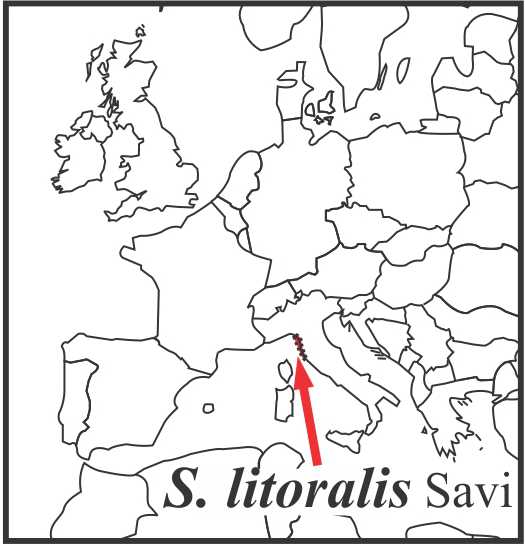
Solidago littoralis Savi ex Pers. (1806) and Solidago virgaurea L. var. littoralis (Savi ex Pers.) DC. (1836) are synonyms based on a later orthographic variants of the name.
In a multivariate study of S. ser. Solidago, S. litoralis was statistically supported as distinct from other species in the series including S. virgaurea (Semple et al. 2020). Involucres were larger in S. litoralis and it is the only species in ser. Solidago that has a dense indument of short hairs on the stems, leaves and outer phyllaries.
Multiple images of the species are posted on line including this set.
Garbari, F and O. Cecchi. 2000. Solidago litoralis Savi (Asteraceae): typification, taxonomy and distribution of a plant endemic of the N-W Tyrrhenian seashores of Tuscany. Webbia 54(2): 181-192.
Semple, J.C., Y. Ma, L. Tong, and M. Sorour. 2020. A multivariate morphometric analysis of Solidago sect. Solidago and S. sect. Multiradiatae (Asteraceae: Astereae). Phytoneuron 2020-38: 1–59.
Last revised 5 April 2025 by J.C. Semple
© 2025 J.C. Semple, including all photographs unless otherwise indicated


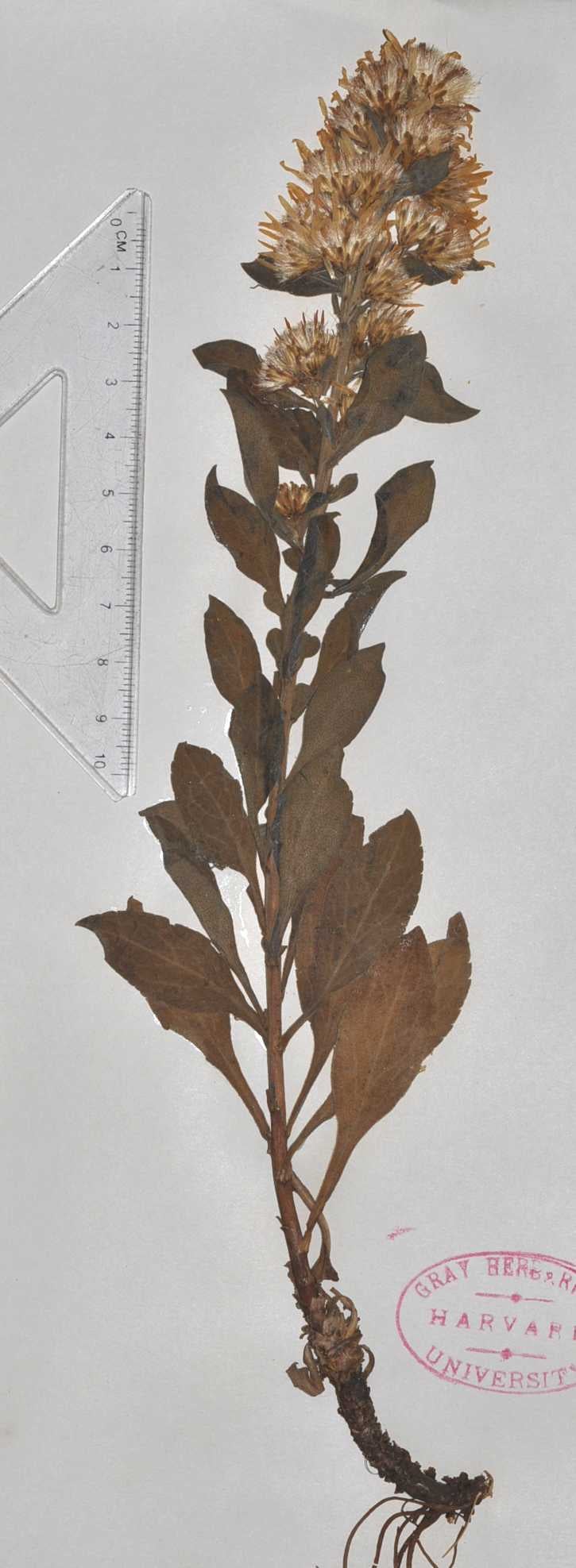

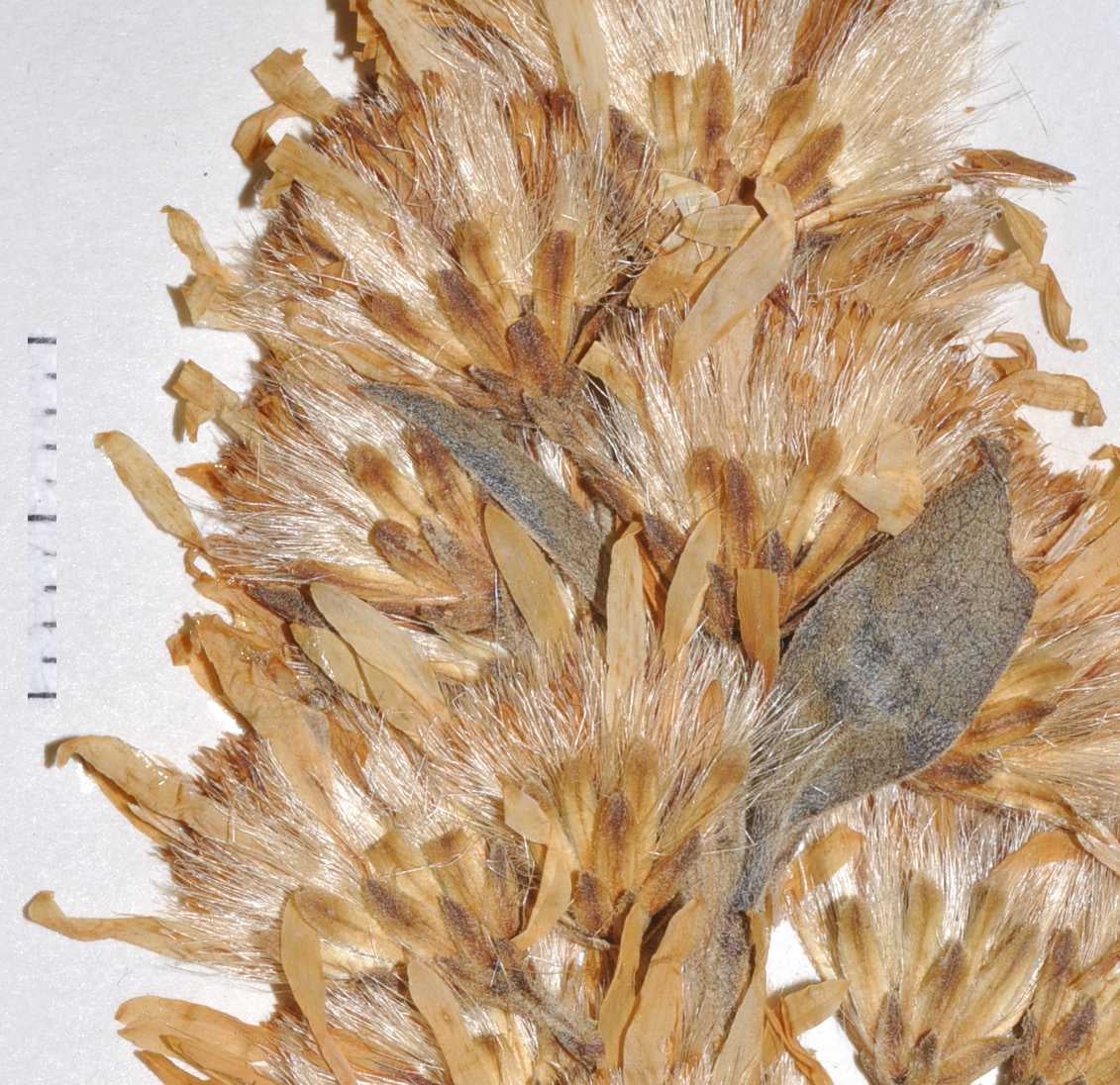

1-4. Solidago litoralis, P. Savi s.n. (GH), Italy. 1. Shoot. 2. Hairy stem and leaves. 3. flowering heads. 4. Disc floret fruits.