Fereidoun Rezanezhad
Biography
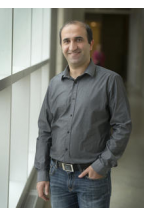
Dr. Fereidoun Rezanezhad is a Research Professor in the Department of Earth and Environmental Sciences at the University of Waterloo. His diverse research interests are united under the central theme of understanding mechanisms controlling subsurface hydrogeochemistry. While he is interested in fundamental physical, hydrological and geochemical questions, much of his work also has strong applied aspects tied to techniques and equipment in his lab.
The scale of his research ranges from detailed examination of hydrological dynamics and biogeochemical pathways to watershed and landscape studies. He focuses on management practices of the fate of carbon, nutrients, and contaminants in soils, and the impacts of greenhouse gases emissions and biogeochemical processes between the atmosphere, hydrosphere, and geosphere at watershed scales. Rezanezhad integrates theoretical, laboratory, field, numerical, and machine learning approaches to mechanistically understand and quantitatively predict biogeochemical processes that regulate water quality, carbon and nutrient cycling, greenhouse gas emissions, microbial activity and mineral transformations in agricultural and urban landscapes, wetlands, peatlands, lakes, and coastal marine environments.
His team has been producing the scientific knowledge base and intersectoral decision‑support tools needed to address complex global challenges, including the impacts of climate warming, increasingly frequent flooding events and winter warming across agricultural, urban, wetland and northern permafrost and peatland systems. Rezanezhad applies his research results to guide natural resource management, environmental clean‑up, and nature‑based solutions for country-wide watersheds, as well as through contributions to community leadership and significant efforts to train and mentor the next generation of inter‑ and trans‑disciplinary environmental scientists.
Research interests
Ecohydrology
Critical zone hydrogeochemistry
Soil processes
Cold regions processes and seasonal freeze-thaw dynamics
Biogeochemical cycles of nutrients
Groundwater-surface water interactions
Hydrological and biogeochemical processes of peatlands and wetlands
Flow and transport in porous media
Reactive transport modeling
Microplastics in the environment
Education
2007, PhD Environmental Physics, Institute of Environmental Physics, University of Heidelberg, Germany
2000, MSc Physics, University of Sistan and Baluchestan, Zahedan, Iran
1998, BSc Physics, University of Tabriz, Iran
Awards
2019, Technical University of Munich (TUM) August-Wilhelm Scheer Visiting Professor Award
2015 – 2024, Mercator Fellow in Baltic TRANSCOAST research training group funded by German Research Foundation (DFG)
2009 – 2011, Suncor Energy Inc. Postdoctoral Fellowship. Fen Creation Research Project. University of Waterloo, Canada
2007 – 2009, IP3 Post-doctoral Fellowship, Wilfrid Laurier University, Waterloo, Canada, Cold Regions Research Centre (CRRC), Improved Processes and Parameterisation for Prediction in Cold Regions (IP3) network funded by Canadian Foundation for Climate and Atmospheric Sciences (CFCAS)
2004, Outstanding Paper of the Conference for the Best Scientific Poster, Eurosoil2004, Freiburg, Germany
2003 – 2007, DFG Ph.D. Scholarship and Research Award, University of Heidelberg, Germany, Institute of Environmental Physics
Service
Associate Editor of the Journal of Hydrology
Associate Editor of the Canadian Journal of Soil Science
Associate Editor of the journal Mires and Peat
Academic Editor for the journal PLOS ONE
Chair of Canadian Representative to the International Association of Hydrological Sciences (IAHS) Commission on Water Quality
Professional associations
American Geophysical Union (AGU)
European Geophysical Union (EGU)
Canadian Geophysical Union (CGU)
European Association of Geochemistry (EAG)
Affiliations and volunteer work
Co-op Program Coordinator of the Ecohydrology Research Group
Cross-appointed to the Department of Biology
Water Institute (Member)
Waterloo Climate Institute (Member)
UNESCO Urban Ecohydrology Observatory (Member)
MathPeat Network (Member)
Soils Processes and Critical Zone Technical Committee (Member)
Teaching*
- EARTH 652 - Reactive Transport Modelling
- Taught in 2022, 2026
* Only courses taught in the past 5 years are displayed.
Selected/recent publications
For the full list of Fereidoun Rezanezhad’s publications, please see Google Scholar.
Ramezanzadeh, M., Rezanezhad, F., Slowinski, S., Ye, J., Vandergriendt, M., Rudolph, D. L., Thomson, N. R., and Van Cappellen, P. (2026). Effects of Water Table Fluctuations on Naphthalene Degradation: Soil Column Experiment and Modeling. Vadose Zone Journal, Vadose Zone Journal, e70081. https://doi.org/10.1002/vzj2.70081
Reshadi A. M., Rezanezhad F., Shahvaran A., Ghajar A., Kaykhosravi S., Slowinski S., Van Cappellen P. (2025). Assessment of environmental and socioeconomic drivers of urban stormwater microplastics using machine learning. Scientific Report, 15, 6299, https://doi.org/10.1038/s41598-025-90612-0
Fairbairn L., Rezanezhad F., Gharasoo M., Parsons C. T., Macrae M. L., Slowinski S., Van Cappellen P. (2023). Relationship between soil CO2 fluxes and soil moisture: Anaerobic sources explain fluxes at high water content. Geoderma, 434, 116493. https://doi.org/10.1016/j.geoderma.2023.116493
Ramezanzadeh M., Slowinski S., Rezanezhad F., Murr K., Lam C., Smeaton C., Alibert C., Vandergriendt M., and Van Cappellen, P. (2023). Effects of freeze-thaw cycles on methanogenic hydrocarbon degradation: Experiment and modeling. Chemosphere, 325, 138405 https://doi.org/10.1016/j.chemosphere.2023.138405
Byun E., Rezanezhad F., Fairbairn L., Slowinski S., Basiliko N., Price J. S., Quinton W. L., Roy-Léveillée P., Webster K., and Van Cappellen P. (2021). Temperature, moisture and freeze–thaw controls on CO2 production in soil incubations from northern peatlands. Scientific Reports, 11:23219, https://doi.org/10.1038/s41598-021-02606-3
Rezanezhad F., Price J.S., Quinton W.L., Lennartz B., Milojevic T., and Van Cappellen P. (2016). Structure of peat soils and implications for water storage, flow and solute transport: A review update for geochemists. Chemical Geology. https://doi.org/10.1016/j.chemgeo.2016.03.010
Graduate studies
I am currently seeking to accept graduate students. Please **email me** your resume, and I will review it and respond if interested.