Environment celebrates two new Vanier Scholars
PhD students Richard Adeleke and Satveer Dhillon are rewarded for their academic excellence, research potential and exceptional leadership skills.
Estimated reading time: 2:57
Two Faculty of Environment students have received the prestigious Vanier Canada Graduate Scholarship. The award, valued at $150,000 over three years, is given to doctoral students across Canada in the health, natural sciences, engineering, social sciences and humanities fields.
Richard Adeleke is a PhD candidate within the Department of Geography and Environmental Management and an emerging leader in economic and health geography. Before joining the University of Waterloo, Adeleke completed his bachelor’s and master’s degrees in Human Geography at the University of Ibadan in Nigeria.
Adeleke’s doctoral research analyzes the experience of financial inclusion among persons with disabilities in the Region of Waterloo. In Canada, approximately 25 per cent of persons with disabilities have limited access to using services like online banking and financial planning, which excludes them from the benefits of financial inclusion which many of us take for granted. Adeleke plans to examine literature and conduct interviews to learn about the environmental and social barriers preventing access and identify strategies to overcome these obstacles.
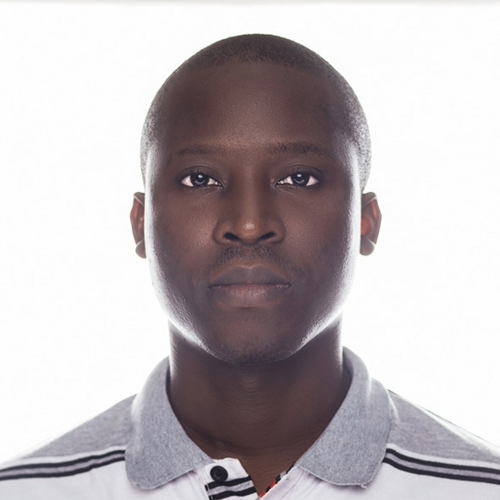
He is supervised by Dr. Nancy Worth, a feminist economic geographer whose research focuses on work, social reproduction, inequalities, age and generations, and feminist theory.
“At the heart of my career aspirations lies the desire to contribute meaningfully to an inclusive society through my research, where no one is marginalized,” says Adeleke. “As the world grapples with the pressing challenges of social inequality and exclusion of minority groups from everyday life, I envision a career where I can advocate for innovative solutions that promote social justice.”
Satveer Dhillon is a PhD candidate within the Department of Geography and Environmental Management with a background in health studies and health geography. Her master’s work at the University of Western Ontario earned her multiple awards including the SSHRC Canada Graduate Scholarship and Ontario Graduate Scholarship.
Dhillon’s doctoral research focuses on the impacts of climate change on health and wellbeing in Uganda. Climate change has severe effects on regions worldwide, particularly low and middle-income countries. In Uganda, climate change will lead to increased levels of resource scarcity, which has been shown to result in psychological distress, impacting health and wellbeing. Dhillon plans to use a mixed-methods design, including surveys, semi-structured interviews and deliberative dialogues, to engage with individuals living in the Mukono and Rukiga regions, two areas highly susceptible to resource scarcity. Dhillon is supervised by Dr. Susan Elliott, a health geographer whose research focuses on the built environment, socially constructed risks, and the physical environment's effects on health, always emphasizing the integration of science and policy.
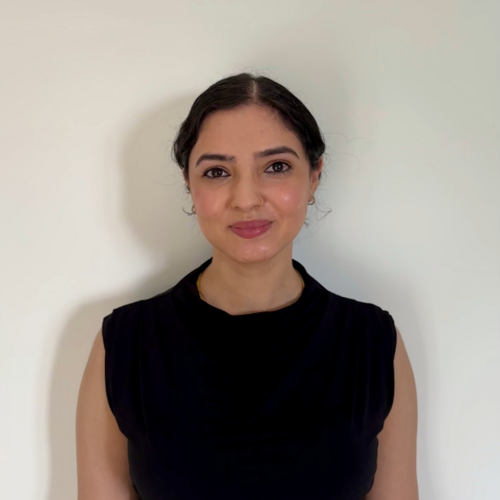
“The findings from this research will help us better understand how people residing in lower-income, vulnerable communities are adapting to climate change,” says Dhillon. “The results can help inform what community-led interventions can be implemented to improve psychosocial health and wellbeing in Uganda and similar low-income settings facing climate change risks.”
Dhillon’s passion for improving the lives of marginalized individuals has been instilled in her since childhood. Her parents immigrated from Punjab, India and built a life in Canada with the foundational values of hard work and helping others. Dhillon was also surrounded by inspirational role models who motivated her to learn more about the world and volunteer her time locally and globally.
Adeleke and Satveer join four other Vanier award-winners at Waterloo this academic year. Learn more about the other 2025 Vanier scholars here, and congratulations to all winners on this significant achievement!

