News

Filter by:

Limit to news where the title matches:
Limit to items where the date of the news item:
Date range
Limit to news items where the audience is one or more of:
Limit to news items where the faculty or school is one or more of:

As Kitchener continues to grow, public service providers face the ongoing challenge of deciding where new infrastructure and programs are needed most. Over the summer term, University of Waterloo Faculty of Environment planning students Miki Zheng and Alexa R. partnered with Kitchener Public Library, FCI Director Dr. Leia Minaker, and FCI Member Dr. Rob Feick to build an evidence-backed decision tool. Using ArcGIS overlay analysis, the team mapped three factors against each other: projected population growth, and deprivation measured two ways, once through the Canadian Index of Multiple Deprivation, and once through EQAO test scores. What came out of the project is a framework KPL can use to test locations, including options like the automated library lockers already running at local community centres.

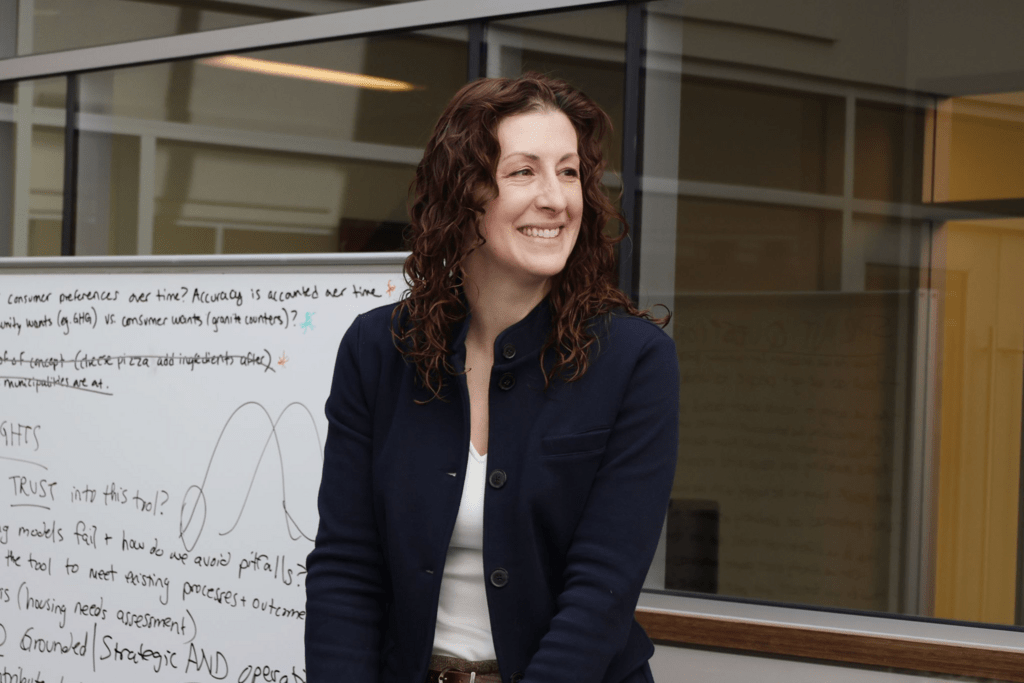
At the AMO conference in Ottawa, municipal leaders and city staff connected with FCI to explore practical, data-backed solutions for their communities. From high-demand resources like the Development Charges Monitor and CivicInquire (an AI-powered homelessness policy platform led by FCI Director Dr. Leia Minaker that recently secured SSHRC funding) to collaborative student partnerships, FCI demonstrated how research moves out of academia and directly into local council chambers. Through the i-Capstone program, municipalities of any size can partner with University of Waterloo student teams to tackle local infrastructure and policy challenges across one or two terms at zero cost.

Data that could strengthen homelessness policies across Canada is often fragmented and difficult for decision-makers to navigate. To address this gap, FCI Director Dr. Leia Minaker has received SSHRC funding to advance CivicInquire, Canada's first intersectional, AI-powered platform dedicated to homelessness policy. By combining machine learning, web crawling, and key informant interviews, CivicInquire transforms disparate policy data into an interactive national database and visualization tool. The platform equips municipal leaders, planners, and community advocates with practical, evidence-backed insights to guide local decision-making.

Researchers and network partners connected with the Future Cities Institute have secured new SSHRC funding to advance data-backed climate resilience and municipal policy tools. Spanning municipal net-zero implementation, property-level flood risk intelligence, virtual reality disaster planning, and international cyclone adaptation, these newly funded initiatives demonstrate how academic research turns into usable, real-world tools for city builders.

Replacing assumptions with evidence is essential as Waterloo Region plans for one million residents. The updated Vision 1 Million Scorecard, co-released by FCI and BestWR, provides a practical snapshot of regional readiness across housing, transit, healthcare, and infrastructure. By measuring concrete progress and highlighting critical gaps in community support, this tool equips municipal leaders, industry partners, and residents with the data needed to guide transparent, long-term planning decisions.

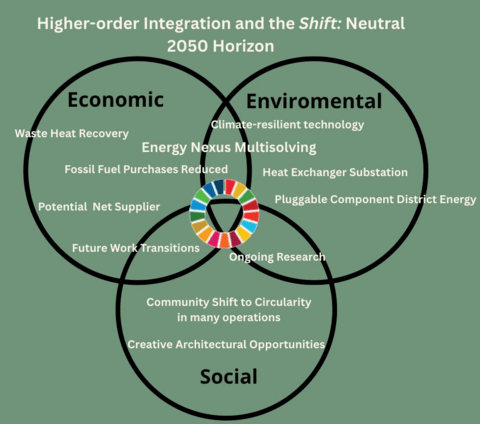
Master of Future Cities student Johanna B. secured Best Idea honors at the Brookfield Renewable Innovation Challenge. Bringing a systems-thinking lens to the Pearl Sullivan Engineering IDEAs Clinic, Johanna’s interdisciplinary team designed an on-campus waste-to-energy organics digester and biogas generator. By turning local campus organic waste into methane fuel for central heating operations, the concept delivers immediate waste management savings while establishing a practical, scalable building block for campus-wide district energy planning and long-term net-zero targets.

BUILD NOW: Waterloo Region has officially broken ground on Union 1, an 85-unit non-profit rental building at 2025 University Avenue East. As the academic partner for this initiative, the Future Cities Institute founded by CAIVAN will study the project closely to document what works, what doesn't, and how different sectors can successfully build together at this scale.

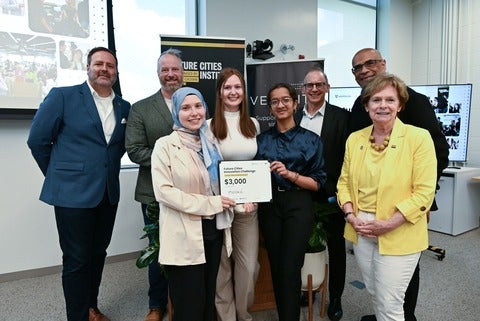
The Future Cities Institute founded by CAIVAN partnered with Velocity to host the Future Cities Innovation Challenge. The high-intensity, two-week sprint brought interdisciplinary student teams together to build data-backed business concepts targeting the Canadian housing crisis, modern infrastructure demands, and municipal service systems.

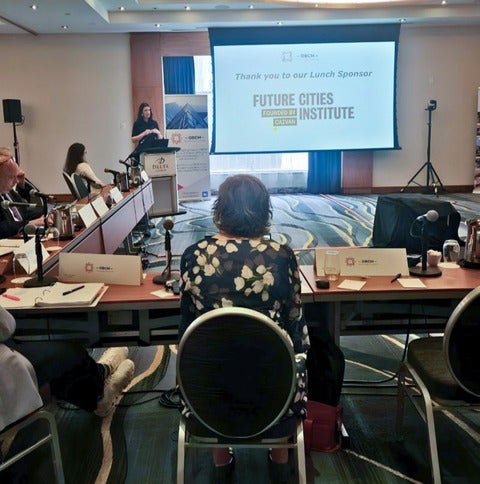
The Future Cities Institute founded by CAIVAN sponsored lunch at the Ontario’s Big City Mayors (OBCM) meeting in Waterloo. Connecting with over 65 mayors, Chief Administrative Officers, and policy staff from across the province, Director Dr. Leia Minaker presented the institute’s applied research capabilities and work-integrated student programs designed to tackle pressing, real-world municipal challenges.

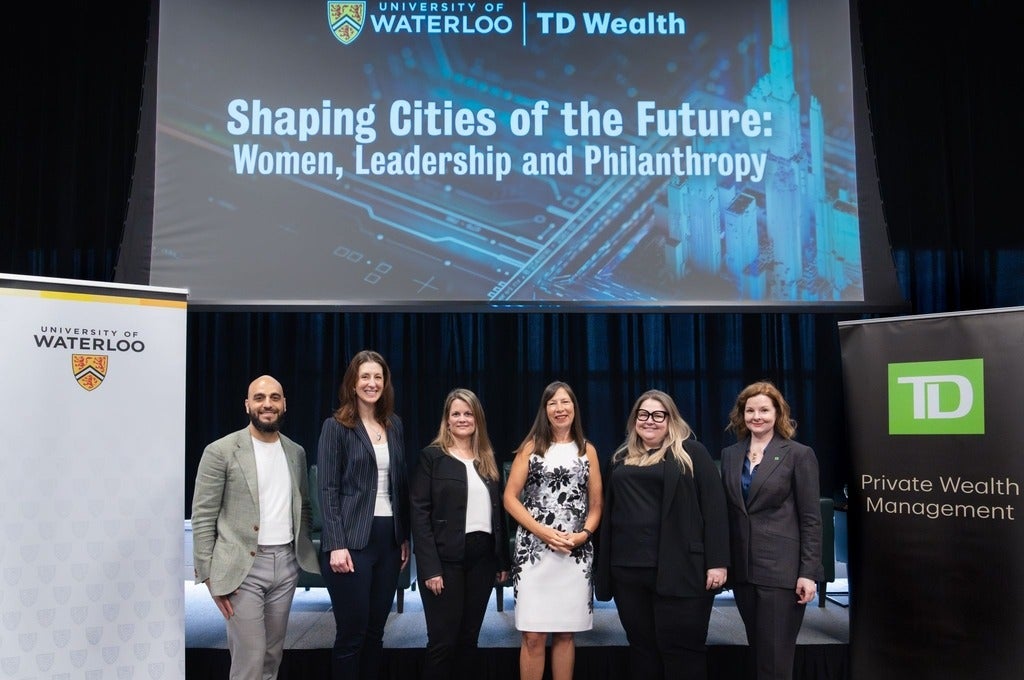
At a recent event co-hosted by the University of Waterloo and TD Wealth, members of the Waterloo community gathered for a powerful conversation on Shaping Cities of the Future: Women, Leadership & Philanthropy.  

Moderated by Leia Minaker, our Director at the Future Cities Institute, the discussion highlighted the vital role women play in financial leadership and philanthropy. Leia guided a rich conversation that emphasized the value of trust-based giving, the power of intentional investment, and the many forms philanthropy can take, whether it be time, ideas, or financial support.