Alan Jamison
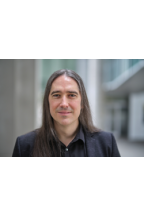
Biography
Dr. Jamison's group uses lasers to cool atoms to within a few billionths of a degree of absolute zero, making the coldest systems in the known universe. At these temperatures, atoms can be made to mimic interesting quantum systems from condensed matter, nuclear, and high-energy particle physics. We can also use light to drive chemical reactions that form molecules at similarly low temperatures. These ultracold molecules are a great resource for studying quantum chemistry and quantum information.
Research interests
Quantum Materials
Quantum Science
Quantum Simulation
Quantum Sensors
Photonics
Quantum Computing
Quantum Information Processing
Scholarly Research
The most compelling questions in quantum physics involve interacting systems of many particles. Quantum many-body physics embraces attempts to build quantum computers, understand exotic new materials, and fundamental questions such as measurement and thermalization in quantum mechanics. Ultracold atoms and molecules provide pristine systems in which to study quantum many-body physics, free from the defects and impurities of bulk materials and completely isolated from the outside world. We use the exquisite control available in ultracold systems to tackle some of the deepest questions of how our universe is put together and how it evolves with time.
Education
2014 Doctorate Physics, University of Washington, Seattle, WA, USA
2008 Master of Science Physics, University of Washington, Seattle, WA, USA
2007 Bachelor of Science (BS) Mathematics, University of Central Florida, Orlando, FL, USA
Awards
2015 Henderson Thesis Prize, University of Washington
2013 Hans G. Dehmelt Prize, University of Washington
2008 Mellam Teaching Fellowship, University of Washington
Affiliations and volunteer work
Institute for Quantum Computing
Teaching*
- PHYS 10 - Physics Seminar
- Taught in 2021
- PHYS 359 - Statistical Mechanics
- Taught in 2021, 2022, 2023, 2024, 2025, 2026
- PHYS 363 - Intermediate Classical Mechanics
- Taught in 2021, 2022
* Only courses taught in the past 5 years are displayed.
Selected/recent publications
Control of reactive collisions by quantum interference Son, H., Park, J. J., Lu, Y.-K., Jamison, A. O., Karman, T., Ketterle, W. Science 375, 1006-1010 (2022) arXiv: https://arxiv.org/abs/2109.03944
Collisional Cooling of Ultracold Molecules Hyungmok Son, Juliana J. Park, Wolfgang Ketterle, Alan O. Jamison Nature 580, 197 (2020) arXiv: https://arxiv.org/abs/1907.09630
Long-Lived Ultracold Molecules with Electric and Magnetic Dipole Moments Timur M. Rvachov, Hyungmok Son, Ariel T. Sommer, Sepehr Ebadi, Juliana J. Park, Martin W. Zwierlein, Wolfgang Ketterle, Alan O. Jamison Phys. Rev. Lett. 119, 143001 (2017) arXiv: https://arxiv.org/abs/1707.03925 DOI: 10.1103/PhysRevLett.119.143001
A stripe phase with supersolid properties in spin–orbit-coupled Bose–Einstein condensates Jun-Ru Li, Jeongwon Lee, Wujie Huang, Sean Burchesky, Boris Shteynas, Furkan Çağrı Top, Alan O. Jamison, Wolfgang Ketterle Nature, 543, 91-94 (2017) arXiv: https://arxiv.org/abs/1606.03514 DOI: 10.1038/nature21431
Advances in precision contrast interferometry with Yb Bose-Einstein condensates Alan O. Jamison, Benjamin Plotkin-Swing, Subhadeep Gupta Phys. Rev. A, 90, 063606 (2014)arXiv: https://arxiv.org/abs/1404.6028 DOI: 10.1103/PhysRevA.90.063606
Effects of gravitational confinement on bosonic asymmetric dark matter in stars Alan O. Jamison Phys. Rev. D 88, 035004 (2013) arXiv: https://arxiv.org/abs/1304.3773 DOI: 10.1103/PhysRevD.88.035004