
We are home to 30 faculty, four staff, approximately 60 graduate students, several research visitors, and numerous undergraduate students. We offer exciting and challenging programs leading to BMath, MMath and PhD degrees. We nurture a very active research environment and are intensely devoted to both ground-breaking research and excellent teaching.
News
Brian E. Forrest named fellow of the Canadian Mathematical Society
Brian E. Forrest, professor of Pure Mathematics, has been named a Fellow of the Canadian Mathematical Society (CMS). The fellowship is awarded for outstanding contributions in research, teaching and learning and service in fulfillment of CMS mandates and goals.
"It's an honour and something I'm pretty proud of," says Forrest. "This is a wonderful way to stay connected to the Canadian Mathematical Society, a group that's been a valuable part of my career."
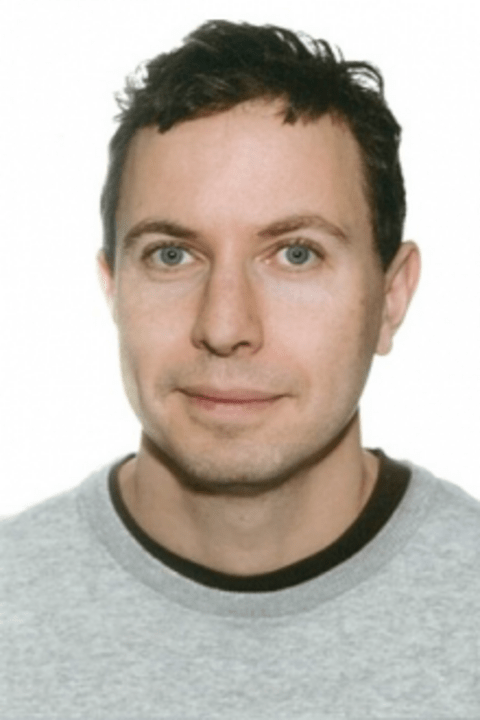
It all added up for Jason Bell

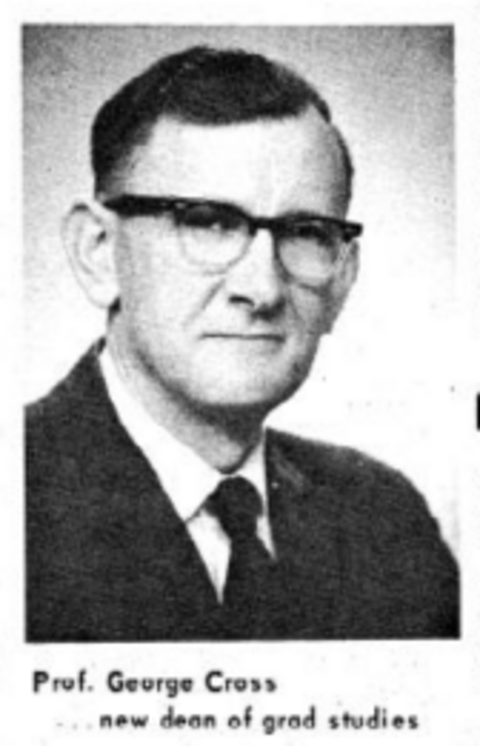
Remembering George Cross

Born and raised in Nova Scotia, George attended Dalhousie University to complete both his bachelor’s and master’s degrees. Following his graduation, he headed West and taught undergraduate math at Victoria College and the University of British Columbia where he completed his doctorate in 1958.
Events
Number Theory Seminar
Damaris Schindler, University of Göttingen
Quantitative weak approximation and quantitative strong approximation for certain quadratic forms
In this talk we discuss recent results on optimal quantitative weak approximation for certain projective quadrics over the rational numbers as well as quantitative results on strong approximation for quaternary quadratic forms over the integers. We will also discuss results on the growth of integral points on the three-dimensional punctured affine cone and strong approximation with Brauer-Manin obstruction for this quasi-affine variety. This is joint work with Zhizhong Huang and Alec Shute.
MC 5479
Model Theory Working Seminar
Fateme Peimany, University of Waterloo
Model Theory Working Seminar
We continue to study the structure of groups definable in CCM.
MC 5479
Differential Geometry Working Seminar
Faisal Romshoo, University of Waterloo
Deformations of calibrations, II
We will continue where we left off last time, completing the proof of when the obstructions for the calibrationsvanish. If time permits, we will go through the proof of the fact that if an orbit is metrical, elliptic andtopological, then the corresponding moduli space is a smooth manifold.
MC 5403