World Water Day 2026: Key takeaways from this year
World Water Day is an international celebration of water. It is coordinated by the United Nations and focuses on accelerating SDG 6: Clean Water and Sanitation for all by 2030.
The theme of this year’s World Water Day was Water and Gender and focused on highlighting the disproportionate impact of the water crisis on women and girls, due to insufficient infrastructure and lack of representation.
The Water Institute marked World Water Day with Water for All, a full-day conference supported in part by the Sustainability Action Fund. The event brought together researchers, students, and industry professionals on March 20, 2026, with a keynote presentation, student research showcases, an alumni award presentation, and a panel discussion. Presenters and attendees examined water inequality challenges and explored actionable steps toward universal water access.
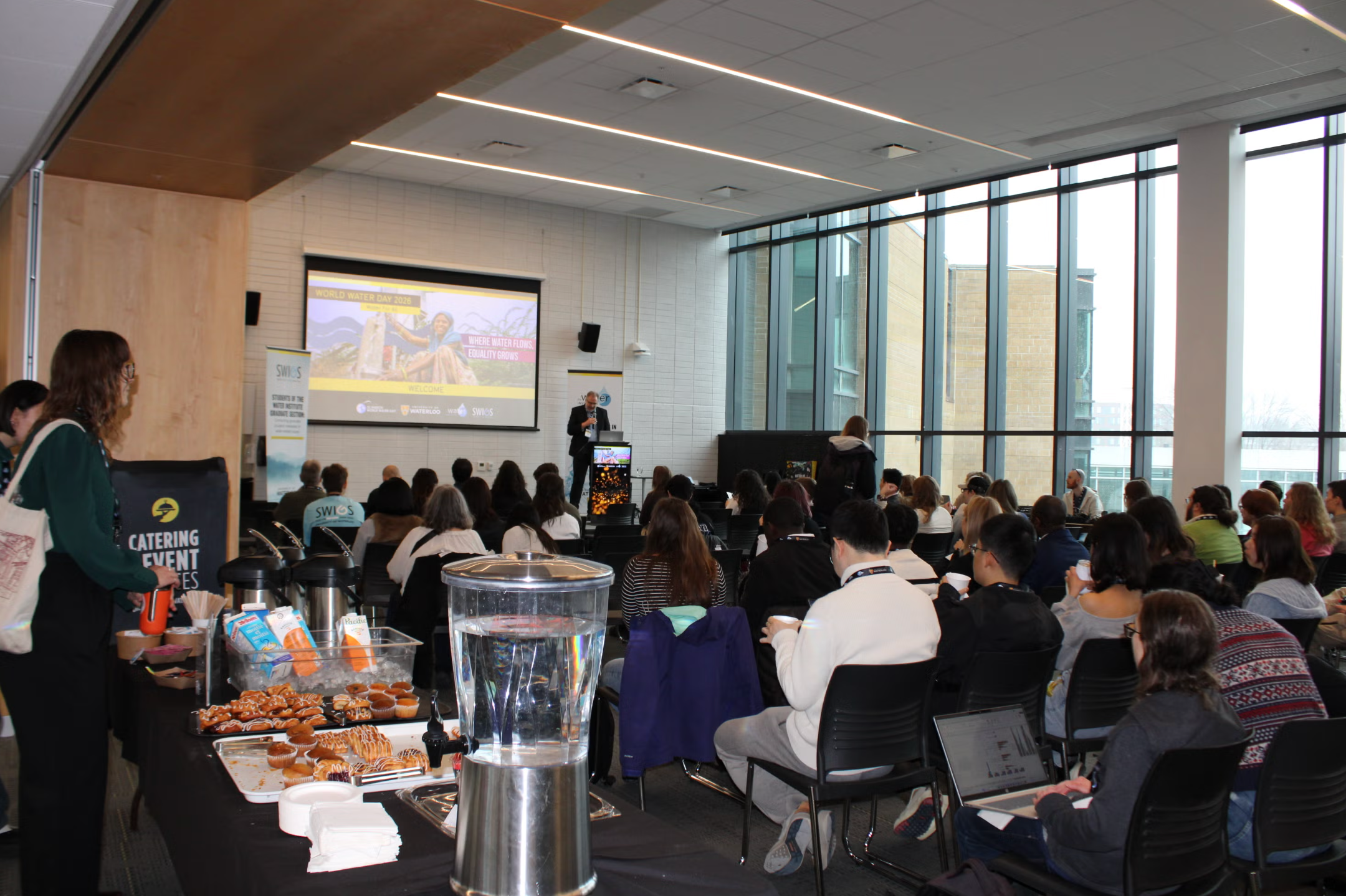
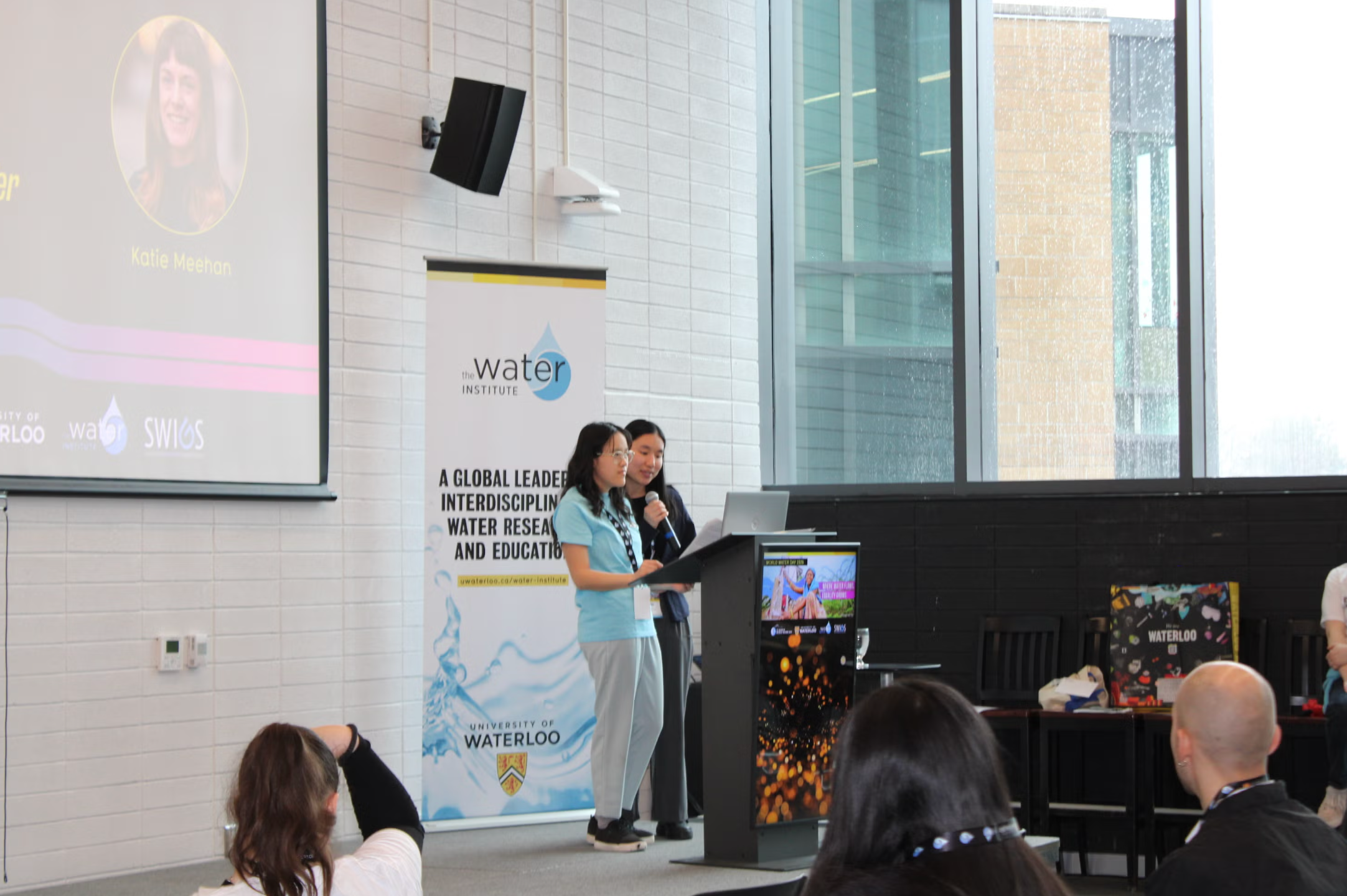
Keynote speaker, Dr. Katie Meehan, Professor of Environmental Justice at King’s College London, showcased findings on the root causes that lead to infrastructure inequality in the developed world. She explained that governments often shift responsibility for securing water onto vulnerable households, despite inadequate infrastructure and high costs, leaving many at risk of water poverty.
As a systemic problem, water inequalities require collective struggle. There is nowhere else to go than straight through.
Her work highlights the need for systemic change, moving away from top-down approaches toward community-driven solutions, and recognizing water security as a shared responsibility that requires collective action.
The conference also featured student research showcases related to water research from a variety of disciplines, including the Department of Civil and Environmental Engineering, Earth and Environmental Sciences, School of Planning, Department of Biology, Department of Economics, Faculty of Math, and School of Architecture.
Examples of exciting research include:
-
Why is the World’s Largest Tropical Wetland Shrinking? by Luana Camelo
-
Waste to Water Solution: Repurposing Seaweed for Environmental Remediation by Rosa Maria Castillo Hernandez
-
Tiny Leaves, Big Impacts: Duckweed’s role in CH4 and CO2 gas dynamics in freshwater ponds by Emma Jewett
The complete list of student showcases is available on the Water Institute Student Showcase page.


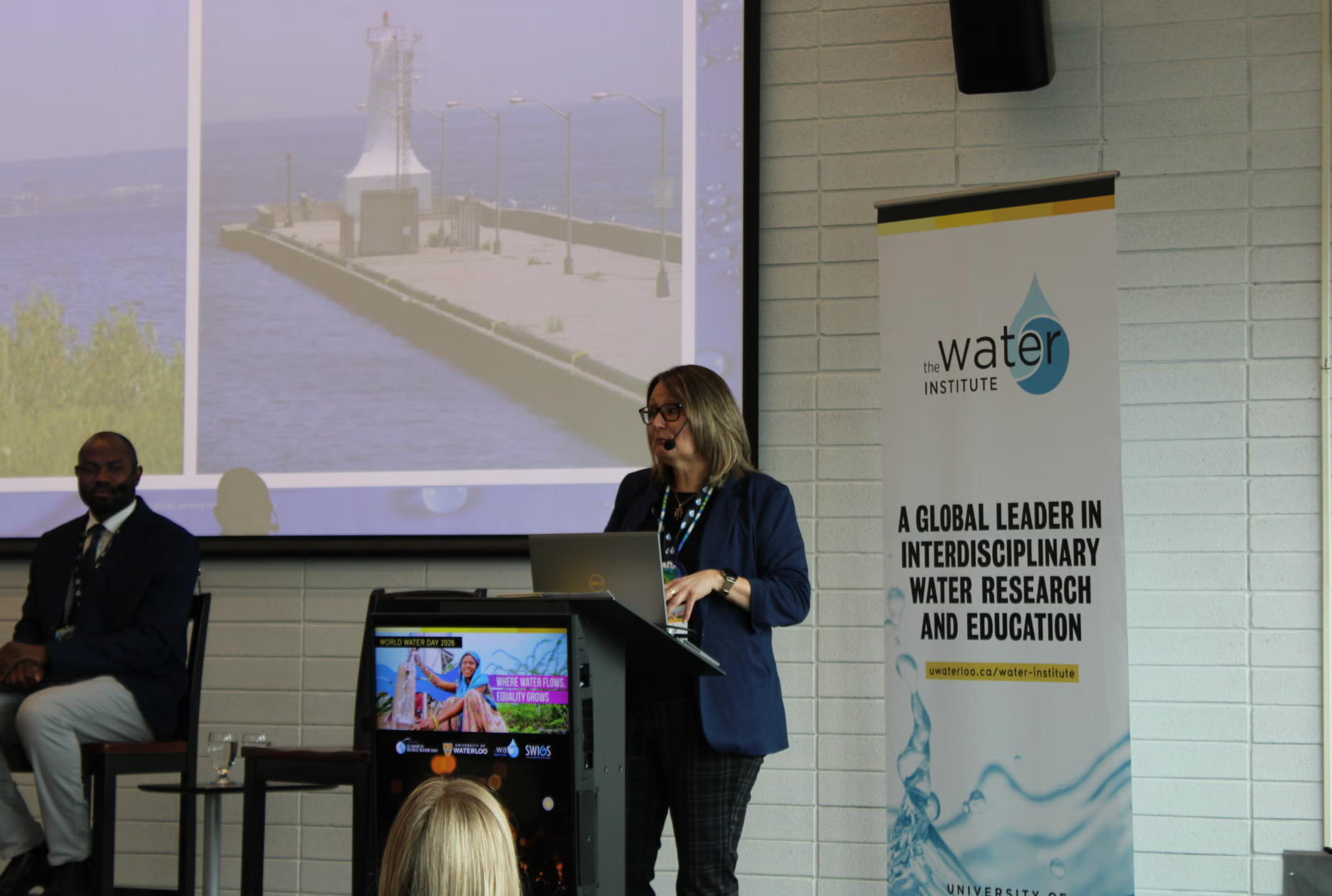
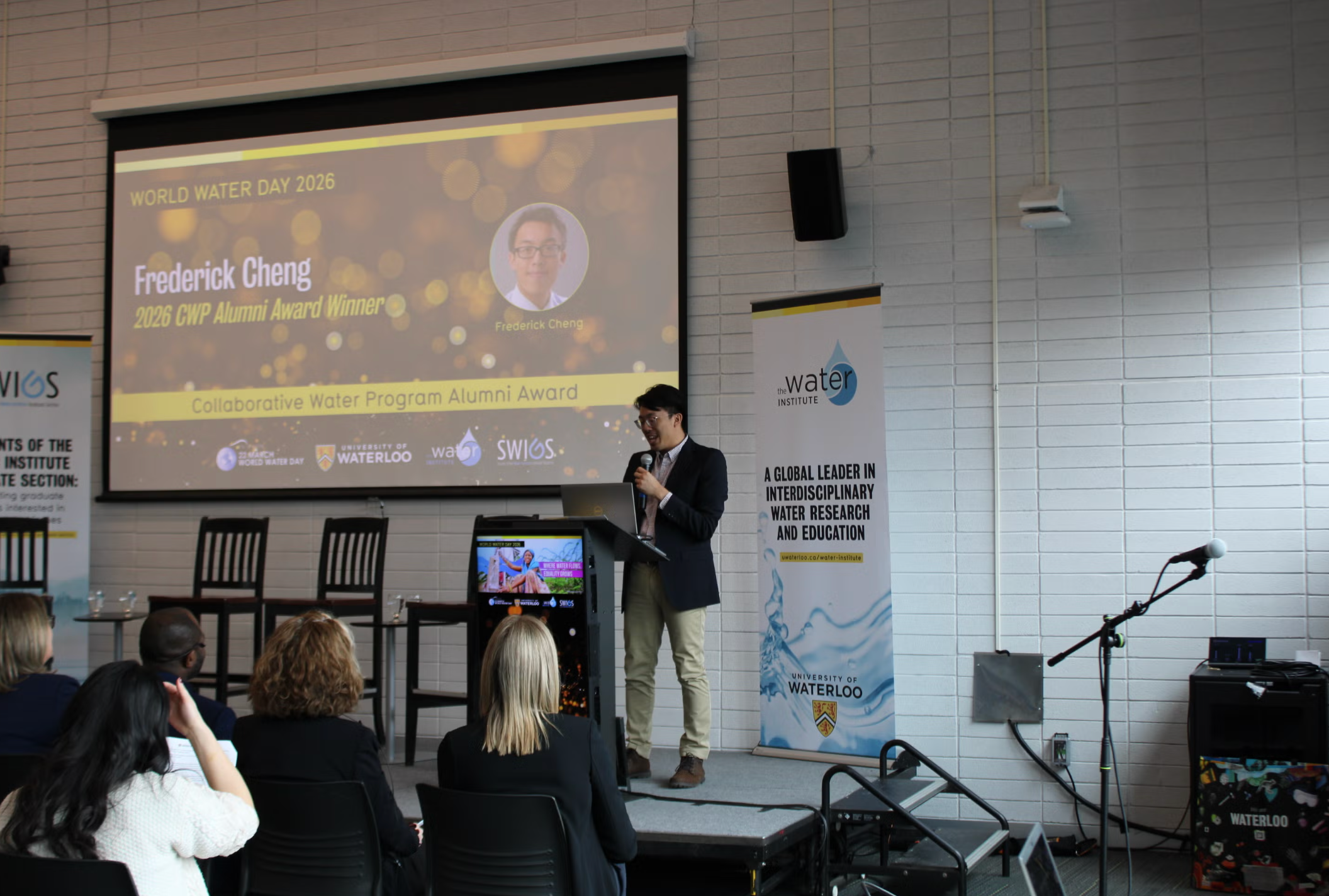
The event also featured the presentation of the Collaborative Water Program 2026 Alumni Award to Frederick Cheng, an Assistant Professor at the University of Virginia. Cheng was recognized for his substantial contributions to policy, water research, and community engagement.
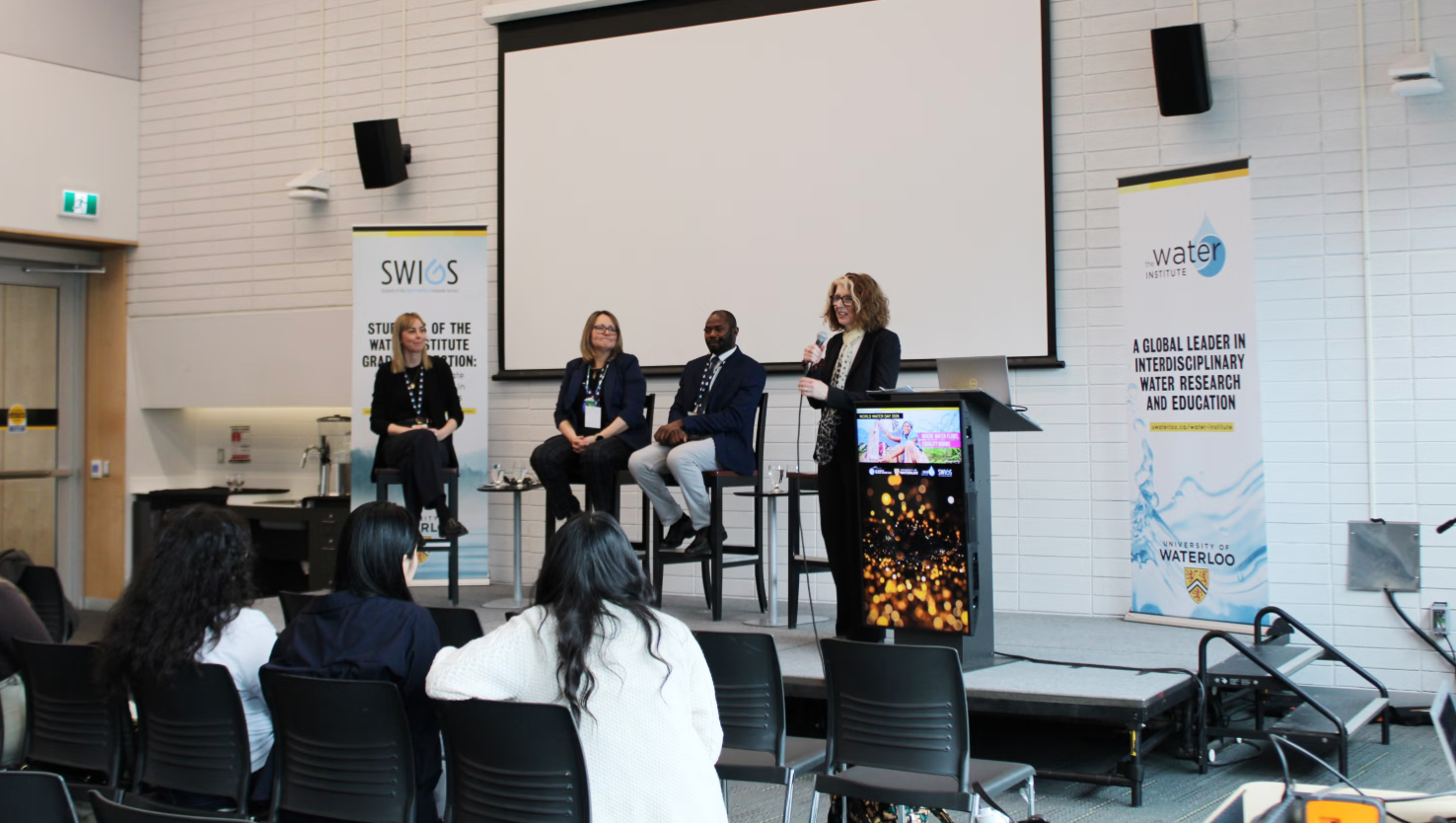
The panel discussion featured researchers, Dr. Susan Elliot, Abraham Nungbour, Sheri Longboat, and Alexa Bennet. The panel explored how race, gender, class, and other social factors affect access to water and sanitation, as well as the challenges and successes of conducting water research with an equity lens.
Across the day, conversations focused on actionable solutions like restoring Indigenous water governance, empowering women leaders, strengthening community engagement and fostering interdisciplinary collaboration that bridges research and real-world impact.
Overall, World Water Day serves as a reminder that clean water is a fundamental right for everyone. To learn more about ongoing research, visit the Water Institute page!
Explore more stories in our sustainability news feed or check out recent news stories below →