Anise-scented or Fragrant or Sweet Goldenrod
Solidago odora Ait. is widely distributed in the southern U.S. with the range extending north to southern New England in the east. It is distinquished by the sometimes persistent woody petiole bases on the lowest portions of the stem, its smooth, entire, single veined, lanceolate-deltoid leaves that give off a strong anise odor when crushed (Semple & Cook 2006 FNA) and by its often narrowly triangle phyllaries. The involucres are usually green to bright yellow becoming a bit rusty with age; phyllaries have hyaline margins and ared single veined. Michaux (1803) treated the species as Solidago retrorsa Michx. Specimens in P and P-MICH he labeled as S. odora are in fact collections of the distantly related S. tortifolia Ell. of S. sect. Unilaterales subsect. Triplinerviae (Semple et al. 2020). The species is diploid (2n=18) throughout its range.
The species is treated here in a narrow sense including only var./ssp. odora in FNA with Solidago chapmanii (synonym Solidago odora var. chapmanii) excluded as a separate species.
Solidago odora is a member of S. subg. Triactis sect. Odorae (Mack.) Semple & J.B. Beck, which is the more typical goldenrod lineage in the subgenus (Semple et al. 2023). Potentially, S. odora is one of the oldest species in the genus.
After the Boston Tea Party in 1773, a tea substitute (a Liberty Tea) was made from leaves of S. odora by the American colonists. Goldenrod tea can still be bought on line.
Semple, J.C., V. Durand-Andro, G. Flament, C. Aupic, and F. Jabbour. 2020. Typification of Solidago retrorsa Michx. (Asteraceae:Astereae). Phytoneuron 2020-69. 1-8.
Semple, J.C., McMinn-Sauder, H., Stover, M., Lemmon, A., Lemmon E., and J. B. Beck. 2023. Goldenrod herbariomics: Hybrid-sequence capture reveals the phylogeny of diploid Solidago. Amer. J. Bot. 110(7): e16164. https://doi.org/10.1002/ajb2.16164
Last revised 21 January 2026 by J.C. Semple
© 2026 J.C. Semple, including all photographs unless otherwise indicated


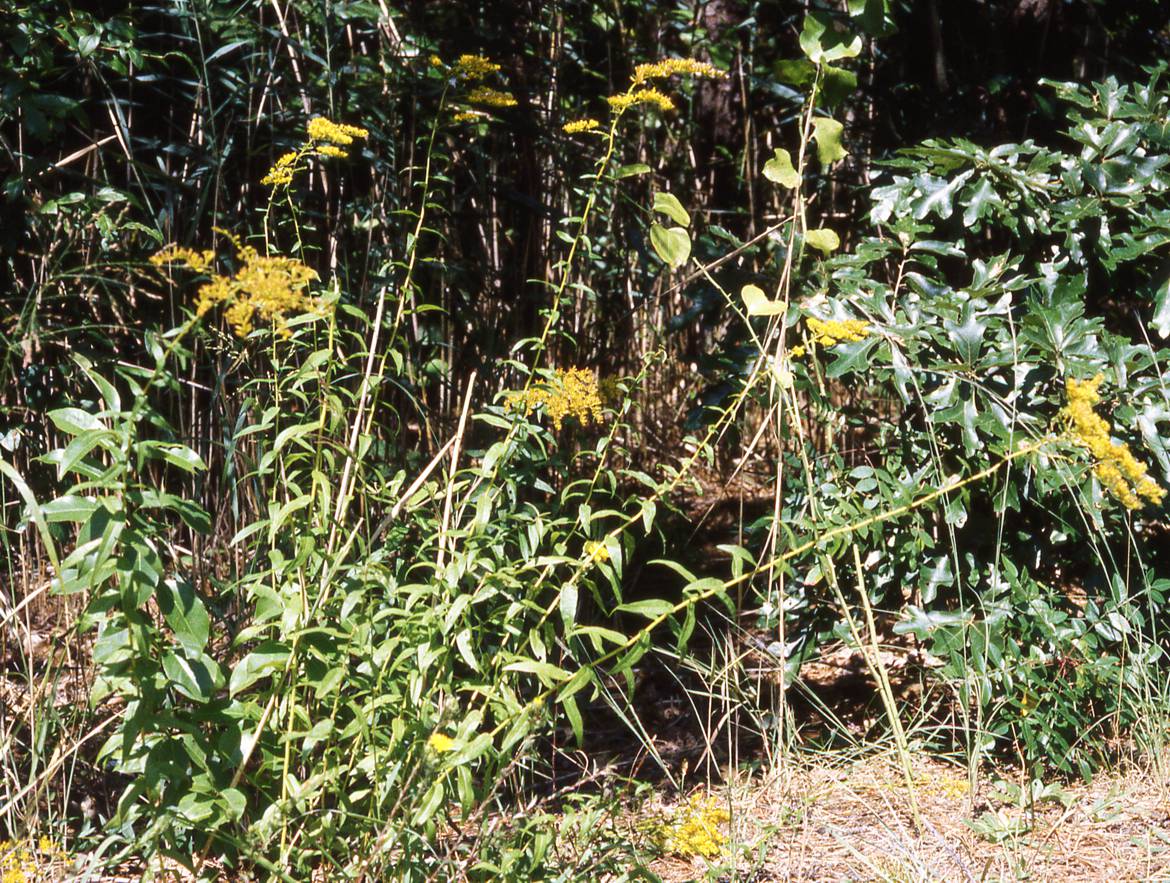
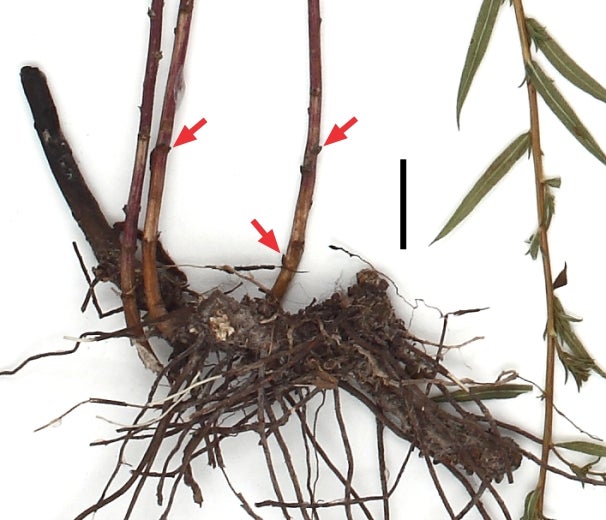
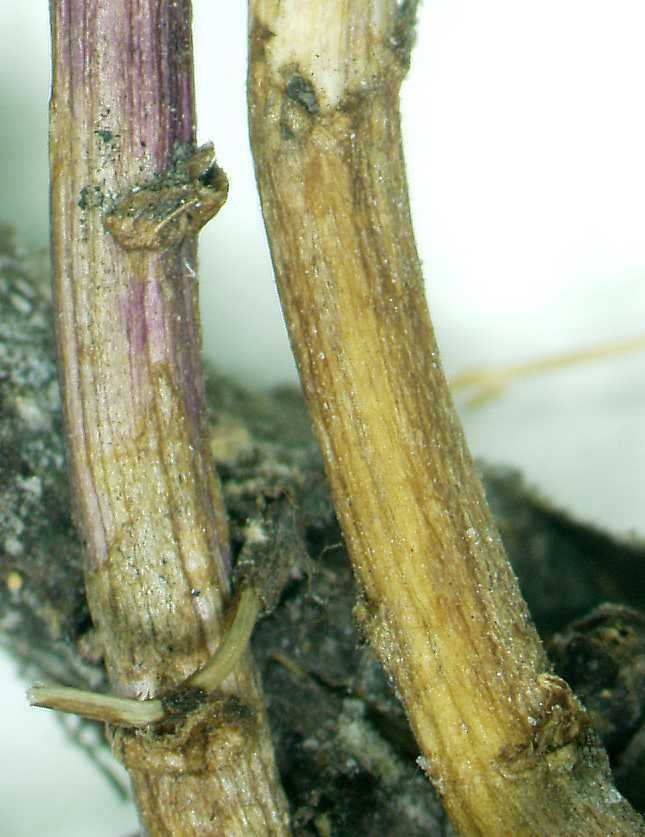
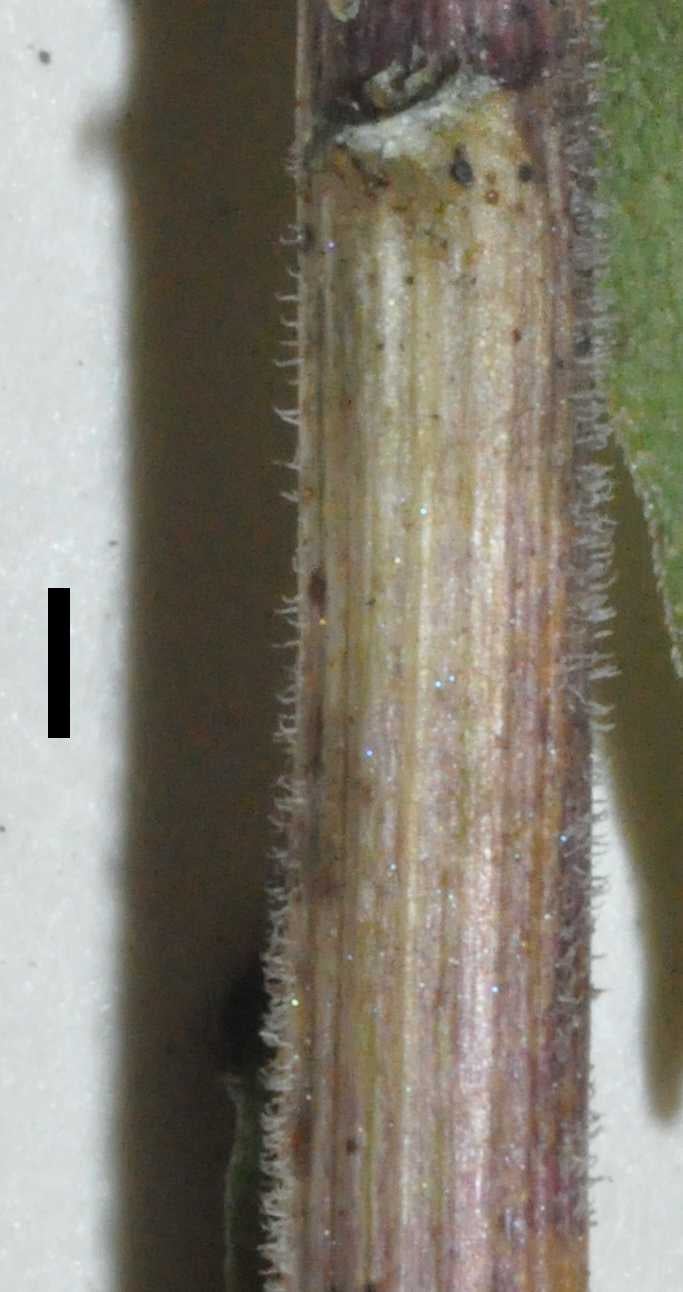
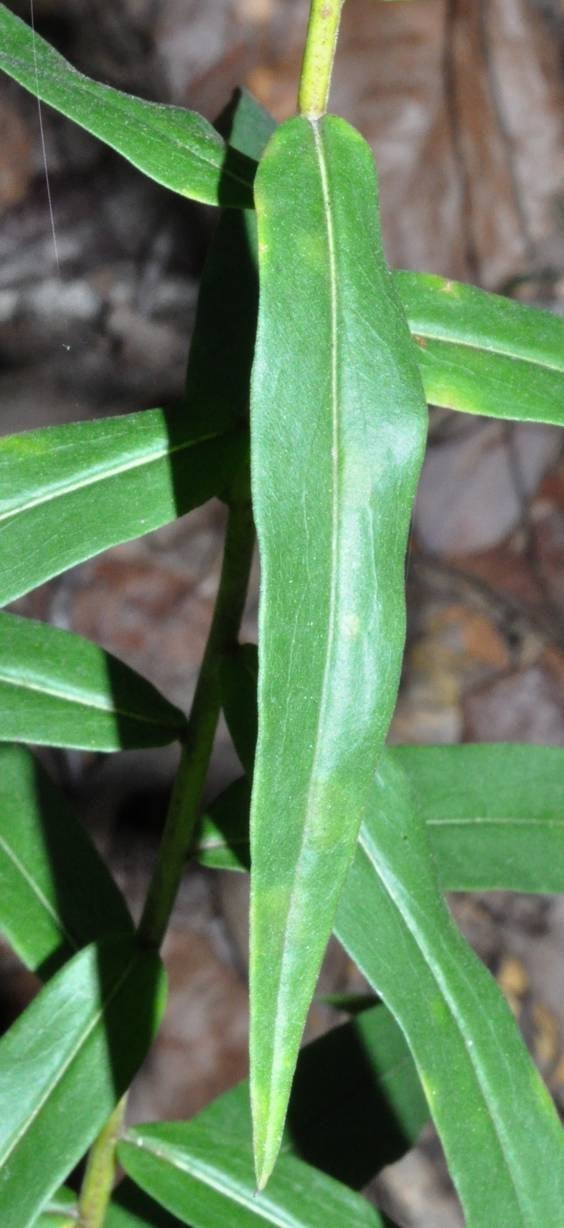
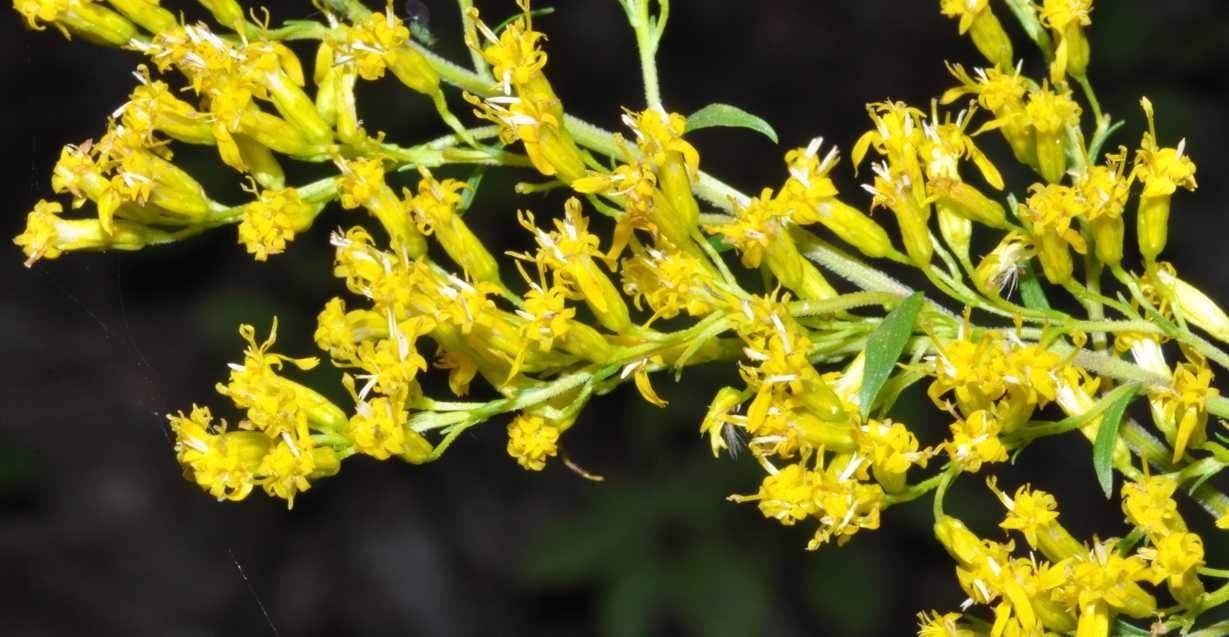

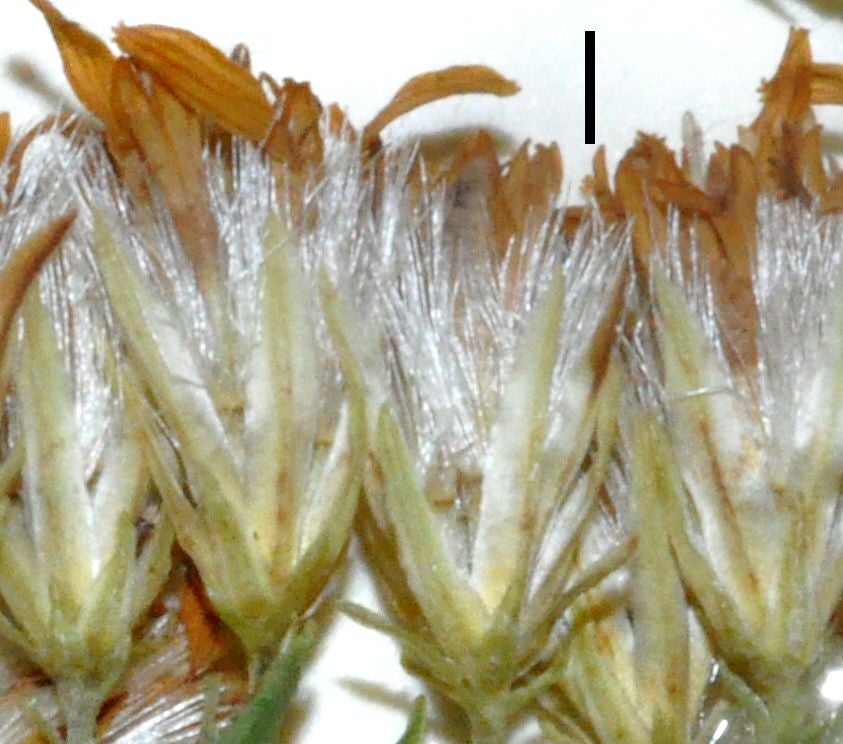
1-8. Solidago odora. 1. Shoots, coastal New Jersey. 2. Rootstock, red arrows indicated persistent woody leaf bases, Urbatsch live collection. 3. Basal stems with persistent petiole bases, Rosen 5152 LSU00138346, image provided by LSU. 4. Mid stem, Semple & Suripto 10033, Bossier Par., Louisiana. 5. Leaf, Semple 11864, Giles Co.,Tennesseee. 6. Inflorescence branches, S 11864, Giles Co., Tennessee. 7-8. Heads and phyllaries, S & Su 10033.