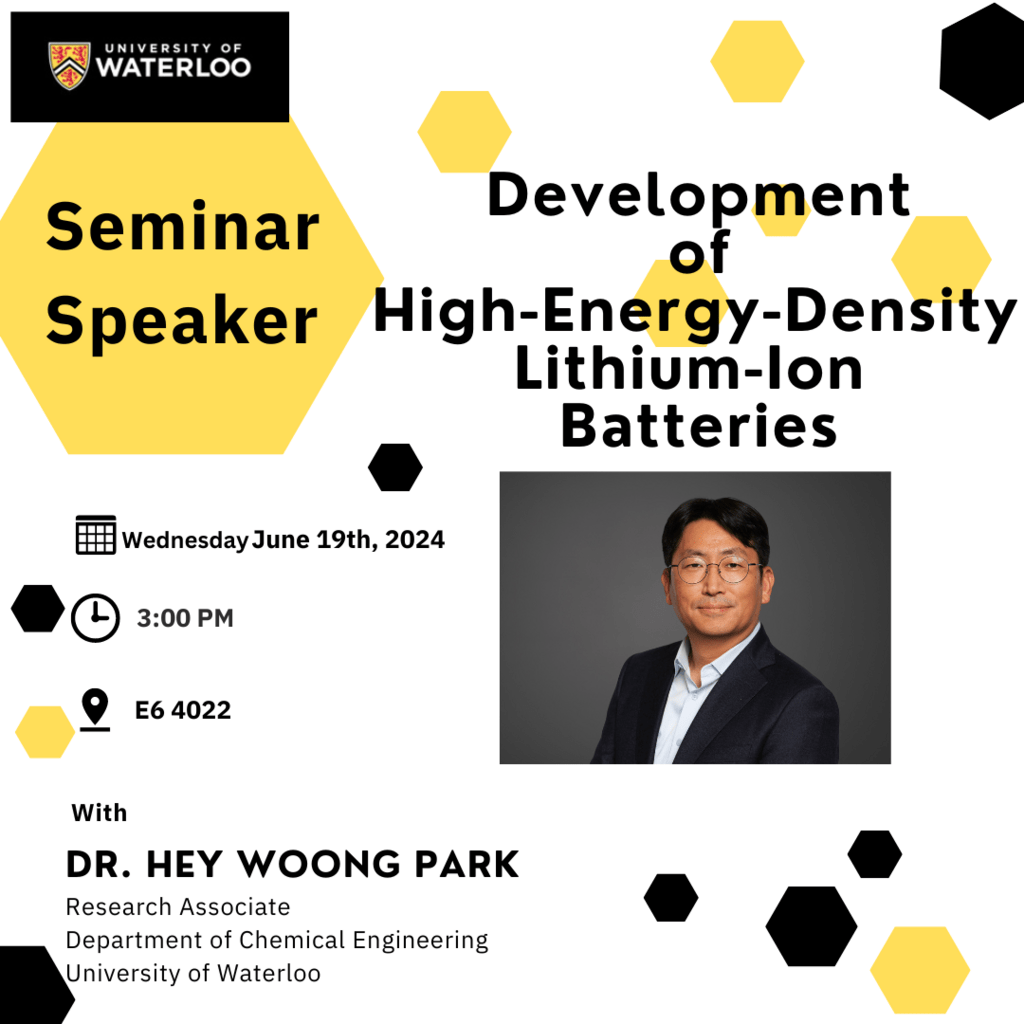
Graduate Seminar| Development of High-Energy-Density Lithium-Ion Batteries, by Dr. Hey Woong Park
The Chemical Engineering Department is hosting a special graduate lecture on Development of High-Energy-Density Lithium-Ion Batteries
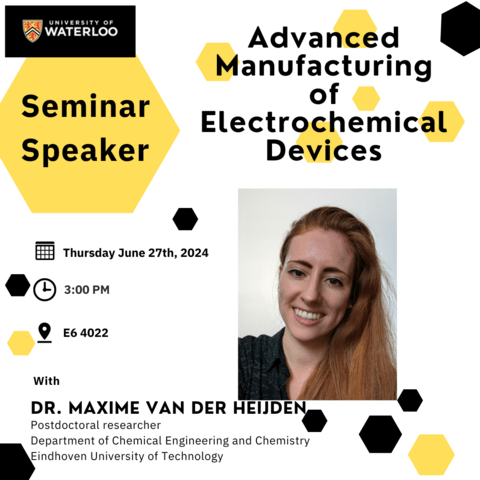
The Chemical Engineering Department is hosting a special graduate lecture on Advanced Manufacturing of Electrochemical Devices.
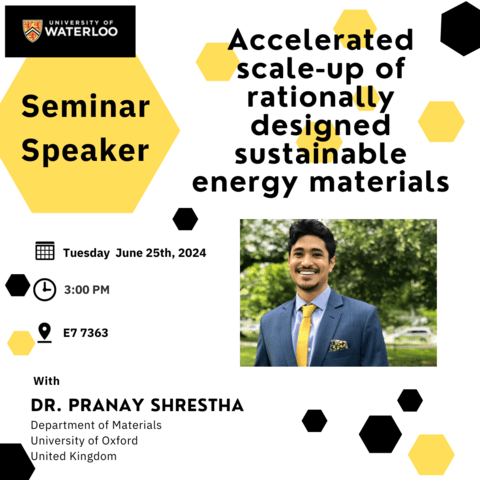
The Chemical Engineering Department is hosting a special graduate lecture on Accelerated scale-up of rationally designed sustainable energy materials.
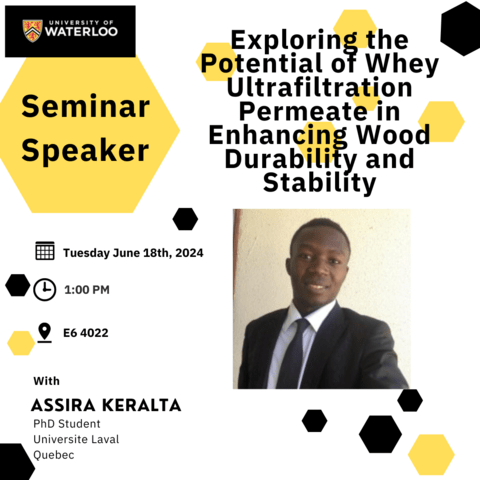
The Chemical Engineering Department is hosting a special graduate lecture on Exploring the potential of whey ultrafiltration permeate in enhancing wood durability & stability.
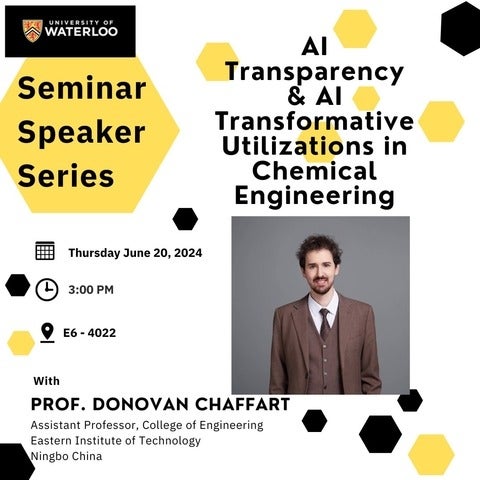
The Chemical Engineering Department is hosting a special graduate lecture on AI Transparency & AI Transformative Utilizations in Chemical Engineering.
Round Table with WiE Leaders
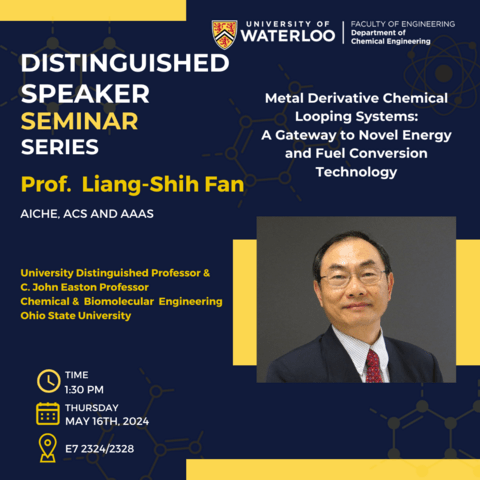
The Chemical Engineering Department is hosting a Distinguished Speaker Seminar Series on Metal Derivative Chemical Looping Systems: A Gateway to Novel Energy and Fuel Conversion Technology.
The Chemical Engineering Department is hosting a special graduate seminar on Tips on How to Write and Submit a Successful Paper.
In this thesis, Nafion membranes were modified with single to few-layer heteroatom-doped graphene with the aim of reducing vanadium crossover and possibly improving reaction kinetics within a Vanadium Redox Flow Battery (VRFB). The former was successfully achieved, while the investigation of the latter demonstrated limitations in the application of some established analysis techniques to systems such as VRFBs. Reduced graphene oxide did appear to have a positive effect on the reaction kinetics.
Carbon capture is a promising way to slow down climate change from anthropogenic sources. One of the carbon capture technologies that is being actively researched is adsorption. Given the increasing amount of literature that present novel ideas, being able to predict this information based on adsorbent textural properties is desirable. In this thesis, machine learning is used to construct a model to estimate adsorbent performance.