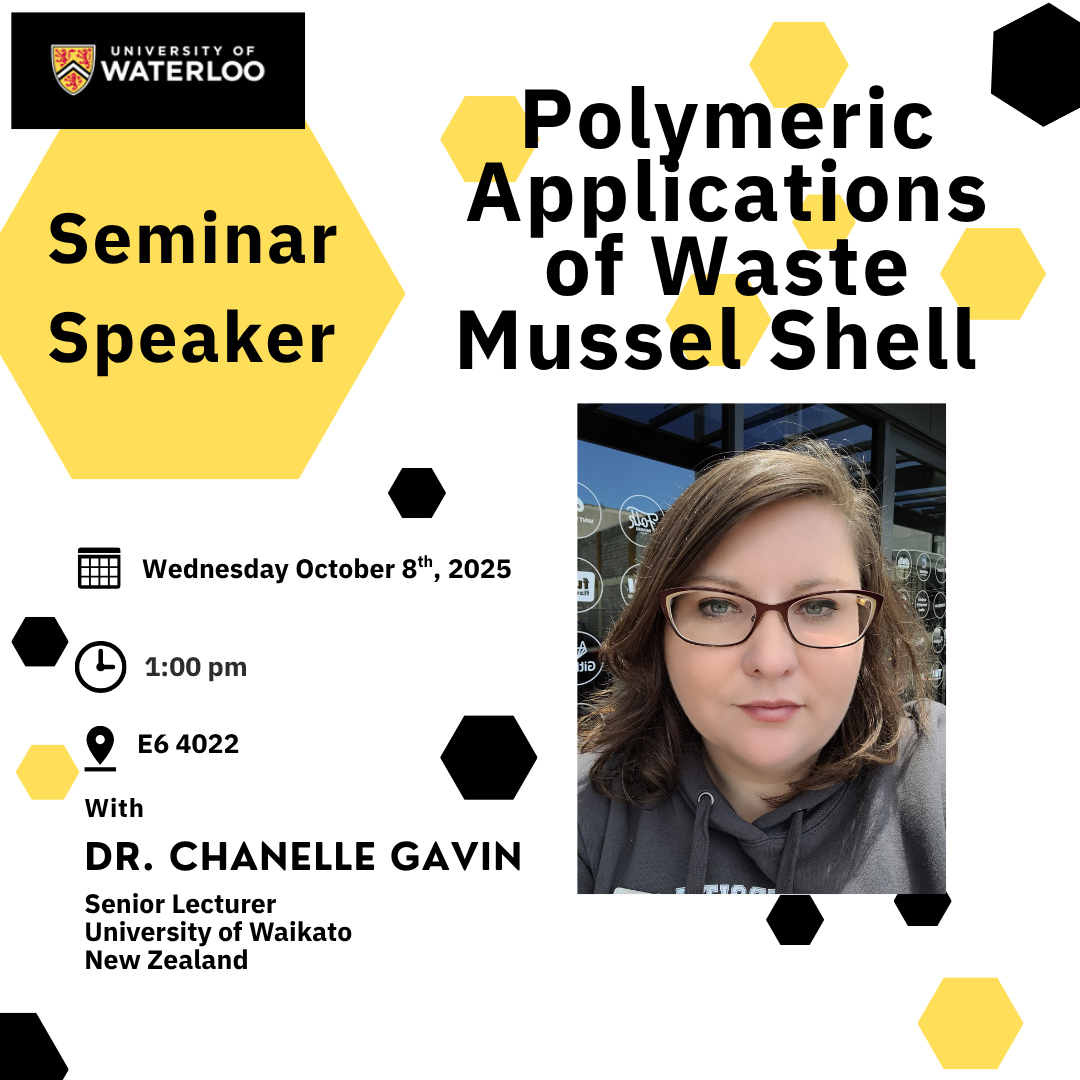
The Chemical Engineering Department is hosting a special graduate lecture on Polymeric Applications of Waste Mussel Shell.
Abstract:
New Zealand currently produces approximately 90,000 tonnes of mussels each year. This is expected to increase as the country looks to grow mussel production from a $300 million enterprise to $1.5 billion by 2035 in accordance with government strategy. Mussel processing removes either all or half of the mussel shell before sale generating 55,000 tonnes of waste shell each year which consists primarily of calcium carbonate. This seminar will discuss some preliminary work which looked at incorporating this into polymeric materials.
Biography:
Dr Chanelle Gavin is a Senior Lecturer at the University of Waikato, New Zealand, whose research focuses on biomaterials and sustainable engineering processes. Working at the intersection of materials, chemical, and environmental engineering, she explores a wide range of topics that support New Zealand’s bioeconomy—particularly in the agriculture, horticulture, and aquaculture sectors.
Her research includes the development of bioplastics (such as protein-based thermoplastics and biopolymers), the extraction and separation of high-value compounds (including antimicrobial peptides), nutrient management at the individual farm level, and waste management from industrial processes.
Chanelle has expertise in plastics processing, characterisation and thermal analysis, including advanced techniques like synchrotron FTIR. She also works with protein chromatography and protein identification methods, as well as environmental modelling and monitoring.
Motivated by a passion for applied research, she focuses on enhancing the efficiency, value, and sustainability of primary industries, using her interdisciplinary skill set to address complex, real-world challenges.