Transform your research to an investor-ready venture
The Academy of Research and Commercialization (ARC) program offers workshops, collaboration and funding preparation for PhD students seeking to transform deep-tech research into for-profit ventures.
Your research creates value. Learn how to capture it.
Innovations grounded in substantial scientific or engineering advances often require long development timelines, strong IP strategies, and thoughtful commercialization planning.
ARC supports doctoral researchers in exploring multiple pathways to impact, from licensing and partnerships to venture creation.
World-class knowledge. Conveniently structured. Expertly delivered.
ARC is delivered by the Conrad School of Entrepreneurship and Business, in collaboration the Faculty of Engineering and ecosystem partners. Together, these partners provide the academic grounding, commercialization expertise, IP guidance, and venture support needed to translate deep-tech research into practice.
The ARC program is generously funded by the Norman Esch Foundation. Participants do not pay tuition or other fees.
Jump to: What is deep-tech? | About the ARC program | Program structure | Program completion | Application process | FAQ | Apply now


1. Problem-solution fit:
- Develop a clear, testable articulation of how your research addresses a real-world challenge.
- Define the limitations of existing methods or technologies and describe the specific improvement your work offers (e.g., safer, more cost-effective, or more precise).
- Estimate the scale of the problem, communicate your technology readiness level (from lab validation to real-world application).
- Identify the key assumptions that must hold true for your solution to succeed.
2. Risk and validation plan:
- Identify the biggest uncertainties in bringing your research beyond the lab.
- These may include scientific performance, safety requirements, user adoption, or the challenges of scaling production.
- Outline how you will test, validate, or address these unknowns to strengthen the path from research to real-world impact.
3. Pathways to impact:
- Explore the different ways your research can reach users and create value.
- Options may include launching a new venture, licensing your technology, or partnering with established organizations.
- Consider who your first adopters might be, how you can demonstrate early proof of value, and the basic resources required.
- You’ll also learn about potential funding avenues, from grants to early-stage investment, without needing to commit to a specific path.
4. Research storytelling:
- Create a concise, approachable summary of your work that invites feedback.
- This could include a one-page overview and a short presentation that explains the problem you are addressing, your proposed solution, early evidence, and the next steps.
- Begin organizing your supporting materials so that your progress and future plans are easy to follow.
Program structure
The ARC program features five immersive modules, each including two seminars, a supporting workshop, an application assignment, and multiple support interventions.
Together, the modules guide participants through the journey from validation to venture over six months, from November 2026 to May 2027.
The five modules are:
1. Opportunity Discovery and Validation
- Understand deep-tech commercialization pathways, venture fit and research-to-market processes.
- Define a significant problem and target customer.
- Apply discovery tools to your venture.
- Synthesize learning into venture opportunity.
2. Customer Discovery and Market Validation
- Design and conduct rigorous customer discovery.
- Size and validate target markets.
- Build venture-specific validation strategies.
- Document evidence and market attractiveness.
3. Commercialization Strategy and Competitive Advantage
- Select your optimal commercialization path.
- Protect and leverage competitive advantage.
- Develop your venture commercialization blueprint.
- Integrate strategy into a coherent plan.
4. Funding, Partnerships and Growth
- Evaluate appropriate sources of capital.
- Prepare for growth, investment and scale.
- Build financing and partnership plans.
- Prepare your venture for investors and partners.
5. Commercialization Launch and Ecosystem Integration
- Understand Canada’s deep-tech ecosystem.
- Create and present a compelling venture story to a relevant audience.
- Map your venture plans to specific ecosystem entities.
- Know your venture’s path forward and be introduced to people who matter.
Program completion
Participants who successfully complete all program components will receive a Completion Stipend as well as an official University of Waterloo ARC Certificate of Completion.
Participants with commercialization project plans and pitches demonstrating the strongest commercial potential will be eligible to receive up to $30,000 in seed funding!
Who should apply?
ARC invites all deep-tech PhD students to apply.
This program is open to all admitted PhD students at the University of Waterloo working in the deep-tech space. Ideal applicants have a lab-validated insight or prototype, curiosity about real users, and openness to explore different commercialization pathways.
Program funding is generously sponsored by the Norman Esch Foundation; there are no additional costs to participating students.
Note: Additional Esch seed opportunities are available for Engineering and Science PhD students with inventions in deep-tech. Amounts and timing vary by year.
Frequently asked questions
1. Do I need to form a corporation before I apply?
No. In fact, you may not need to form one at all. This program helps you decide how to commercialize your research — whether to form your own company, find a partner, license your IP, or choose another option.
2. Is this a for-credit program?
No, the ARC program is not for credit. Successful participants will receive an official certificate of completion. Optional for-credit entrepreneurship courses may be available through the Conrad School of Entrepreneurship and Business (standard tuition rate and University fees apply).
3. Does the university take equity in my venture?
No, neither the university nor the ARC program take any equity in your IP or venture.
4. What is the time commitment required of me?
The full program requires 50–60 hours of your time for scheduled seminars, workshops, and other events. Outside these events, you may elect to spend as little or as much time as you wish to apply lessons learned.
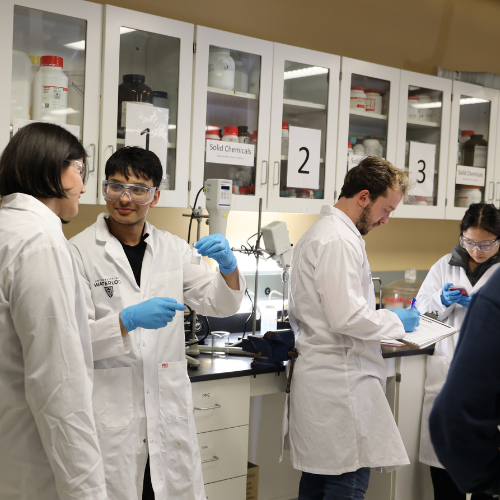
What does participating in the Academy of Research Commercialization (ARC) program look like from a graduate student’s perspective?
In this video, Jeswin Joseph, a PhD student in Mechanical Engineering at the University of Waterloo, shares his experience in the ARC program, reflecting on his participation and the value of the program in his academic and professional journey.
Questions? Connect with us!
Have questions about the ARC program? Email us at conrad@uwaterloo.ca or fill out the form below.