Environment PhD candidate wins prestigious Weston Family Award for Northern Research
Stephanie Saal is using new microwave technology to increase snowpack knowledge in the Yukon.
The Canadian north is experiencing rapid environmental change, increasing the need to better understand its ecosystems, biodiversity, and the communities that depend on them. Stephanie Saal, a PhD candidate in the Department of Geography and Environmental Management, is researching how snowpack impacts key ecological relationships, and how best to collect this information at a watershed level. In recognition of her academic achievements and innovative research, Saal has been awarded the 2026 Weston Family Award in Northern Research. Valued at $120,000 over three years, the award is presented to outstanding doctoral students across Canada. Saal was one of eight recipients, placing her among the country's emerging leaders in Northern research.
Saal’s passion for the Canadian north began more than a decade ago when she visited the Yukon. “I was captivated by its wilderness and sense of possibility. After finishing my master’s degree, I returned to work with Yukon College and later Yukon University in cold-regions hydrology research.”
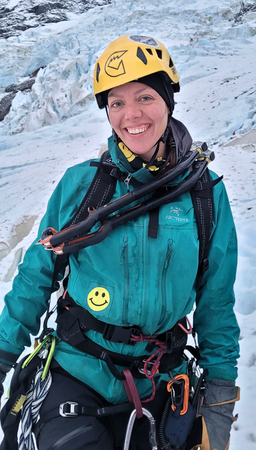
During her time in the Yukon, Saal built a strong community, volunteered in outdoor safety and recreation, and learned what it means to contribute to the region you call home. Her work with First Nations, government, and industry allowed her to develop a unique perspective on the area and its specific environmental concerns.
Saal identified the need for reliable, large-scale snowpack information to support ecological monitoring, flood forecasting, and hydropower management. “Snowpack is a major driver of northern water systems, yet it remains the largest hydrological unknown. Retrieving watershed‑scale snowpack information in mountainous terrain has historically been limited by technology. With new microwave sensors now in orbit, meaningful progress is finally possible.”
Saal chose the University of Waterloo for the opportunity to work with Dr. Richard Kelly, whose expertise in microwave remote sensing aligned with her research goals. In partnership with Kwanlin Dün First Nation (KDFN), Saal uses differential interferometry from synthetic aperture radar satellites to track cumulative snowpack development over the winter, enabling landscape-scale estimates of snow water equivalent. Together with KDFN, she examines how snow influences key ecological relationships, including how snowmelt helps regulate water temperatures for cold-water fish species and how snowpack affects caribou movement.
By advancing snowpack monitoring in Northern regions, Saal's research will help improve our understanding of environmental change and support the communities, ecosystems, and species that depend on these lands. Congratulations to Saal on being recognized for her impressive research and academic achievements.