Family connections and adaptive capacity in small-scale fisheries
Master of Environmental Studies student Farah El-shayeb publishes research on the power of community to navigate change.
Estimated reading time: 1:47
Small-scale fisheries supply about two-thirds of the global fish for direct human consumption, and are facing increased vulnerability to climate change, biodiversity loss, and livelihood security. If these fisheries are to survive, they must be able to adjust their operations to take advantage of opportunities and avoid threats. This ability is known as adaptive capacity and includes social organization in both formal settings like fisheries cooperatives, and informal settings like families.
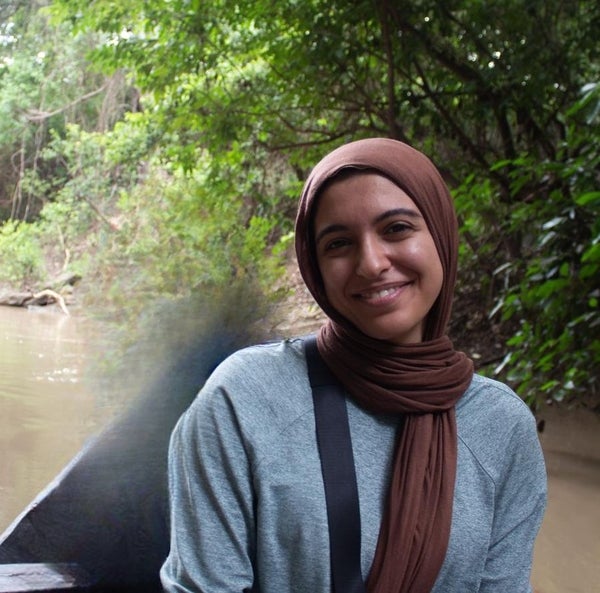
Farah El-shayeb, a Master of Environmental Studies student in the Department of Geography and Environmental Management, worked with Dr. Jeremy Pittman on an undergraduate research project to determine the role of family in adaptive capacity.
Using a long-term dataset of interviews and surveys from a yellow clam fishery in Uruguay, El-shayeb examined how families influence ties within the community, adaptive decisions and outcomes. The analysis found that strong family ties were a significant predictor of other important connections with the community.
Fishers with strong family ties were more likely to have connections to discuss issues related to management and governance of the fishery, labour sharing, and knowledge sharing of fishing practices. These ties also influenced the degree of change adaptation.
The results from this research show the complex relationship between fisheries and families and increase our understanding of how these communities function. For small-scale fisheries to build local adaptive capacity, these relationships must be at the forefront of governance and policy decisions and considered a unique strength that can be harnessed for building resiliency.
The collaborative nature of the Faculty of Environment is a space where meaningful partnerships thrive and where research is deeply rooted in both theory and practice.
Completing an undergraduate research project helped strengthen El-shayeb’s knowledge of rural vulnerability, governance and adaptation. It also solidified her decision to pursue graduate-level research in the Faculty of Environment, where she will study climate adaptation and managed retreat in low-lying Indonesian communities.
“Being part of such a large, interdisciplinary team has connected me to a rich network of researchers, practitioners, and communities working at the forefront of climate resilience. The collaborative nature of the Faculty of Environment and its strong relationships with international partners were exactly what I was looking for as I aimed to pursue research with real-world impact. It’s a space where meaningful partnerships thrive and where research is deeply rooted in both theory and practice.”
The research, The role of family in shaping adaptation and adaptive capacity in small-scale fishing communities: The yellow clam fishers in Uruguay, authored by El-shayeb and others, was published in the Journal of Rural Studies.