The intersection of local knowledge and traditional science
Recent PhD graduate Natasha Serrao conducts interdisciplinary research in natural and social sciences.
Chilika Lagoon, located on the Eastern coast of Bay of Bengal in India, is a biodiversity hotspot that is home to over 200 fish species. These fish support the livelihoods of over 400,000 fishers by providing both sustenance for their families and a commodity to sell. Fishing knowledge is developed and passed between generations and community members, and the local naming systems have not been fully linked to Linnean taxonomic nomenclature (scientific classification).
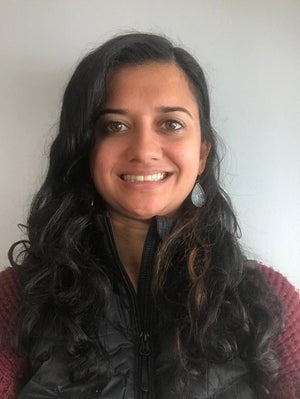
Natasha Serrao, a recent PhD graduate from the Social and Ecological Sustainability program, had experience researching community-based fisheries and genetics. Serrao chose the Faculty of Environment to combine her interest in social and natural science in an interdisciplinary setting. Under the supervision of Prateep Nayak, her doctoral research was on the intersection of fisher knowledge and scientific data to understand species importance in Chilika Lagoon.
As a component of her thesis, Serrao examined the local names of fish species in Chilika Lagoon and analyzed if these names differed between social groups. To complete her research, Serrao interviewed 108 fishers from different age groups, genders and villages. She presented each participant with a photo slideshow, where each slide contained a colour photo of a different fish species. She asked each participant to identify the species, and each answer was collected, translated and analyzed.
Across all photos, a total of 753 unique names were recorded, with many of the differences attributed to phonetic differences. Serrao also found no significant associations between fish identification and age and gender, except men were able to identify several more fish with higher success than woman. As expected, there were differences in fish naming between villages.

“I am incredibly grateful for my time in Chilika. It was a privilege to connect with over 200+ fishers for this research, and I was treated with so much kindness and hospitality. For me, it wasn’t just about collecting data for my research- it was also about participating in cultural events, spending time with the women and girls in the communities and learning to live in a different culture. Despite the challenges I endured, this experience is something I will remember forever.”
This study represents the first of its kind in Chilika Lagoon and will be a critical step for species management. By understanding the patterns in local naming conventions, fisher knowledge can be better translated to a larger audience and be used for conservation, ecological restoration initiatives, and fishery policies.
Serrao plans to return to Chilika Lagoon to reconnect with the fishers who supported her work, share her findings, and express her gratitude.
The research, Variations in vernacular naming of important species across three fishing villages of Chilika Lagoon, India,authored by Serrao and Nayak, is published in the Journal of Ethnobiology and Ethnomedicine.