


Turbulent times like ours call for people who understand systems of violence and conflict, and who are prepared to build peace with justice. This involves identifying and transforming systems of violence, marginalization, and oppression, including racist, gendered and colonial violence at home as well as around the world. Whether working locally or globally, Peace and Conflict Studies is committed to imagining, educating, and ongoing learning that equips our graduates to pursue justice and peace.
PACS as a department is located on territory that is governed by the Dish with One Spoon Wampum and land promised to the Six Nations Confederacy in 1784 as part of the Haldimand Declaration. For more information, see Conrad Grebel University College's land acknowledgement and read about decolonization at the University of Waterloo's Office of Indigenous Relations.


Why Study Peace and Conflict Studies (PACS)?
Learn diverse ways to promote peace, equitable justice, and social change through a vibrant interdisciplinary program that combines the study of history, political science, sociology, and psychology to understand better the causes and impact of interpersonal, communal, and international conflicts and violence in different societies. You will explore theory, research, and practice in classes taught by leading peace and justice scholars and practitioners. As an arts student, you will bring a unique perspective and set of skills to peace and conflict studies. Your creativity, critical thinking, and empathy can help contribute to finding new and innovative solutions to the complex challenges of peacebuilding and conflict resolution.
Take courses on conflict mediation, non-violent social change, gender and peacebuilding, religion and culture, environment, community transformation, human rights and social justice, refugees and forced migration, negotiation strategies, trauma, healing, and restorative justice.
Prepare to become a peace practitioner, community leader, or entrepreneur in conflict management programs or work with community and international development organizations, education systems, law firms, social services, refugee resettlement program support agencies, and more after graduation.
Who are PACS graduates?
PACS graduates have gone into many careers and used their training in different ways.
To learn more about what students can do after they graduate from PACS, check out our alumni profiles
Events
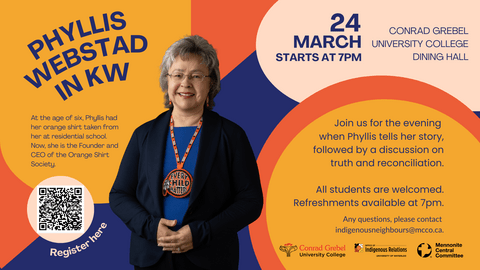
Phyllis Webstad in KW
Join us for an inspiring event of Indigenous knowledge, storytelling, and reconciliation, with speaker Phyllis Webstad. Phyllis Webstad is the Founder and CEO of the Orange Shirt Society. At the age of six, Phyllis was sent to St. Joseph Mission Residential School, and her belongings were taken from her on the first day, including her orange shirt that her grandmother had given her. Now, she tours the country telling her story and raising awareness about the impacts of the residential school system, and the orange shirt has become a symbol of hope, reconciliation and a commitment to a better future. During the event, there will be opportunities to listen to Phyllis' story and discuss actionable steps toward reconciliation.
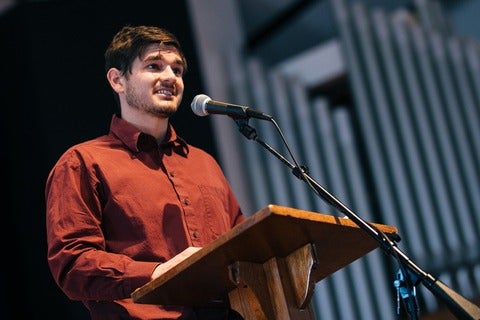
The Annual C. Henry Smith Peace Speech Contest
The annual C. Henry Smith Peace Oratorical Contest offers Peace and Conflict Studies (PACS) students and Grebel residents/associates an opportunity to discuss peacebuilding and social justice issues on campus and beyond. The intercollegiate competition is administered by the Peace and Justice Ministries of the Mennonite Central Committee (MCC).
On March 25, 2026, from 7 p.m. to 8:30 p.m. at Grebel, the PACS Department and the Grebel Chaplaincy’s Offices are organizing a speech performance and inviting you to participate. The contest winners will be rewarded with cash prizes. For more information, reach out to the PACS Academic Advisor.
You can learn more about the contest and meet former PACS or Grebel resident participants.
Application deadline — March 6, 2026.

Grebel Convocation 2026
Conrad Grebel University College proudly hohonours graduates who have lived and studied at Grebel while completing their University of Waterloo degree programs. This special Convocation ceremony takes place several weeks before the University of Waterloo Convocations, where the official degrees are conferred. It is a time for faculty, staff, students, families, and friends to come together and celebrate this significant achievement. We warmly welcome friends and families to join us for this celebration on Sunday, April 12, 2026, at 2:00 PM in the Humanities Theatre, University of Waterloo.
News

More Than What’s Around You: Thubelihle Mkwalula’s Personal Journey Through MPACS
Thubelihle Mkwalula is in her second year of the MPACS program. She is originally from Eswatini and completed her undergraduate degree in global affairs in the United States. Following her undergrad, she applied directly to the MPACS program because she wanted to diversify her field of study.

Developing New Perspectives through PACS with Dustin Fulgur
For nearly a decade, Dustin Fulgur worked in security, as he considered a career in policing or the military. Now, as a third-year Peace and Conflict Studies (PACS) student, he is reexamining the structures at play in society.
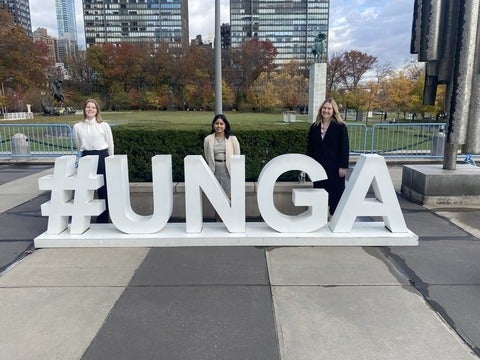
MCC UN Student Seminar: Reflections from Peace and Conflict Studies students
Each year in November, Peace and Conflict Studies (PACS) students are invited to apply to attend the Mennonite Central Committee (MCC) United Nations (UN) Student Seminar. Six students attended the seminar this year, held in the United Nations Plaza in New York City. The three-day seminar explored themes regarding the UN’s role in peacebuilding and advocacy initiatives. After the students returned home, inspired and invigorated, they expressed their takeaways from the trip.