News

Filter by:

Limit to news where the title matches:
Limit to items where the date of the news item:
Date range
Limit to news items where the audience is one or more of:

ECE PhD student Soomin Shin has been awarded a $15,000 scholarship from the Waterloo Data and AI Institute, recognizing her innovative research at the intersection of artificial intelligence and real-world physical systems.

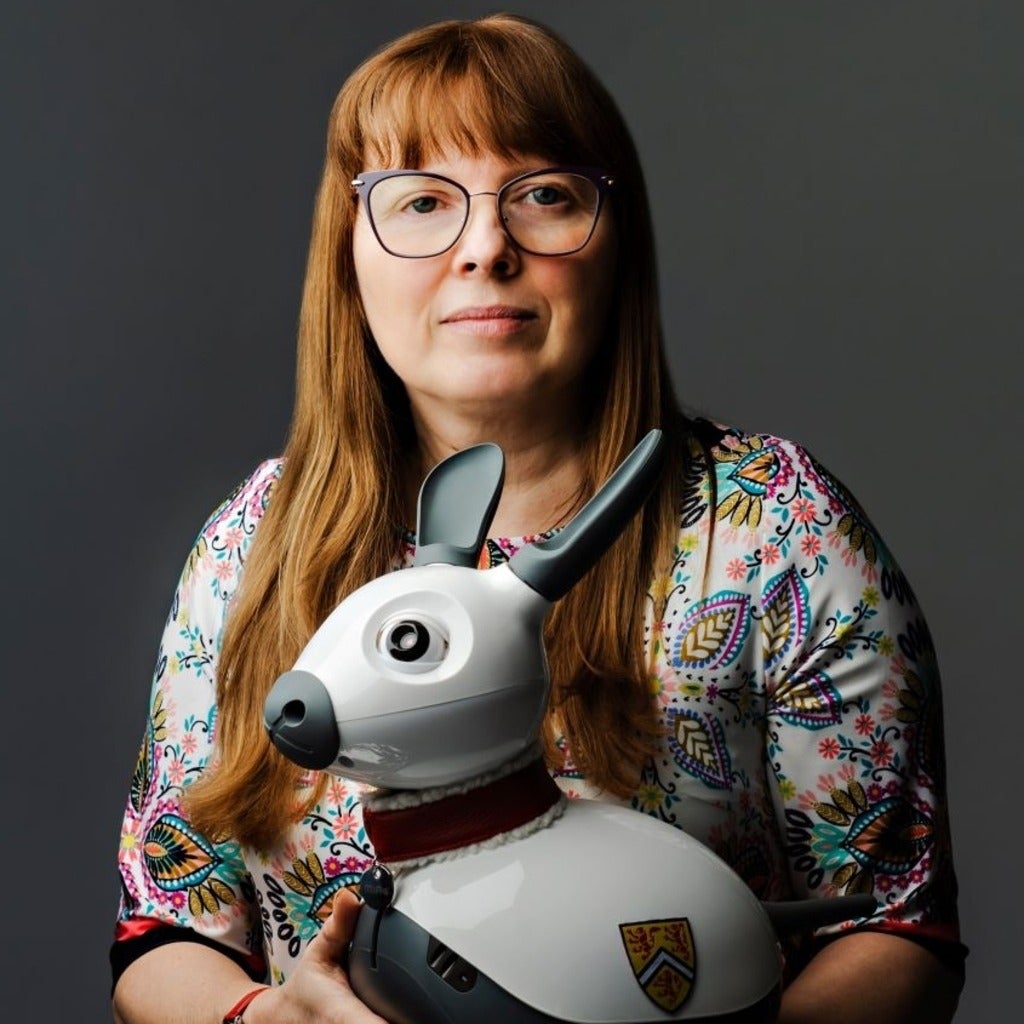
Supervised by Dr. Kerstin Dautenhahn, Shin is a member of the Social and Intelligent Robotics Research Lab (SIRRL), where researchers explore how robots can interact with people in meaningful, socially aware ways. Her work focuses on building scalable social robot systems that can operate sustainably in real-world environments by integrating advanced AI capabilities.
A Waterloo Engineering research team is helping cancer survivors manage lymphedema with a smartphone-sized, portable compression sleeve that lets patients move freely during therapy.

Dr. Carolyn Ren, a professor in the Department of Mechanical and Mechatronics Engineering and Canada Research Chair in Microfluidic Technologies, leads the Waterloo Microfluidics Laboratory (WML). Her team has engineered a soft-robotic compression sleeve to replace bulky, expensive clinical devices that hinder movement.

Electrical and Computer Engineering MASc student Alicia Pan has won first place at the University of Waterloo’s GRADflix Showcase on March 10, where graduate students present their research through short, engaging videos designed for a broad audience.

Pan’s winning video, “Meet Mirrly: A Social Robot for the Eye Doctor’s Office,” introduces Mirrly, a robot designed in collaboration with the RoboHub to help children with amblyopia (lazy eye) follow their eye-patching treatment.

A fresh injection of $7.5 million USD seed funding is propelling Upside Robotics into its next phase of growth, giving the Velocity‑based startup momentum to deepen its partnerships with farmers and agricultural companies across Canada. 

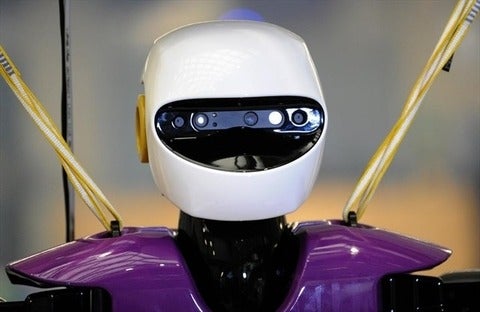
People can collaborate with groups of wheeled robots to create art using an interactive system developed by researchers at Waterloo Engineering.

The robots trail coloured light as they move in response to a piece of music within a fixed area – which serves as the canvas – while a camera records them to produce a “painting,” or visual representation of its emotion.

Research by Dr. Nasser Lashgarian Azad, a professor of systems design engineering, was featured by the National Research Council of Canada.

Azad teamed up with the Digital Technologies Research Centre and policymakers from Transport Canada to test how well AI-based decision-making systems in autonomous vehicles can withstand cyberattacks, without ever putting a real vehicle at risk.