Phantom power: the energy you don't see
Did you know: devices can spend up to 75% of their time using energy, even when they are turned off?
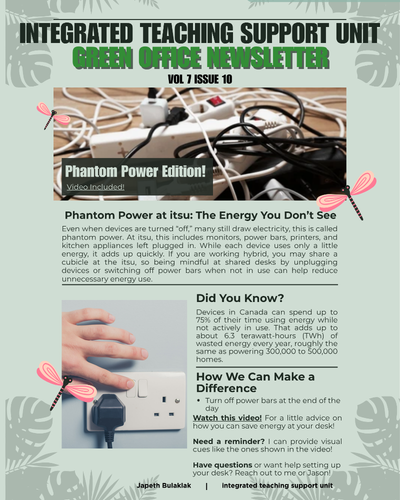
In Canada, devices on “stand-by” add up to an estimated 6.3 terawatt-hours of wasted electricity each year which is enough to power an additional 300,000-500,000 homes. This hidden energy use is known as phantom power. Even when devices appear to be off, many continue to draw electricity.
In office settings, common sources of phantom power include computers, monitors, power bars, printers, and kitchen appliances. While the energy used by each device may seem small, it adds up over time and contributes to significant wasted energy.
The Integrated Teaching Support Unit (itsu) – formerly CTE – is home to an active Green Office team dedicated to reducing emissions and creating a more sustainable workplace on campus. As part of this effort, Japeth Bulaklak, the Special Projects Assistant (Co-op) and Jason Thompson, Faculty Liaison: Science & Environment, have created a video resource to help itsu, and other offices, reduce phantom power. These tips make energy-saving both simple and effective:
- Organize cords
- Plug devices into a power bar
- Keep the power switch accessible
- Create a visible reminder note for yourself to turn off the power bar
If you have any questions about phantom power or would like personalized advice on reducing phantom power, you can reach out to Japeth Bulaklak or Jason Thompson at ITSU.
Explore more stories in our sustainability news feed or check out recent news stories below →