National Day of Remembrance and Action on Violence Against Women
Canada changed forever on December 6, 1989 when 14 young women were murdered in a gender-based act of violence at l'École Polytechnique de Montréal.
Canada changed forever on December 6, 1989 when 14 young women were murdered in a gender-based act of violence at l'École Polytechnique de Montréal. The University of Waterloo’s Department of Chemical Engineering is tied for first in Canada with the University of Alberta's Department of Chemical & Materials Engineering in the 2020 Global Ranking of Academic Subjects, released by the Shanghai Ranking Consultancy.
The Shanghai Ranking Consultancy, which also publishes the prestigious Academic Ranking of World Universities (ARWU), is an independent organization dedicated to “research on higher education intelligence and consultation.” It has been using a transparent methodology and objective third-party data to rank and present the world’s top universities since 2003 and academic subjects since 2009.
The Global Ranking of Academic Subjects measures universities’ quality of education, faculty, research output and influence, as measured by citations.
On Saturday, November 28, the sixth annual Waterloo Nanotechnology Conference (WNC) will bring together students, employers, researchers and entrepreneurs to discuss the exciting future of nanotechnology. This virtual event provides an exclusive opportunity to learn about careers, opportunities and resources in the world of nanotechnology.
All students (high school, university, college and graduate) and industry professionals are welcome to join us as we explore three unique aspects of nanotechnology: health, environment and information.
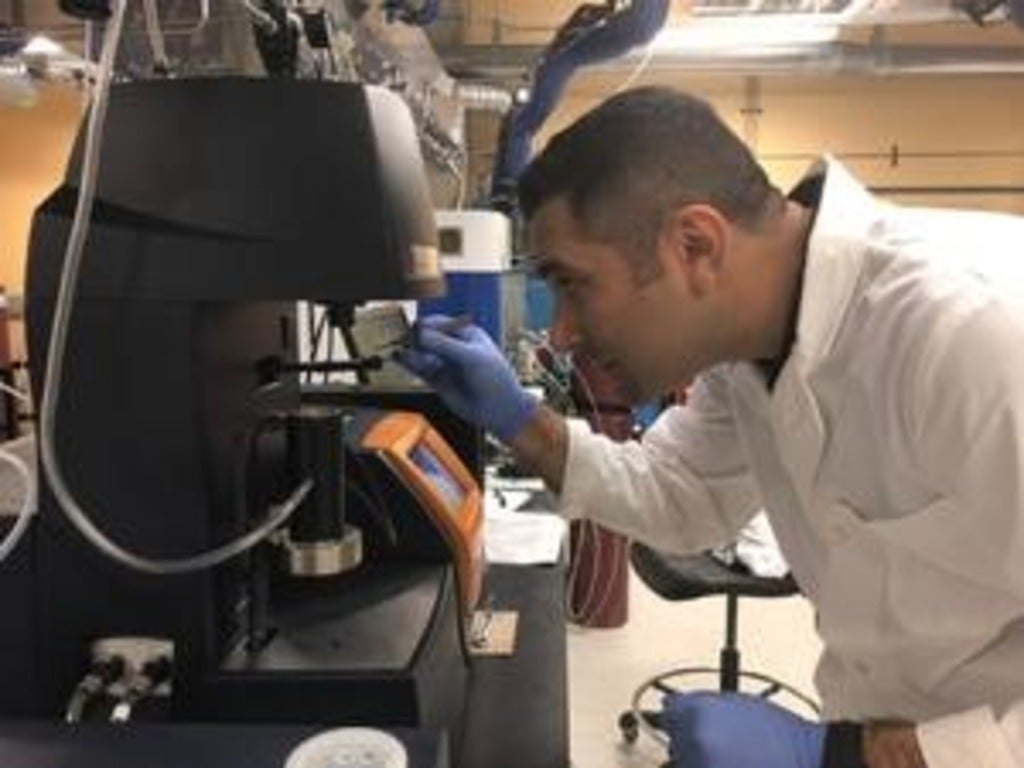
The Department of Chemical Engineering welcomes you to hear Professor Boxin Zhao and his former students, PhD graduates Fut (Kuo) Yang and Aleksander Cholewinski, discuss their innovation: a hybrid material composed of a polymer impregnated with a supercooled salt solution, termed sal-gel, that assumes two distinct but stable solid states under the same range of temperatures and pressure.
On the 19-20th November, 2020, the Waterloo Institute for Nanotechnology (WIN) will host the “International Workshop on Nanotechnology for a Sustainable Future”.
The Department of Chemical Engineering’s Aiping Yu has been awarded a prestigious 2020 E.W.R. Steacie Memorial Fellowship.
Each year, the Natural Sciences and Engineering Research Council of Canada (NSERC) recognizes six highly promising early-stage researchers in the natural sciences and engineering with an E.W.R. Steacie Memorial Fellowship, in recognition of their efforts and to enhance their research capacity so that they can become leaders in their field and inspire others.
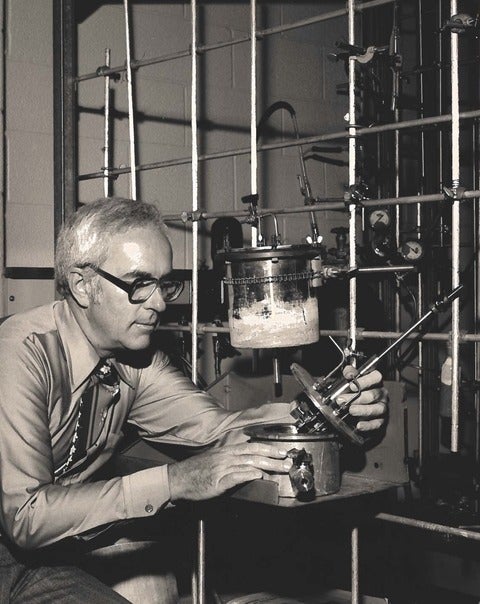
Professor Emeritus Ken O’Driscoll passed away on August 4, 2020, at the age of 89.
O’Driscoll was an internationally respected polymer science researcher, a talented teacher, and a kind and inspirational mentor who worked in the Department of Chemical Engineering between 1970 and 1992. His research in polymerization kinetics and polymer synthesis and characterization influenced many products we know and still use today, including hydrophilic contact lenses (also known as ‘soft contact lenses’), which he developed in 1971.
The Department of Chemical Engineering placed 87th in worldwide university rankings for 2021, joining three other Waterloo Engineering subjects in the top 100.
Please join us to hear a webinar by Professor Alison Scott (PhD ‘19), winner of the 2020 Park and Veva Reilly ChE Medal for Proficiency in Research. She will discuss her work on a general framework for the design of polymeric materials, which maximizes experimental resources and optimizes the resulting polymer product’s suitability for its intended application. Professor Scott will discuss two distinct (yet related) case studies to demonstrate that the framework can be useful in many industries and applications and for any type of polymeric material.
After joining chemical engineering professor David Simakov’s research group last month, postdoctoral researcher Edris Madadian is applying advanced thermochemical and biochemical technologies to remove contaminants from sewage sludge, the main by-product of wastewater treatment plants.