Thursday, April 23, 2015 1:30 pm
-
1:30 pm
EDT (GMT -04:00)
Faculty
Tuesday, March 17, 2015
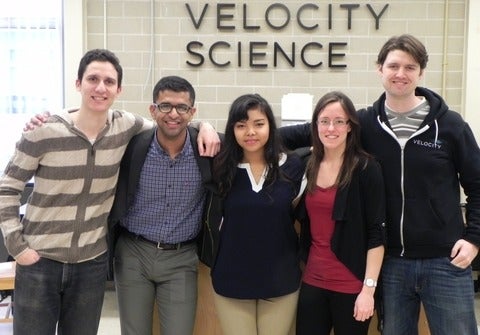
Professor Aucoin's PhD Student Student - Eric Blondeel captures $60,000 AC Jumpstart Grant with his startup ExVivo Labs
 For more information please see AC JumpStart Grant
Tuesday, March 31, 2015 3:00 pm
-
5:00 pm
EDT (GMT -04:00)
Chemical Engineering Capstone Design Symposium
Tuesday, March 31, 2015 - 3:00-5:00 pm
Location E6 - 1st and 3rd floor atriums
Project Poster Fair & Meet the Professor Night
Come and see the design project work completed by our graduating class. Meet other students and professors. Get ideas for your design projects or graduate work.
Applicants, Alumni and Members of the Public are welcome to attend
Saturday, March 14, 2015 2:00 pm
-
4:00 pm
EDT (GMT -04:00)
Chemical Engineering Showcase 2015
Tuesday, March 31, 2015 9:30 am
-
9:30 am
EDT (GMT -04:00)
Notice of PhD Oral Defence - "Protein Capture by Cation Exchange Membrane" by Anna-Katharina Hassel
Tuesday, April 28, 2015 12:00 am
-
Wednesday, April 29, 2015 12:00 am
EDT (GMT -04:00)
ExpecTAtion
The registration platform to sign up for expecTAtions is now ready for you to use. ExpecTAtion sign-up
The next ExpecTAtions workshop for prospective TAs in Engineering will be held on Tuesday, April 28 and Wednesday, April 29, 2015, 8:30-3:30 (2 days)
Workshop Schedule
Day One - April 28
Tuesday, April 7, 2015 1:00 pm
-
1:00 pm
EDT (GMT -04:00)
PhD Oral Defence - "Colorimetric Detection of Pathogenic Bacteria using Morphology-Controlled Gold" by Mohit Verma
Friday, March 13, 2015 11:30 am
-
11:30 am
EDT (GMT -04:00)
Seminar - “Biomaterials Topography for Stem Cell Regulation and Tissue Engineering Applications”, Evelyn KF Yim, Department of Biomedical Engineering, Mechanobiology Institute Singapore, Department of Surgery, National University of Singapore
ABSTRACT: Stem cells respond to both physical and biochemical changes in their stem cell niche. An ideal scaffold for tissue engineering application should mimic the microenvironment for natural tissue development and present the appropriate biochemical and topographical cues in a spatially controlled manner. Studies have shown that physical forces from the substrate topography play a role in stem cell proliferation, migration and cell fate determination.
Friday, March 6, 2015 11:30 am
-
11:30 am
EST (GMT -05:00)
Seminar - “Enabling RNA as a Biomedical Therapeutic Through Customized Nanotechnology Platforms" by Dr. Omar Khan, Postdoctoral Associate, Massachusetts Institute of Technology, Boston, MA
ABSTRACT: The exogenous delivery of RNA into tissues has shown great potential for the treatment of destructive diseases by therapeutically controlling the expression of genes within those tissues. A key need for the broad application of RNA for therapeutic biomedical engineering applications is the development of safe and effective delivery systems capable of targeting specific cells within the body.
Thursday, March 12, 2015 9:00 am
-
9:00 am
EDT (GMT -04:00)