Staff

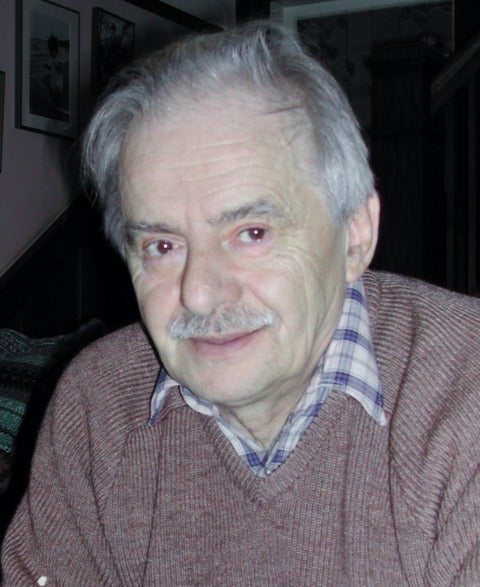
Daniel P. Sellan, PhD
Postdoctoral Fellow
The University of Texas at Austin

My research is in the area of heat transfer science and engineering, an emerging field that seeks to develop an understanding of energy transport at an atomistic and carrier level [e.g., phonon (lattice vibration), photon, electron, and fluid particle]. I use a combination of atomistic calculations, statistical thermodynamics, traditional heat transfer analysis, and bulk and micro/nanoscale experiments to solve critical problems in energy research.

Mousa Jafari, PhD
Post-Doctoral Fellow
University of Waterloo
RNA interference is a post-transcriptional gene silencing process whereby short interfering RNAs (siRNAs) induce the sequence-specific degradation of complementary messenger RNA. Despite their promising therapeutic capabilities, siRNA-based strategies suffer from enzymatic degradation and poor cellular uptake. Several carrier-based approaches have been employed to enhance the stability and efficiency of siRNA delivery.
Dr. Poupak Mehrani
Chemical and Biological Engineering Department
University of Ottawa
Fluidized beds including those of gas-phase are widely used in industry due to their excellent features including providing high degree of mixing, heat transfer, mass transfer, to just name a few. In this talk a brief summary of research presently carried out by my research team in the areas of polymerization and clean energy, where fluidized bed reactors are employed, will be presented.
Tuesday, August 20, 2013 3:30 pm - 3:30 pm EDT (GMT -04:00)

Seminar: “Bioenergy and Availability” by Dr. Duu-Jong Lee (NTUST, Taiwan)


Abstract: The world is faced with energy challenges with depleting fossil fuel reserves. Although with successful exploitation of shale gas and shale oil, the long-term economic benefits on shale fuels use considering the environmental damage are unknown. Biomass is abundant worldwide and its derived energy is regarded renewable and cost-effective. Additionally, the use of bioenergy from biomass is claimed to be carbon neutral since the biomass has supreme capability to biofixation of CO2. However, the cost of biodiesel production from biomass is high.

Abstract: The North American Oil & Gas industry is going through a phase of profound change that has significant implications for Canada with respect to the economy, the workforce. In the first half of my talk will cover the ways in which the industry at large is reacting to these changes, as well as possible implications for further development of the oil sands reserves in Canada and supporting research and development activities.