Chemical Engineering leads in health technology
The Department of Chemical Engineering at the University of Waterloo is equipping students with cutting-edge tools to advance research in biotechnology and biomedical engineering.
Two new pieces of equipment, an Ambr-15 Automated Micro Bioreactor System and a Liquid Chromatography-Mass Spectrometry (LC-MS) instrument, are opening doors for engaging graduate-level research in bioprocessing and biopharmaceuticals.
Chemical engineers play a key role in designing and optimizing processes for producing vaccines, monoclonal antibodies, and other biologic medicines. They also use synthetic biology to engineer cells that produce therapeutic molecules.
Professor Hector Budman collaborates closely with industry partners and recently received an Ambr-15 Automated Micro Bioreactor System through a donation from Sartorius.
The above video shows how the Ambr-15 Automated Micro Bioreactor System functions. The video is narrated by PhD student Zahra Negahban.
This advanced system allows students and researchers to grow cells and optimize culture conditions for producing biologics such as vaccines and monoclonal antibodies, which are widely used to treat diseases.
The Ambr-15 system is a state-of-the-art platform for miniature cell culture experiments. It consists of two stations, each containing 12 small bioreactors (24 in total), with each bioreactor holding 12 millilitres of culture medium (the nutrient-rich solution that supports cell growth).
The system gives researchers precise control over key conditions such as pH, temperature, and mixing speed, while automatically monitoring and sampling the cultures. By testing many conditions at once, it greatly speeds up research and development, saving valuable time in optimizing processes.
Hands-on learning with the latest equipment driving modern industry
Graduate students in Professor Budman’s lab use this technology to study how different conditions affect cell growth and product formation. This work directly supports the development of vaccines and antibody-based medicines.
The bioreactor system pairs with another powerful tool: a new Liquid Chromatography-Mass Spectrometry (LC-MS) instrument located in Professor Valerie Ward’s lab. Ward, Canada Research Chair in Microalgae Biomanufacturing, specializes in synthetic biology and metabolic engineering for biomanufacturing.
Samples taken from the bioreactors are analyzed with LC-MS to measure nutrients and by-products in the culture medium, such as glucose. Tracking these concentrations ensures cells have the right balance of nutrients to stay healthy and productive. For example, if glucose runs low, additional glucose can be added to keep the culture going.
The data generated is also used to build dynamic models that predict the best culture conditions for maximizing cell growth and product yield.
Both the Ambr-15 bioreactor and LC-MS system are widely used in the pharmaceutical industry. By working with these technologies, chemical engineering graduate students gain hands-on experience with the same tools used to develop life-saving medicines.
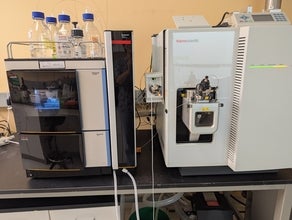
Liquid Chromatography-Mass Spectrometry (LC-MS) instrument
The Department of Chemical Engineering is committed to providing students with access to advanced equipment and industry-relevant training—ensuring they are ready to make an impact in biotechnology, biomedical, and pharmaceutical industries.