Clinical Trials Ontario Information Session
The Centre for Bioengineering and Biotechnology and the University of Waterloo Office of Research Ethics are pleased to host an information session with Clinical Trials Ontario.
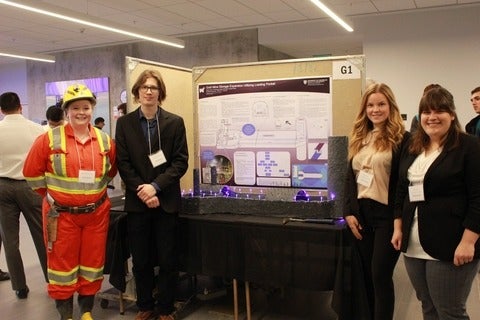
Civil & Environmental Engineering and Management Sciences graduate students will kick off the 3MT Engineering heats in this 1 slide 3 minute explain-your-research challenge.
.
Waterloo pilot project shows residents in even poorly serviced suburbs will use subsidized ridesharing to connect with municipal transit networks
By Brian Caldwell
Faculty of Engineering
Integrating ridesharing with transit in poorly serviced suburban neighbourhoods is an effective way to get people out of their cars and boost ridership.
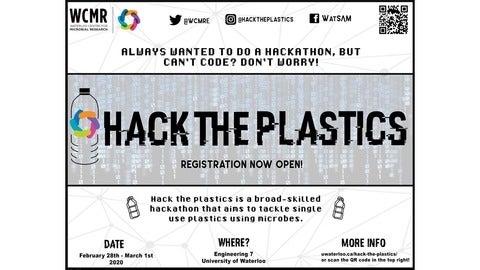
Have you ever wanted to join a hackathon, but thought it was only for coders? Well, Hack the Plastics wants you! Hack the Plastics is a broad skilled hackathon that does not require a coding based final product and will happen from 28th Feb – 1st March, 2020 at the University of Waterloo. You will be tackling ways to fight single use plastic pollution using microbes and producing a technical solution, business plan, and pitch.
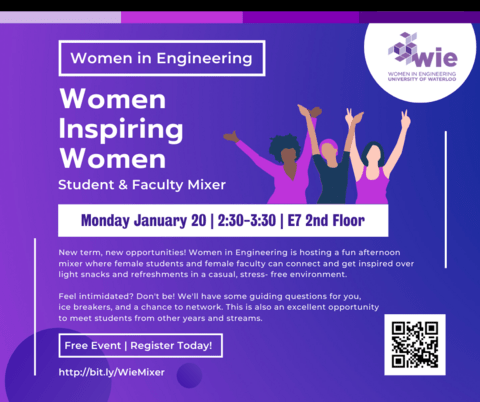
Women in Engineering is hosting a fun afternoon mixer where female students and female faculty can connect and get inspired over light snacks and refreshments in a casual, stress- free environment.

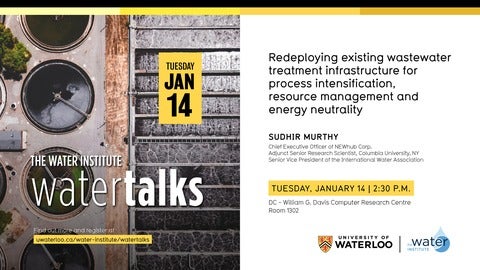
As part of the Water Institute's WaterTalks lecture series Sudhir Murthy will present: Redeploying existing wastewater treatment infrastructure for process intensification, resource management and energy neutrality.

Our department suffered a grievous loss on Wednesday January 8, 2020. Mansour Esnaashary Esfahani, one of our doctoral students, was onboard flight PS725 that crashed in Iran resulting in the tragic deaths of all those aboard. Our thoughts are with his family, his recent bride, Hanieh, and his friends. We mourn his passing.
Managing reservoirs for water quality, not just flood control, could be part of the solution to the growth of toxic algal blooms in the Great Lakes, especially Lake Erie, every summer.
In a major study involving data from Canada and the United States, researchers at the University of Waterloo identified reservoirs on streams and rivers as sources of food for algae at the worst possible time.