The Ontario government is investing $540,000 over three years in research led by experts in the University of Waterloo's Department of Civil & Environmental Engineering (CEE) to help communities strengthen flood preparedness and improve water management decisions across the province. The funding, provided through a collaborative research agreement with Ontario's Ministry of Natural Resources, will support the development of advanced hydrologic modelling tools designed to help municipalities, conservation authorities, and dam operators better anticipate and respond to flooding.
The project is led by Dr. Bryan Tolson, professor of Civil and Environmental Engineering, in collaboration with Dr. James Craig, professor of Civil and Environmental Engineering and a leading expert in hydrologic modelling, serving as co-investigator.
The new investment follows an earlier four-year, $494,500 agreement that resulted in the development of several widely used resources, including the Ontario Hydrologic Modelling System (OHMS), the Ontario Hydrologic Atlas (OHA), the Streamflow Alteration Index (SAI), and the Ontario Lake and River Routing Product (OLRRP). These tools are helping water managers across Ontario make more informed decisions about flood preparedness, watershed management, and infrastructure planning.

From left to right: Dean Mary Wells, Dr. Bryan Tolson, Minister Mike Harris and Dr. Bill Rosehart
At the centre of this work is Raven, an open-source hydrologic modelling framework developed at Waterloo over nearly two decades by Craig. Today, Raven is used across Canada for operational streamflow forecasting and serves as the foundation for many of the models being developed through the provincial partnership.
"We are taking proactive steps to be better prepared, so that when flooding happens, we can reduce its impacts," said Mike Harris, Ontario's Minister of Natural Resources. "By funding collaborative research projects with academic partners like the University of Waterloo, our government is ensuring we have the best and most up-to-date information to keep people and property safe."
"Better models and improved forecasts of floods can give communities more time to prepare and help the province manage its dams to balance competing demands on Ontario's rivers and lakes," said Tolson.
The project also creates valuable opportunities for graduate students and postdoctoral scholars within CEE. Researchers-in-training work directly alongside ministry scientists and engineers to build and test models using real watersheds and real-world water management challenges, gaining hands-on experience while contributing to research with direct societal impact.
For the Department of Civil & Environmental Engineering, the project showcases the department's leadership in water resources engineering and highlights how faculty expertise can be translated into practical solutions for governments and communities. From flood forecasting and climate adaptation to infrastructure resilience and environmental sustainability, CEE researchers are helping address some of society's most pressing challenges.
As Ontario continues to adapt to changing environmental conditions, the research led by Tolson and Craig demonstrates how innovative engineering research can support evidence-based decision-making and help build safer, more resilient communities across the province.
For more information:
- Ontario news release: Ontario Investing $540,000 to Protect Communities Against Flooding
- Learn more about Bryan Tolson's research
- Explore the Raven Hydrological Modelling Framework
- View project datasets through the OLRRPv2 website and the Streamflow Alteration Index (SAI) publication

Ontario Minister of Natural Resources Mike Harris joins Mary Wells, Dean of Engineering, CEE professors James Craig and Bryan Tolson, and graduate students involved in developing hydrologic modelling tools to support flood preparedness and water management across Ontario.

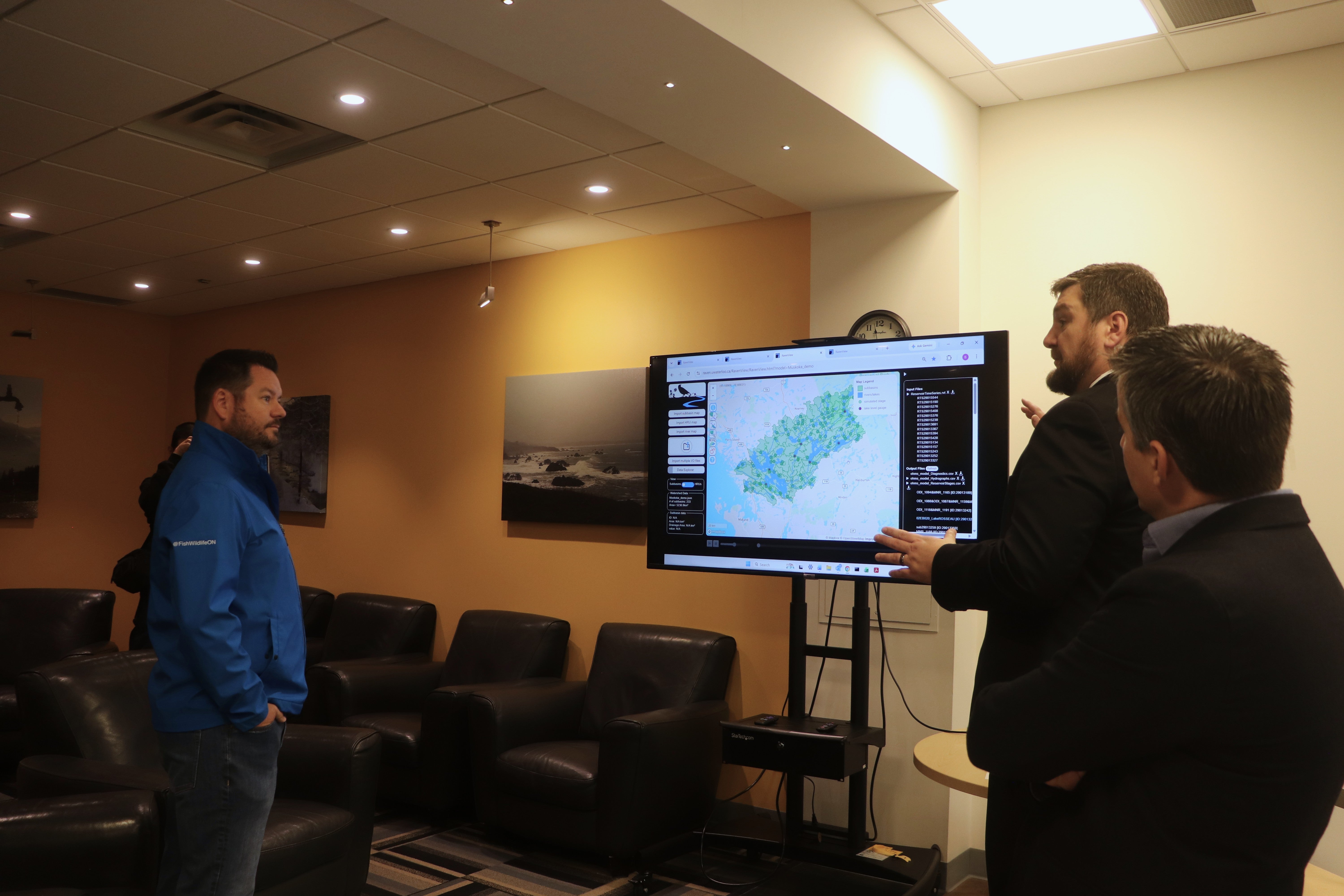
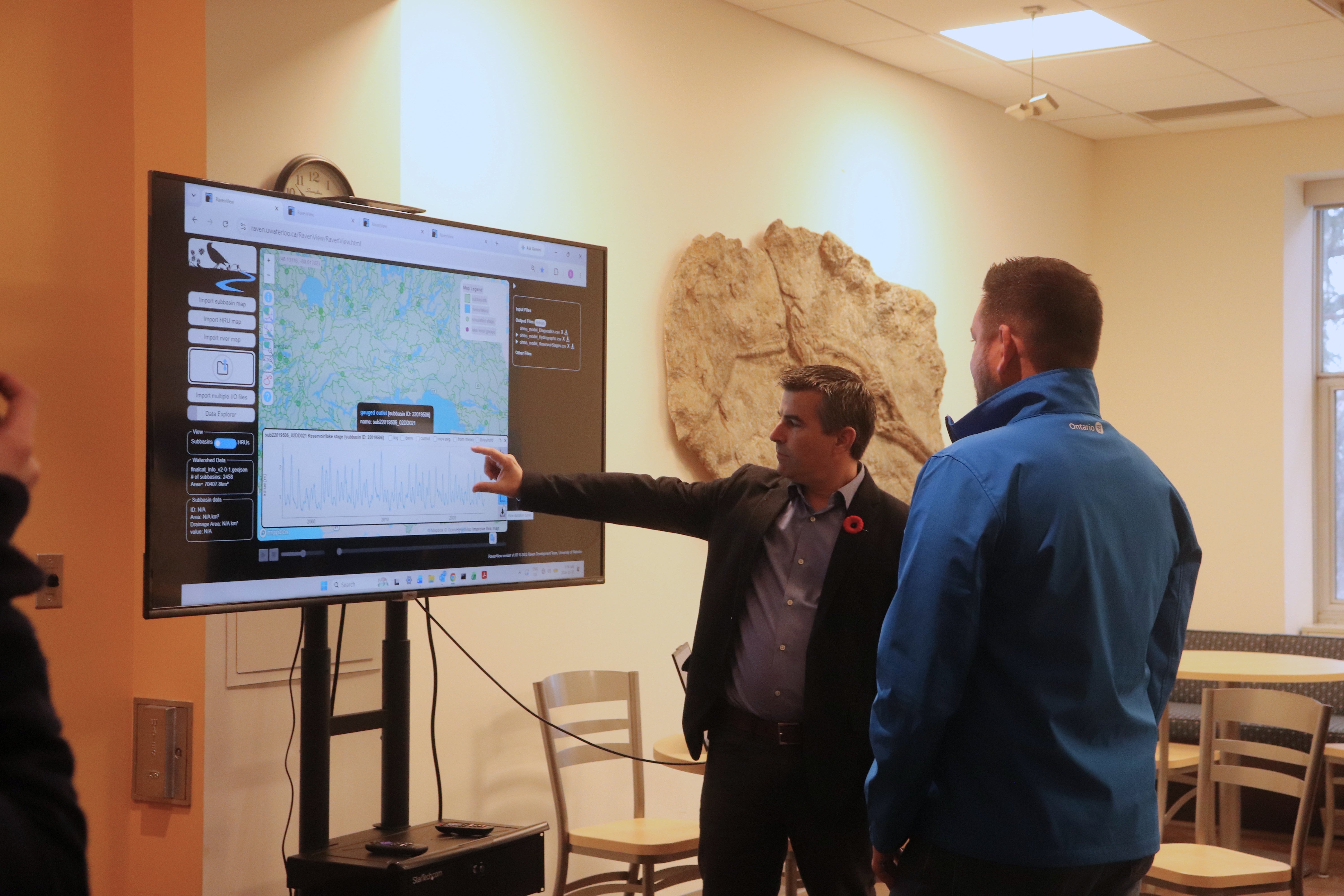
Dr. Bryan Tolson and Dr. James Craig showcase the Raven Hydrological Modelling Framework and flood forecasting tools developed by researchers in the Department of Civil & Environmental Engineering during a visit by Ontario Minister of Natural Resources Mike Harris.

Dr. Bryan Tolson and Dr. James Craig showcase the Raven Hydrological Modelling Framework and flood forecasting tools developed by researchers in the Department of Civil & Environmental Engineering during a visit by Ontario Minister of Natural Resources Mike Harris.