Bridging global sustainability and local knowledge
Reiko Omoto grounds sustainability solutions in the knowledge and experience of local communities.
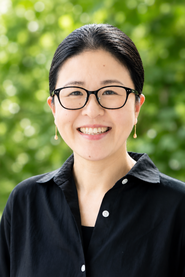
In the middle of winter, in the mountainous village of Chizu, Japan, you might find Reiko Omoto (PhD ’13) waist deep in snow digging the frozen earth for carrots in her garden. If dinner needs vegetables, this is where they come from.
It isn't a hobby. It's how she lives.
Later that week, she'll return to Tottori University, where she is a Professor in the Faculty of Regional Sciences. Her career has taken her from international fisheries governance to research with farmers, fishers and rural communities across Japan, Southeast Asia and the United States.
Fascinated by wildlife and nature since childhood, Omoto found her love of growing food through her PhD supervisor and friend, Dr. Steffanie Scott, professor of Geography and Environmental Management at Waterloo. At Waterloo, Omoto's doctoral research examined how global sustainability standards affected small-scale shrimp farmers in Vietnam. Her research raised a question she would continue to explore throughout her career: how can global solutions succeed if they aren't grounded in the realities of the people they're meant to serve?
Rather than searching for answers from behind a desk, Omoto sought them alongside communities. As a postdoctoral researcher with the Integrated Local Environmental Knowledge project at Kyoto's Research Institute for Humanity and Nature, she collaborated with communities around the world to explore food systems and environmental change.
"There's a farmer and there's country policies and environmental issues," she says. "I realize that you cannot just take one side."
Omoto carried that thinking into her work with international fisheries governance. As Fisheries Manager for Japan at the Marine Stewardship Council, Omoto worked with fishers navigating sustainability certification and saw firsthand how different types and scales of fisheries can require different approaches to achieving sustainability, including approaches beyond international certification. She has continued exploring that gap throughout her career, examining how different types of sustainability schemes can better respond to the producers and communities expected to use them.
"I always believe that everyone, whatever their profession is, has their own professional knowledge," she says. "I really like to learn from virtually anyone."
In Okinawa, Omoto documented how seaweed farmers were restoring corals using techniques developed through years of daily experience in the water. Their methods had initially been dismissed by academics, but over time the corals survived, grew and began to reproduce naturally. The work became the subject of Omoto’s research on how seaweed production and coral conservation can work together, and how market-based conservation can engage consumers alongside producers in supporting coral conservation.
Then, in Chizu, Omoto worked alongside women entrepreneurs responding to climate change, population decline and the challenges facing rural communities. Their work became the subject of a 2025 paper co-authored by Omoto, the women themselves and two researchers from the United States, helping their efforts gain greater recognition and legitimacy with town council. Omoto also now serves as an advisor on future planning for Chizu, where she participates directly in discussions about the town’s future.
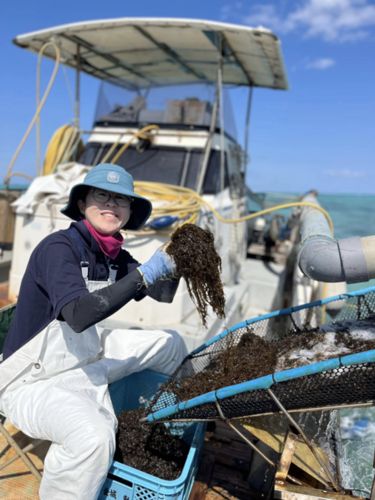
Ask Omoto what she's most proud of, she doesn't mention influencing global standards or becoming a professor. After a thoughtful pause, she talks instead about her book Local Certification: Regionally Created Food Distribution Systems, which failed to sell among its intended audience of academics.
Instead, it was read by farmers, fishers and food producers. Some went on to develop certification systems of their own.
For Omoto, academic achievement has never been separate from the communities and environments her research is intended to serve.
Reiko Omoto is a recipient of the 2026 Distinguished Alumni Award, recognizing alumni whose professional achievements, community contributions and environmental impact exemplify the Faculty of Environment.