Exploring connection in an increasingly digital world
Each year, third-year Knowledge Integration (KI) students bring ideas to life through immersive museum exhibits as part of their final capstone project, the most significant project of the KI students’ academic journey. Over eight months, students combine research, creativity and collaboration to design installations that encourage visitors to engage with complex societal issues.
The 2026 showcase invited visitors to reflect on how we connect, communicate and understand the space around us and one another in an increasingly digital world. Among the many thought-provoking projects were Connection Lost and Teaching Identity Development Through Play, both of which examined how individuals navigate identity, empathy and decision-making in modern society.
Connection lost: Empathy in the digital age
What happens to empathy when communication moves online?
Connection Lost immerses visitors in the realities of digital interaction, highlighting how tone, context and human connection can become distorted through screens. From the moment visitors entered the exhibit, they were greeted with the striking phrase “Error 404: Connection Not Found” and invited to reflect on how technology shapes the way we perceive and respond to others.
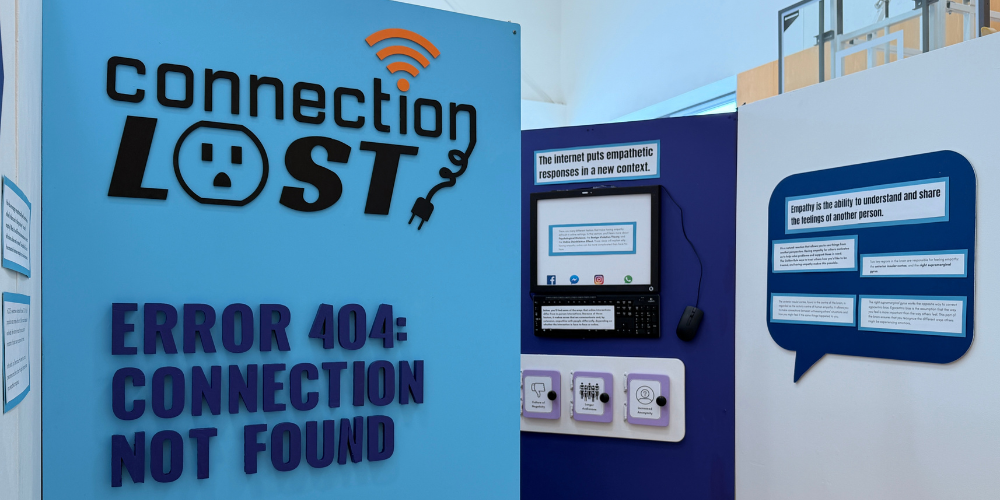
Through interactive stations, visitors explored how empathy operates both offline and online. One section encouraged participants to interpret social media posts and consider how tone changes when messages are spoken aloud versus read on a screen. Another invited visitors to see through different lenses demonstrating how personal biases influence interpretation of the same content.
A hallway filled with curated social media posts simulated the constant stream of information users encounter daily, prompting us to consider how attention is captured and exploited online. A feature which mimicked the overwhelming nature of digital spaces and helped visitors question if they are actively choosing what they consume or simply reacting to it.
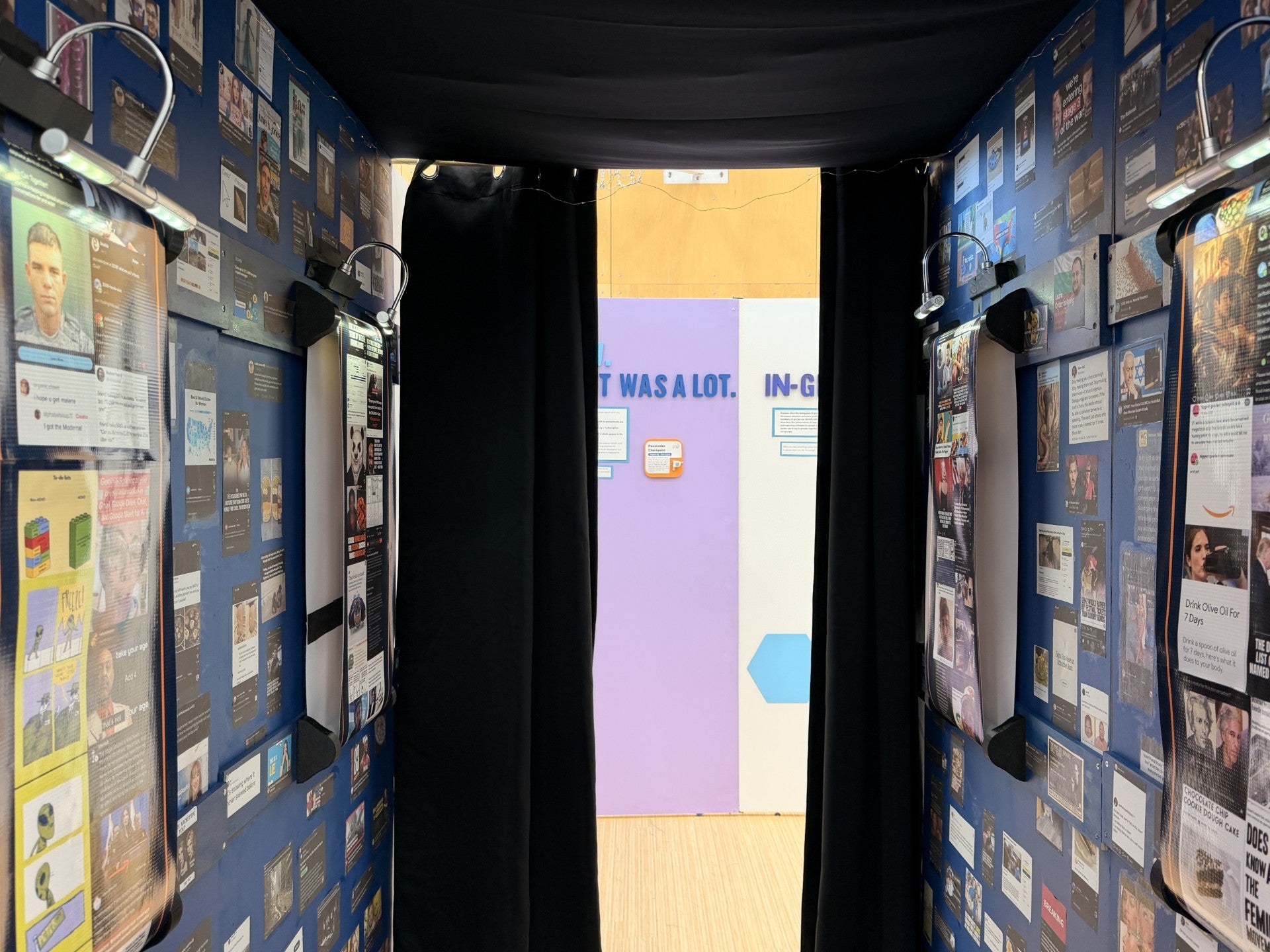
Ultimately, Connection Lost leaves the visitor wondering about their digital habits and how empathy can be preserved in a fast-paced, online world.
Teaching identity development through play: Learning through game theory
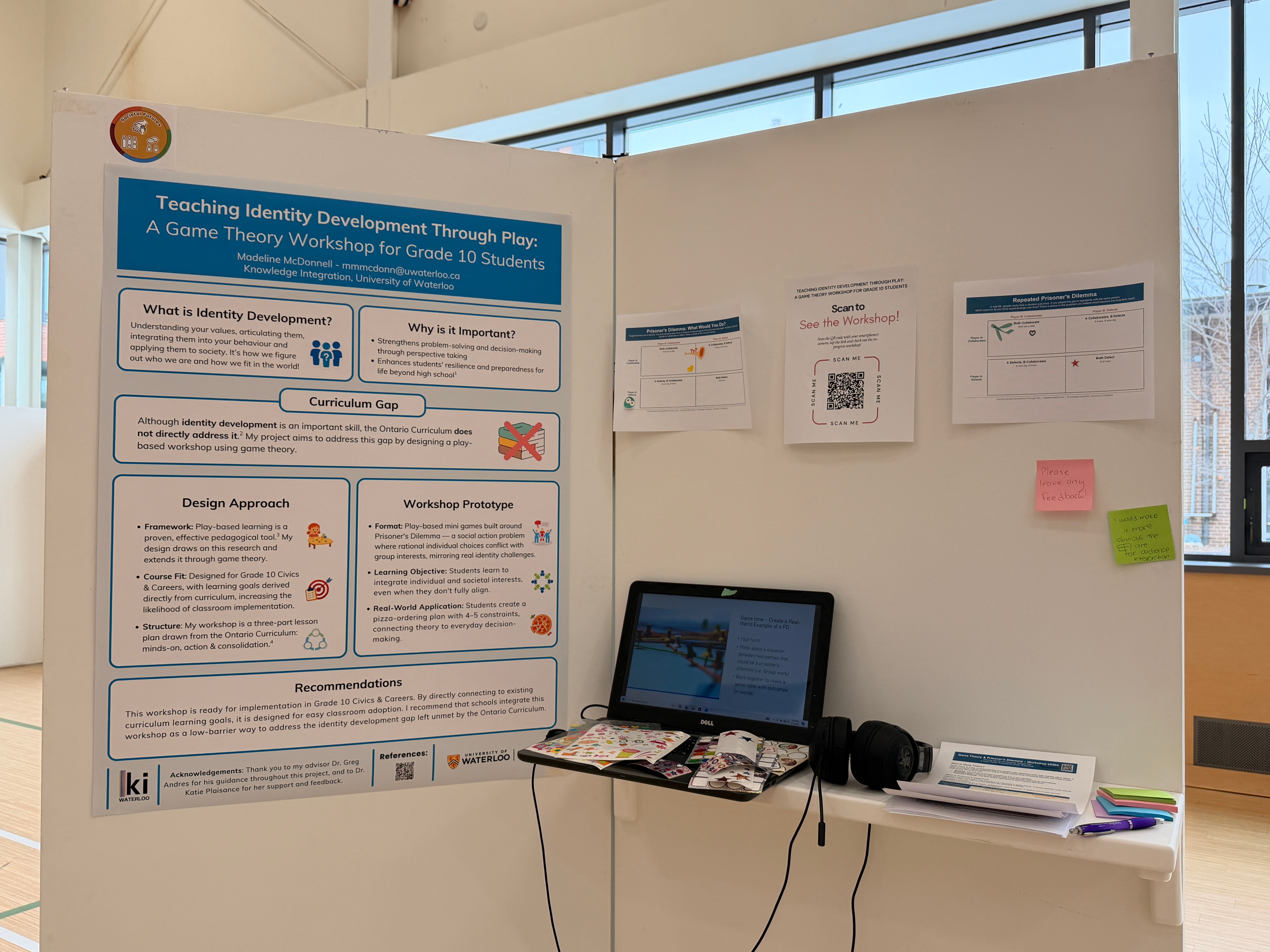
This exhibit showcased a workshop created for Grade 10 students to explore how personal values, social dynamics, and decision‑making work in everyday life using simple games. The designers used a classic experiment called The Prisoner’s Dilemma, which helps students think about whether it’s better to act for their own benefit or cooperate with others. Through the game, students can see how both approaches have advantages and drawbacks in real-world situations.
This type of play emphasized that identity is not static, but rather shaped through experiences, choices and interactions with others. By incorporating creative elements like stickers, prompts and reflective questions, the installation made abstract concepts tangible and accessible. Helping the next generation articulate their values and make informed decisions addresses a gap in the Ontario curriculum in an engaging way. In addition to the creative development of the workshop, the designers also provided a guide for high school teachers to implement it in their classrooms.
The KI exhibit ran from March 16 to 21, 2026, and demonstrated the power of interactive design in making complex ideas accessible for reflection, dialogue and deeper understanding. From digital empathy to identity development, we were reminded that the way we connect with others and ourselves continues to evolve, and that understanding these changes is essential to building a more thoughtful and inclusive future for people and the planet.