Predicting the future of black spruce growth
Master of Science graduate Karisa Tyler studies the impact of a changing climate on tree growth in the Athabasca Oil Sands Region.
Estimated reading time: 2:15
Trees are valuable components of the Canadian ecosystem and natural instruments of carbon storage and sequestration. A tree’s growth is controlled by regional climate, including growing season length and air temperature. It is also impacted by local hydroclimate; water and temperature variations that occur on a smaller scale. Black spruce trees are common within the boreal landscape of North America, including within fen wetlands. There is limited research on black spruce growth in fens, and how the unique hydroclimate of fens may impact tree growth in a changing climate.

Karisa Tyler, a recent Master of Science graduate from the Department of Geography and Environmental Management, has always had a fascination with trees. She chose the Faculty of Environment for graduate studies because of its world-class reputation, range of opportunities, and focus on career preparedness. Under the supervision of Dr. Petrone, her thesis examined the influence of environmental conditions and anthropogenic disturbance on black spruce in boreal peatlands of northern Alberta. In a recently published article, Tyler linked the tree growth of black spruce trees to local hydroclimate in two fen sites in the Athabasca Oil Sands Region.
To determine tree growth, Tyler used a method called quantitative wood anatomy. Tree core and ring samples were collected from both sites and placed within a microscope slide scanner. This allowed key tree growth characteristics to be identified on a cellular level. Correlation analysis was conducted between these growth characteristics and long-term climate data to determine the relationship between the two variables.
The results of Tyler’s analysis showed that even though the sites were less than 100 km apart, tree growth was quite different. This difference was due to the impact of the local hydroclimate. Some conditions, including variable water table depth, had a stronger correlation to tree growth changes than other macro-climate conditions like air temperature or precipitation. When the water table was stable, trees could buffer the effects of air temperature and precipitation variability. Therefore, black spruce within fens may be protected in short-term periods of low rain or extreme temperatures, but more susceptible to periods of long-term drought. This is especially relevant to the Athabasca Oil Sands Region, which is at high risk of water table and soil moisture decline.
To better understand future climate change impacts on trees in boreal wetland systems, we need to understand historical trends
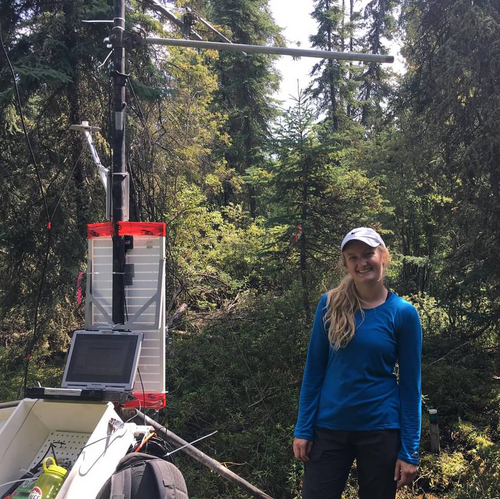
“To better understand future climate change impacts on trees in boreal wetland systems, we need to understand historical trends”, says Tyler. The results of Tyler’s research increase our knowledge of climatic influence on black spruce growth and can shape future conservation and management strategies.
Tyler now works as an Ecologist for SLR Consulting Ltd., where she completes environmental impact studies for both the private and public sector across Southern Ontario. The education and experience she acquired from her graduate studies in the Faculty of Environment were critical for her career in the consulting field. “Research programs, like those in the Faculty of Environment, are essential to developing effective conservation efforts”.
The research, Linking black spruce xylem anatomy to local hydroclimate in two boreal fens, authored by Tyler and others, was published in Trees.

