Quantifying the environmental impacts of space activity
PhD Candidate Gurpreet Singh leads an international research initiative that is out of this world.
The number of satellites within Earth’s orbit has greatly increased since 2020, which has led to better broadband connectivity and enhanced Earth observation capabilities. However, this rapid expansion of satellites brings challenges over increased light pollution, increased radio frequency interference, disruptions to circadian rhythms and disruptions to traditional celestial navigation systems.
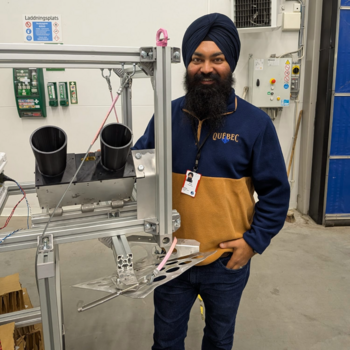
Gurpreet Singh, a PhD Candidate in Sustainability Management, is tackling these challenges through research on the environmental impacts of space activity.
“Space is often perceived as infinite, yet the regions around Earth where satellites operate are limited and increasingly crowded. Sustainable management of this orbital space is essential because satellites now underpin everything from disaster response to environmental monitoring. Without coordinated global stewardship, we risk turning a shared scientific frontier into an unsustainable domain of debris and light pollution, jeopardizing future access to space.”
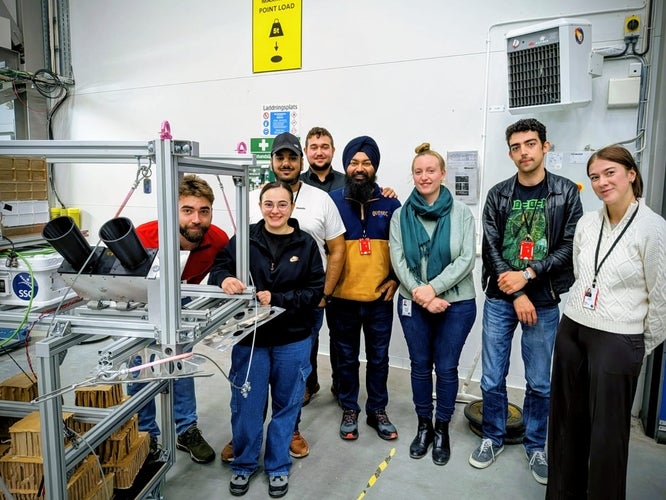
Singh is the lead for Project Space Object Brightness Evaluation and Reference (S.O.B.E.R.), an international student-led initiative that aims to evaluate the impact of resident space objects on dark skies. S.O.B.E.R. was selected for the German-Swedish programme REXUS/BEXUS, which allows students from universities and higher education colleges to carry out scientific and technological experiments on research rockets and balloons. In October, Singh travelled to the Esrange Space Center to see their sensor launched aboard a high-altitude balloon. The sensor successfully captured radiometric data critical for their project.
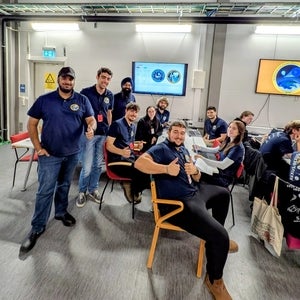
“Beyond the data itself, the mission proved that international student-led teams, working across Canada, and Europe, can make tangible contributions to the global conversation on space sustainability.”
Next, Singh and his team will process the flight data to quantify satellite brightness and integrate it into sustainability indicators that assess the human footprint in orbit. This work will inform both scientific modelling and policy dialogue on how to maintain dark and quiet skies. The S.O.B.E.R. team is also preparing a follow-up mission, expanding to new sensors and orbital testbeds in collaboration with Canadian and European partners.
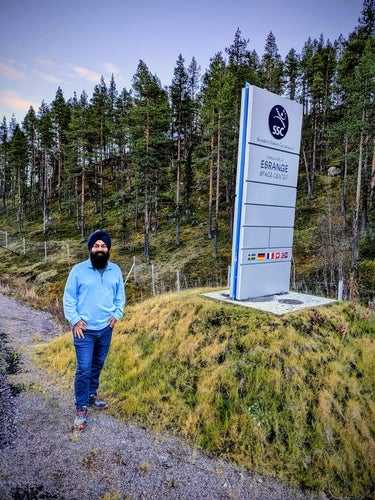
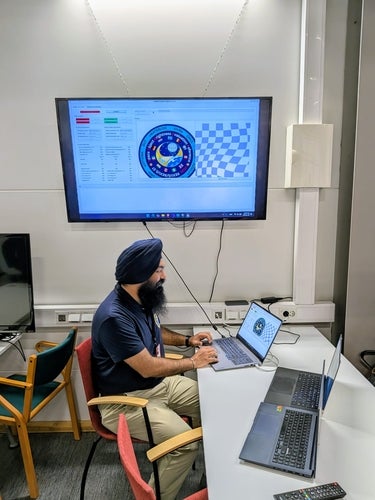
The REXUS/BEXUS programme is realised under a bilateral Agency Agreement between the German Aerospace Center (DLR) and the Swedish National Space Agency (SNSA). The Swedish share of the payload has been made available to students from other European countries through a collaboration with the European Space Agency (ESA). EuroLaunch, a cooperation between the Swedish Space Corporation (SSC) and the Mobile Rocket Base (MORABA) of DLR, is responsible for the campaign management and operations of the launch vehicles. Experts from DLR, SSC, ZARM and ESA provide technical support to the student teams throughout the project. REXUS and BEXUS are launched from SSC, Esrange Space Center in northern Sweden.
S.O.B.E.R is a collaborative project with team members at the University of Waterloo, York University, Technische Universität Darmstadt, Queen Mary University of London, and Luiss Business School Amsterdam. The project is backed by both the Faculty of Environment and the Faculty of Engineering, with mentorship support from Velocity advisor Anthony Ng, Environment faculty Dr. Steven Young and Engineering faculty Dr. Jean-Pierre Hicky.