Rethinking economics to build stronger communities
Kate Linden puts care and relationships at the centre of lasting change.
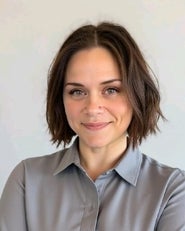
When Kate Linden (PhD '18) introduces students to ecological economics, she begins with an unusual request.
"When you hear economics, don't think markets. Think life."
It's the perspective she wishes someone had given her years earlier. As an undergraduate, she avoided economics, assuming it was confined to spreadsheets, markets and GDP. That changed in her final year through a course taught by ecological economist Peter Victor. The course connected ecology, political economy and the environment through systems thinking.
“It showed me that economics, when done well, is really about care and relationships, not markets and metrics,” she explains.
Ecological economics gave Linden a new way to understand the world. Waterloo gave her the confidence to keep asking bigger questions.
During her PhD studies, Dr Stephen Quilley, Professor in the School of Environment, Resources and Sustainability, encouraged Linden to follow every thread of curiosity, trusting that seemingly unrelated questions would eventually connect. Her research has since ranged from Indigenous governance to regenerative agriculture, aging, and artificial intelligence, but Linden sees a common thread running through it all.
"They all come back down to relationships and how we organize and sustain collective life."
Working alongside communities has also shaped how Linden approaches research. Rather than arriving with solutions, Linden starts by listening. She believes communities are experts in their own lives and that research should respond to what they need, not simply what is convenient to study or easy to publish.
At Cape Breton University (CBU), Linden leads the Economics and Wellbeing stream of Homeward Bound, a $12.4 million initiative and the largest research project in the university's history. The project is rethinking housing, healthcare and community supports to help rural Nova Scotians age in place while building a more equitable and resilient regional economy.
During a challenging period for the project, Linden stepped into the co-principal investigator role. Project Manager, Anabella Smith, describes her as the “steady hand at the centre of it all,” bringing clarity, empathy and direction when the project needed it most.

It’s one part of Linden's rapidly advancing career. Since joining CBU in 2023, she has earned early promotion to associate professor. Her work extends internationally through research on Ecological Footprinting and Biocapacity and locally through her role as Vice-President of ACAP Cape Breton, an environmental nonprofit working to protect and restore the island's natural environment.
Working with communities has changed more than Linden's research questions — it has changed the pace of her work and how she views collaboration.
“Community has really told me that we can't go that fast,” she says. “The biggest problems that I'm trying to solve now were created by ‘fast and optimized’ thinking. I've learned it's the depth and the relationships that will take you further than speed and output ever will.”
For all her academic accomplishments, Linden defines success differently. What matters most to her is whether the work continues to make an impact after the project ends.
One example is a Métis calculator Linden helped develop through the Ecological Footprint Initiative, incorporating Métis knowledge into a metric used internationally. For Linden, its success lies in the fact that the community continues to use it.
Another is ENVigorate, the Faculty of Environment's annual community celebration, which Linden helped found as a graduate student.
“If we share skills and if we eat together and we have a nice time together, then that also helps us think of innovative ways of making change in the community,” she says, reflecting on the value of the festival.
What began as an experiment in bringing people together, continues years after she left Waterloo.
Now an associate professor at Cape Breton University, Linden is the one standing at the front of the classroom. When she tells her own students, "Don't think markets. Think life," she's passing forward an approach that has shaped her research, leadership and relationships with communities.
Kate Linden is a recipient of the 2026 Recent Alumni Inspiration Award, recognizing emerging leaders whose professional achievements, community contributions and environmental impact inspire others.