Alumni

Thursday, August 4, 2016 12:00 pm - 12:00 pm EDT (GMT -04:00)

Seminar: Sophie Laplante

Robust Bell inequalities from communication complexity

Sophie Laplante, Université Paris Diderot

The question of how large Bell inequality violations can be, for quantum distributions, has been the object of much work in the past several years. We say a Bell inequality is normalized if its absolute value does not exceed 1 for any classical (i.e. local) distribution.

Wednesday, June 22, 2016 7:00 pm - 7:00 pm EDT (GMT -04:00)

The detection of gravitational waves on earth

Public lecture by Bill Unruh, The University of British Columbia

On February 11, 2016 it was announced that gravitational  waves have been detected affecting an instrument on earth. In addition to the realization of a 100 year old prediction the astounding sensitivity of the detector demanded the approaching and overcoming of seemingly fundamental quantum limits on measuring the motion of 25Kg masses. Quantum mechanics is usually thought of applying only to the very small (zeptogrammes and nanometers).

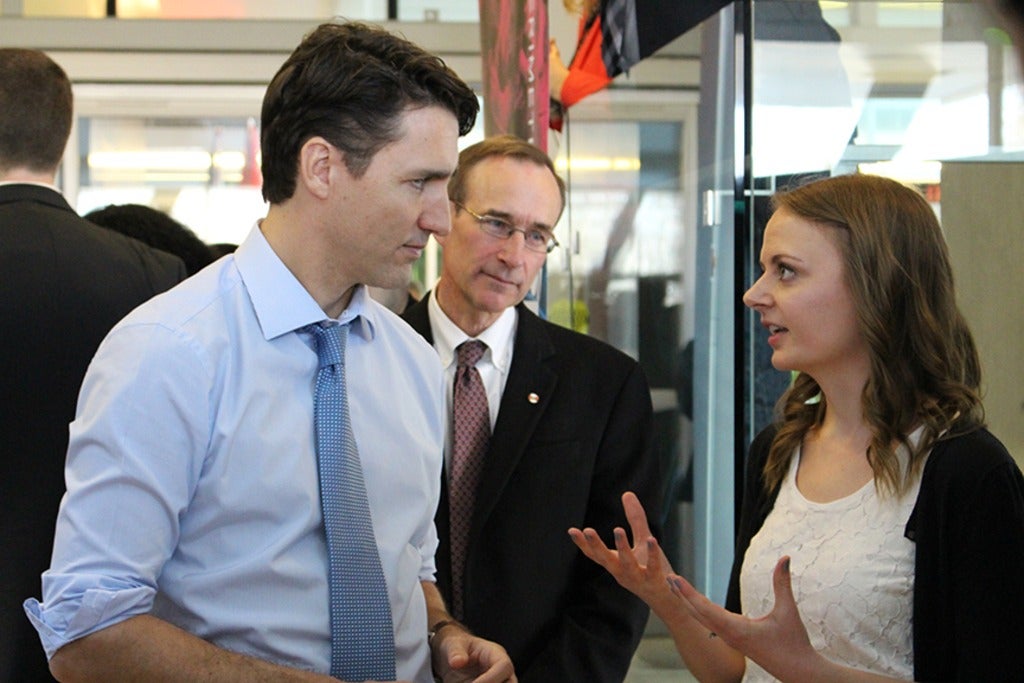
Institute for Quantum Computing (IQC) Executive Director Raymond Laflamme talked quantum computing with Prime Minister Justin Trudeau during a tour of Perimeter Institute for Theoretical Physics (PI) on Friday, April 15, 2016. Their conversation went on to seed a social media sensation that garnered headlines around the world.

Imagine a movie showing particles in a gas moving and colliding with each other. Then when you play the movie backwards the velocity of the particles will be opposite, but their motion is still governed by the same laws of physics – we could just as well call the backwards film “forward” – there is no fundamental way to distinguish the arrow of time. This is called time-reversal symmetry.

Tuesday, June 21, 2016 12:00 am - Friday, June 24, 2016 12:00 am EDT (GMT -04:00)

Relativistic Quantum Information North

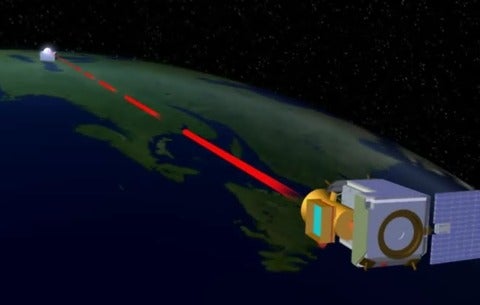
The Relativistic Quantum Information North (RQI-N) Conference, hosted by the Institute for Quantum Computing (IQC), will bring together an interdisciplinary community of researchers at the interface of quantum information science and relativity.

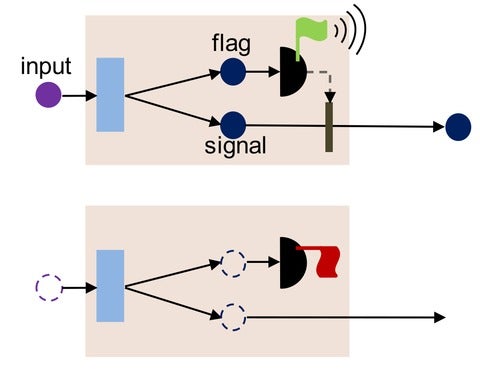
A team lead by researchers from the Institute for Quantum Computing and the Department of Physics and Astronomy at the University of Waterloo has successfully detected the presence of single photons while preserving their quantum states.