Current students

Wednesday, June 24, 2015 12:00 pm - 1:00 pm EDT (GMT -04:00)

Quantum Frontiers Distinguished Lecture: Immanuel Bloch

Immanuel Bloch, Max Planck Institute of Quantum Optics

From Topological Bloch Bands to Long-Range Interacting Rydberg Gases - New Frontiers for Ultracold Atoms

Ultracold atoms in optical lattices have enabled to probe strongly interacting many-body phases in new parameter regimes and with powerful new observation techniques.

Saturday, June 19, 2004 12:00 am - Friday, June 25, 2004 12:00 am EDT (GMT -04:00)

4th annual Canadian Summer School for Quantum Information

This annual summer school series focuses on educating select early-stage graduate students in a stimulating environment of lectures by world-leading researchers covering leading aspects of quantum information. The lecturers are known not only for being leaders in the field, but also for their strong didactic skills. The lecturers are drawn from the areas of computer science, mathematics, chemistry and physics. 

Monday, May 11, 2009 12:00 am - Wednesday, May 13, 2009 12:00 am EDT (GMT -04:00)

Theory of Quantum Computation, Communication and Cryptography (TQC)

Quantum computation, quantum communication and quantum cryptography are subfields of quantum information processing, an interdisciplinary field of information science and quantum mechanics. The TQC conference series focuses on theoretical aspects of these subfields. The objective of the conference is to bring together researchers so that they can interact with each other and share problems and recent discoveries. It will consist of invited talks, contributed talks and a poster session.

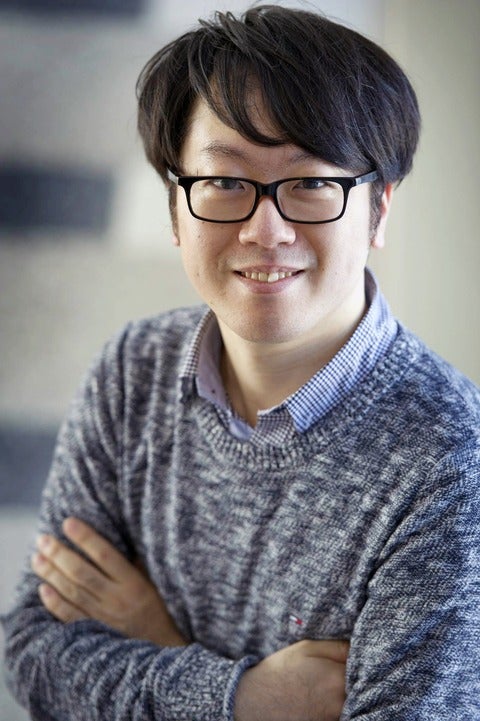
The province of Ontario announced that Kyung Choi and Vadim Makarov of the Institute for Quantum Computing (IQC) were two of the award winners.

Local MPPs Daiene Vernille and Kathryn McGarry presented announced the awards to University of Waterloo recipients this morning at Waterloo and Lin Tan, assistant professor in the Department of Electrical and Computing Engineering, made some remarks on behalf of the university.

Tuesday, June 9, 2015 2:00 pm - 3:00 pm EDT (GMT -04:00)

Erik Woodhead: Prepare-and-measure quantum key distribution

Erik Woodhead, The Institute of Photonic Sciences, Spain

Quantum key distribution (QKD) can be implemented in both so-called
entanglement-based (EB) and prepare-and-measure (PM) configurations. There is a certain degree of equivalence between EB and PM schemes from the point of view of security analysis that has been heavily exploited in the literature over the last fifteen years or so, where a given PM protocol is reduced to an equivalent EB protocol (following the BBM92 argument) whose security is then proved.

Monday, June 22, 2015 2:30 pm - 3:30 pm EDT (GMT -04:00)

Tommaso Calarco: Steering many-body quantum dynamics

Tommaso Calarco, University of Ulm

Quantum technologies are based on the manipulation of individual degrees of freedom of quantum systems with exquisite precision. Achieving this in a real environment requires pushing to the limits the ability to control the dynamics of quantum systems of increasing complexity. Optimal control techniques are known to enable steering the dynamics of few-body systems in order to prepare a desired state or perform a desired unitary transformation.

Monday, June 15, 2015 2:30 pm - 3:30 pm EDT (GMT -04:00)

Mario Berta: Quantum Coding with Finite Resources

Mario Berta, California Institute of Technology

The quantum capacity of a memoryless channel is often used as a single figure of merit to characterize its ability to transmit quantum information coherently. The capacity determines the maximal rate at which we can code reliably over asymptotically many uses of the channel. We argue that this asymptotic treatment is insufficient to the point of being irrelevant in the quantum setting where decoherence severely limits our ability to manipulate large quantum systems in the encoder and decoder.

Tuesday, June 23, 2015 3:00 pm - 4:00 pm EDT (GMT -04:00)

Matthew McKague: Interactive proofs for BQP via self-test graph states

Matthew McKague,  University of Otago, New Zealand

Is it possible to check a quantum computer's work? A quantum computation leaves behind no transcript, and for problems outside nondeterministic polynomial time (NP), it is not immediately clear whether we can verify that a quantum computation has been one correctly. Interactive proofs and self-testing offer a means of doing so.

Marzio Pozzuoli, RuggedCom

Abstract:
In 2001 RuggedCom was a fledging startup. A decade later it was bought by Siemens for nearly half a billion dollars. Mr. Pozzuoli, its founder, will discuss its path to success and the role played in that success by the Canadian experience and the strategies outlined in Geoffrey Moore’s iconic book “Crossing the Chasm”.
 
Biography:

Thursday, May 28, 2015 4:00 pm - 5:00 pm EDT (GMT -04:00)

Quantum Frontiers Distinguished Lecture: Leo Kouwenhoven

Leo Kouwenhoven, Delft University of Technology

Majorana Fermions: Particle Physics on a Chip

Join us for the next Quantum Frontiers Distinguished Lecture Series when Dr. Leo Kouwenhoven will talk about particles that are equal to their anti-particles.